
What is Thanh Minh Tet?
Thanh Minh Tet is one of the important traditional holidays in many Asian countries, including Vietnam. Not only associated with the cycle of weather movement, Thanh Minh Tet also carries a strong cultural and spiritual meaning as an opportunity for children and grandchildren to look towards their ancestors, take care of graves and preserve family traditions.
According to Eastern calendar, a year is divided into 24 solar cycles to reflect the movement of the Sun and weather changes. In the "twenty-four solar cycles" system, Thanh minh is the fifth solar cycle, after Lap xuan, Vu thuy, Kinh trap and Xuan phun.
The name "Thanh minh" expresses the weather characteristics of this period: "thanh" is clear, "minh" is bright. This is the time when the sky is clear, the climate is cool, and trees sprout buds, marking the transition from late spring to early summer. The harmony of heaven and earth creates a meaningful holiday in the spiritual life of Vietnamese people.
What is Thanh Minh Tet in 2026?
In the Tale of Kieu, Nguyen Du wrote: "Thanh minh in March / Lễ is tảo mộ, hội is đạp thanh...", thereby clearly depicting traditional activities associated with this occasion. However, currently, the determination of tiết khí is calculated according to the Gregorian calendar based on the position of the Sun.
Accordingly, Thanh Minh Tet - the first day of the Thanh Minh period - is determined according to the Gregorian calendar and then converted to the Lunar calendar.
Usually, the Thanh minh period lasts about 15-16 days, starting around April 4 or April 5 and ending around April 19 or April 20 of the Gregorian calendar, before transitioning to the Coc Vu period.
In 2026, the Thanh Minh period starts from April 5th and lasts until April 20th of the Gregorian calendar. Thus, Thanh Minh Tet 2026 (the first day of the Thanh Minh period) falls on Sunday, February 18th of the Lunar calendar.
The fact that Thanh Minh Tet 2026 coincides with Sunday creates favorable conditions for families to arrange time to visit graves and reunite without affecting work.
Origin of Purified Blood
According to the Center for Religious and Moral Studies, University of Social Sciences and Humanities (Vietnam National University Ho Chi Minh City), the Thanh Minh period originates from China, associated with the transitional spring when the weather warms up, the air is fresh, and trees grow strongly.
True to the traditional term "ritual is sweeping graves, festival is kicking sounds", Thanh Minh Tet includes both the ritual and the festival part.
However, in Vietnam, Thanh Minh Tet mainly carries the meaning of remembering ancestors. Key activities are tomb sweeping, cleaning graves, burning incense and worshiping Thanh Minh Tet. After completing work outside the cemetery, families often return home to perform ancestral worship ceremonies.
The custom of worshiping Thanh Minh Tet also varies by region. In the North, the offering tray usually has sticky rice gac and duck meat. Meanwhile, in the South, many places have the custom of sweeping graves from before the Lunar New Year, while Thanh Minh Tet is mainly for continuing to care for and repair graves.
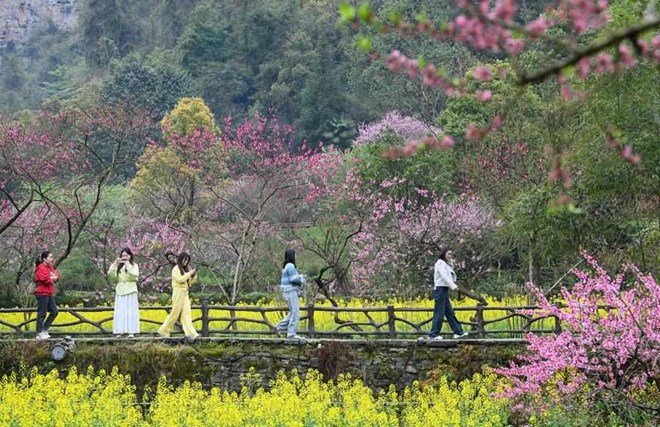
The clearest difference between Thanh Minh Tet in China and Vietnam is: if in China there is also the element of spring travel, then in Vietnam, Thanh Minh almost only focuses on tomb sweeping and Thanh Minh Tet worship, not leaning towards outdoor activities.
What to do on Thanh minh holiday?
Thanh Minh Festival is an occasion to commemorate ancestors through activities such as tomb sweeping, ceremony at the grave and at home, and family reunion.
Mourning
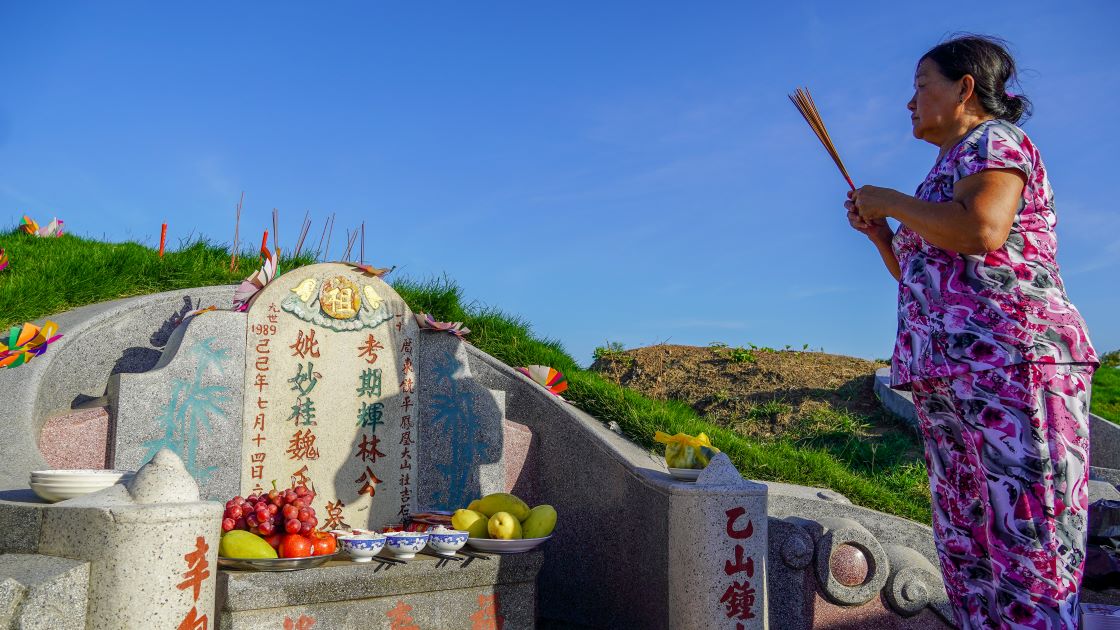
Tomb sweeping is the most important activity during the Thanh Minh festival. This is an occasion for children and grandchildren to repair and care for ancestors' graves such as mowing grass, cleaning tombstones, changing flowers and lighting incense to commemorate. This activity expresses gratitude and the morality of "drinking water, remembering the source".
When visiting graves, families often prepare offerings such as fresh flowers, fruits, cakes and candies... to show respect and pray for peace. This is a cultural beauty with profound humanistic meaning.
Tomb sweeping during the Thanh minh festival not only has a spiritual meaning but also reflects the laws of nature's operation. People go to the cemetery to clear weeds, prune trees, helping to make the tomb space airy and clean.
According to folk beliefs, this contributes to balancing yin - yang, helping qi circulate harmoniously. At the same time, this is also a sign of ending the woody qi of spring, preparing to switch to the fire qi of summer.
This is not only an occasion to clean graves and worship Thanh Minh, but also clearly reflects the seasonal transition, associated with agricultural life and the tradition of "drinking water, remembering the source" of Vietnamese people.
Tomb repair
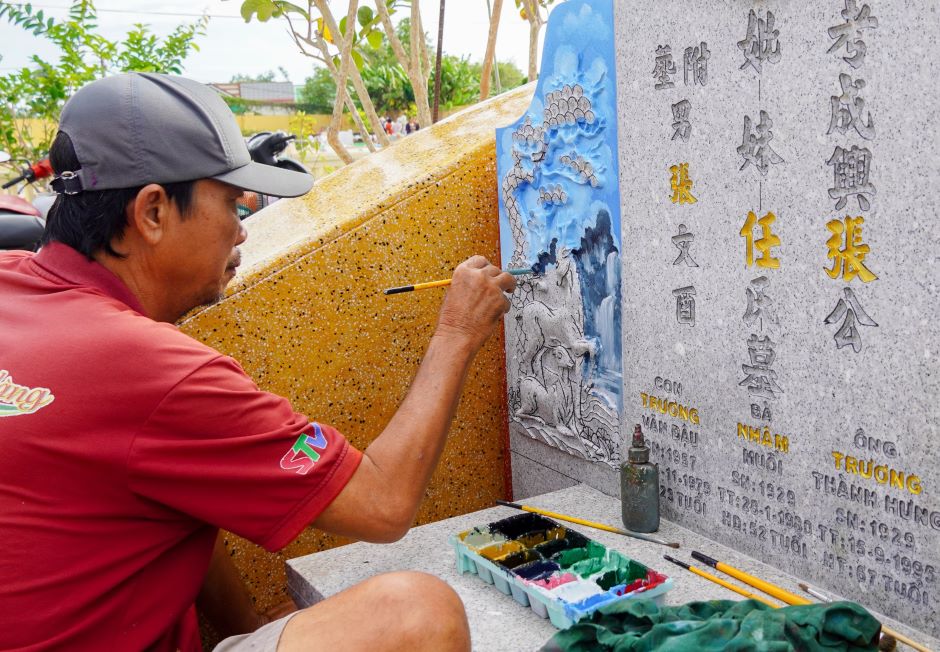
In parallel with visiting graves is the work of cleaning and repairing graves. This is the central content of Thanh Minh Tet, helping to maintain family traditions and connect generations.
The work usually includes clearing weeds, embellishing the campus, and cleaning the tombstones. Many families consider this an opportunity to meet and review family history.
Clean up the ancestral altar
Besides the grave outside the cemetery, cleaning the ancestral altar during the Thanh minh festival is also very important. Families often clean the altar, change water, change flowers and rearrange worship items to show solemnity and reverence.
Taboos when sweeping graves and worshiping Thanh Minh
During the Thanh minh festival, it is advisable to avoid tomb sweeping when it is still dark, with a lot of fog or in the late afternoon and night. According to folk beliefs, this is a time when yin energy is heavy, not suitable for performing rituals. The most suitable time is morning or early afternoon.
Avoid joking and swearing in cemeteries.
One of the important taboos when sweeping graves is not to step on other people's graves, not to sit on tombstones. This is considered disrespectful and can affect spiritual elements according to traditional beliefs.
During the Thanh Minh tomb sweep, many families abstain from taking photos, especially taking selfies at the tomb area. Folk beliefs believe that this is not suitable for the solemn atmosphere of the holiday.
When visiting graves and worshiping Thanh Minh Tet, you should wear neat, discreet clothes, avoid overly colorful or offensive colors. This shows respect for ancestors.
Avoid bringing to your house items of unknown origin from the cemetery. Pregnant women and people with weak health should limit tomb sweeping.


