
According to reporters' records, during the National Day holiday of September 2nd, from early morning, Ba Dinh Square area and surrounding roads were crowded with people and tourists wearing ao dai, traditional costumes, carrying national flags to take photos.
Not only the area facing President Ho Chi Minh's Mausoleum, many surrounding locations have also become favorite photo angles.
In front of Ho Chi Minh Mausoleum
This is one of the most popular locations chosen by tourists. From outside Ba Dinh Square, photographers can take a panoramic view of President Ho Chi Minh's Mausoleum, the flagpole and the wide green lawns in front.
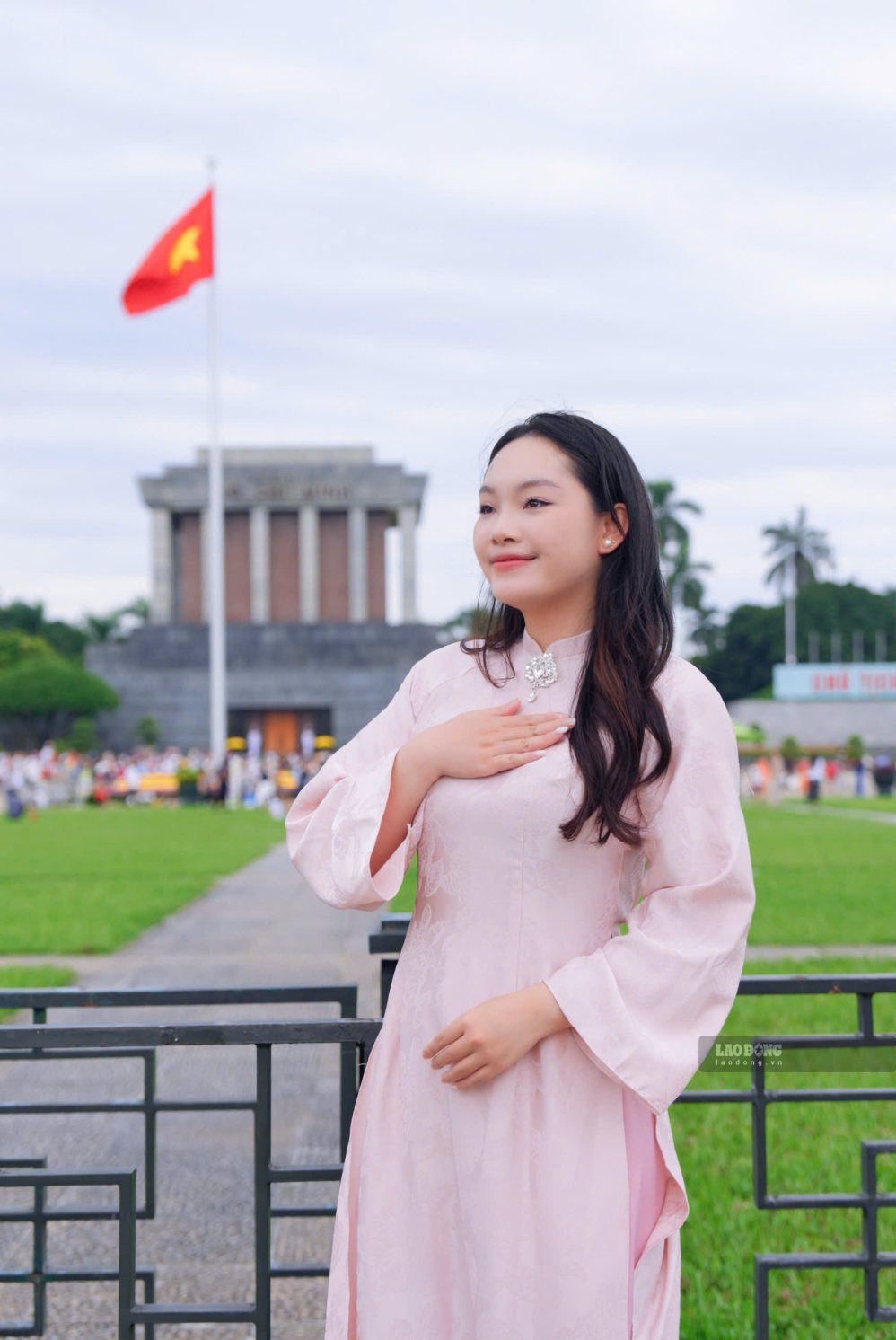
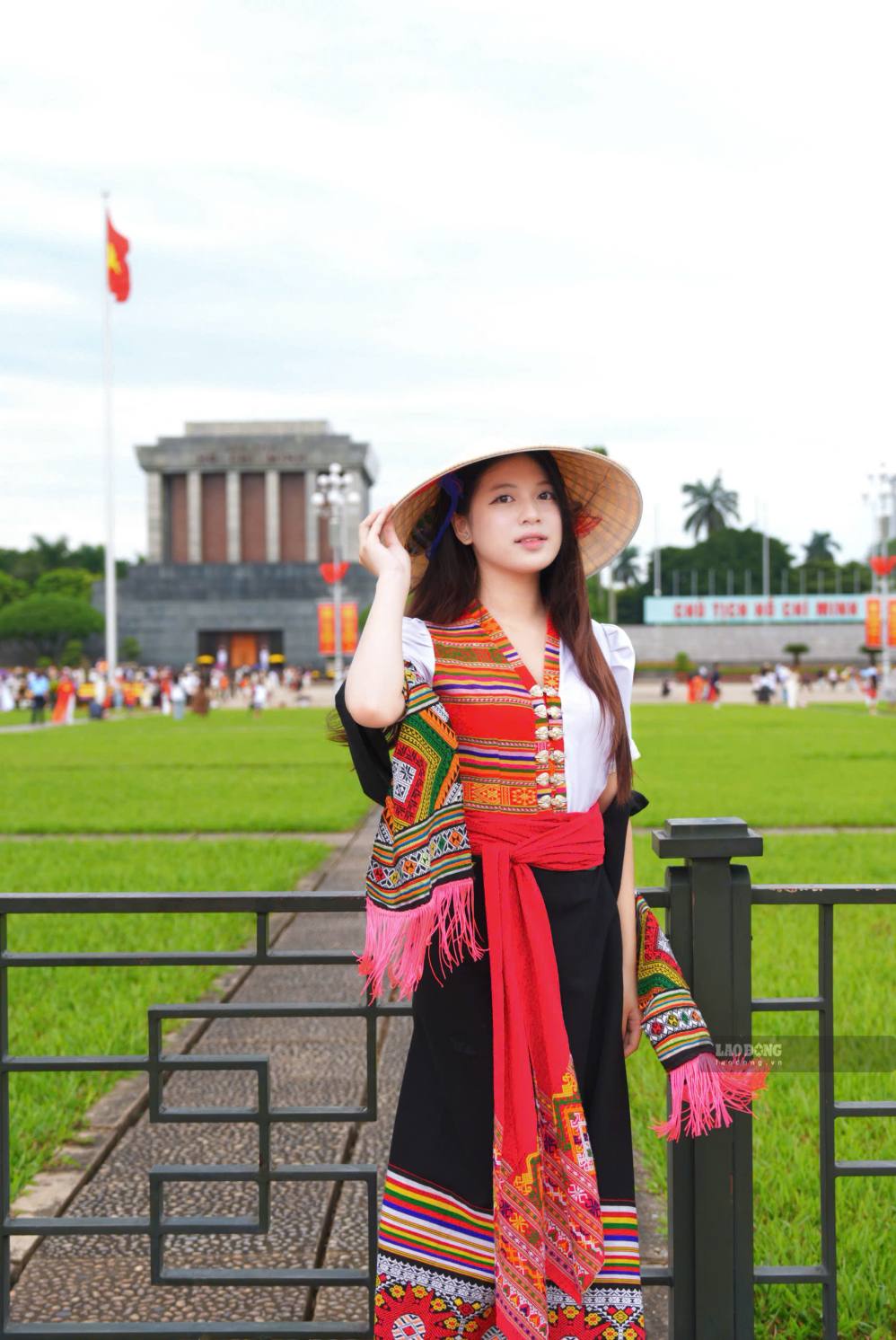
During the National Day holidays, the image of the red flag with a yellow star flying above the square creates a highlight for the frame. Many tourists choose ao dai, national costumes or bring national flags to make the photo imbued with the atmosphere of September 2nd.
Area opposite the Parliament Building
Another shooting angle chosen by many young people is the front area, opposite the National Assembly Building. The modern architecture of the building creates a prominent backdrop.
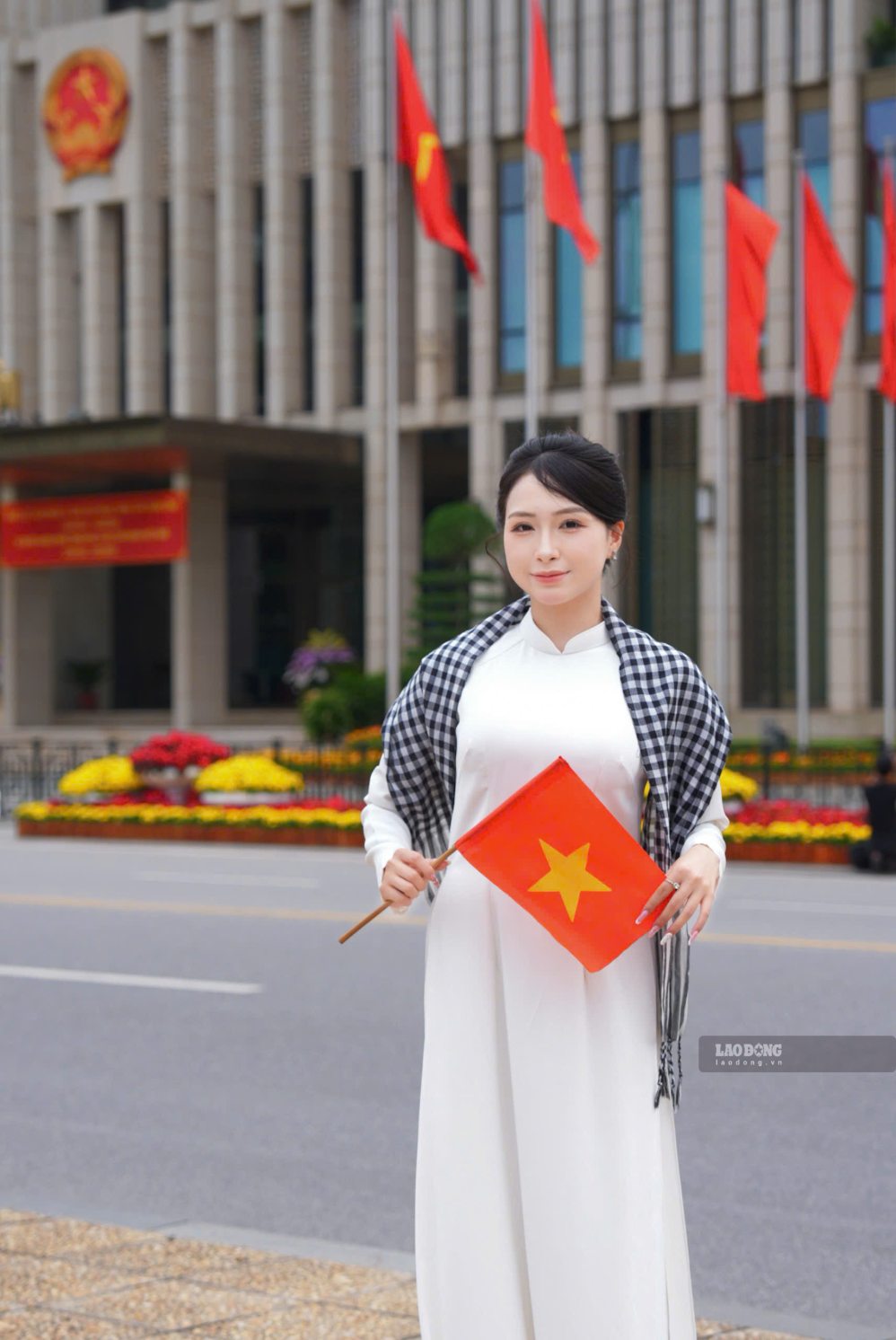
White ao dai combined with checkered scarves and red flags with yellow stars are the choice of many tourists when taking photos here.
Doc Lap intersection area
The intersection between Doc Lap street and Dien Bien Phu street also becomes a photo stop during the holidays. From here, tourists can choose many camera directions with bustling streets.
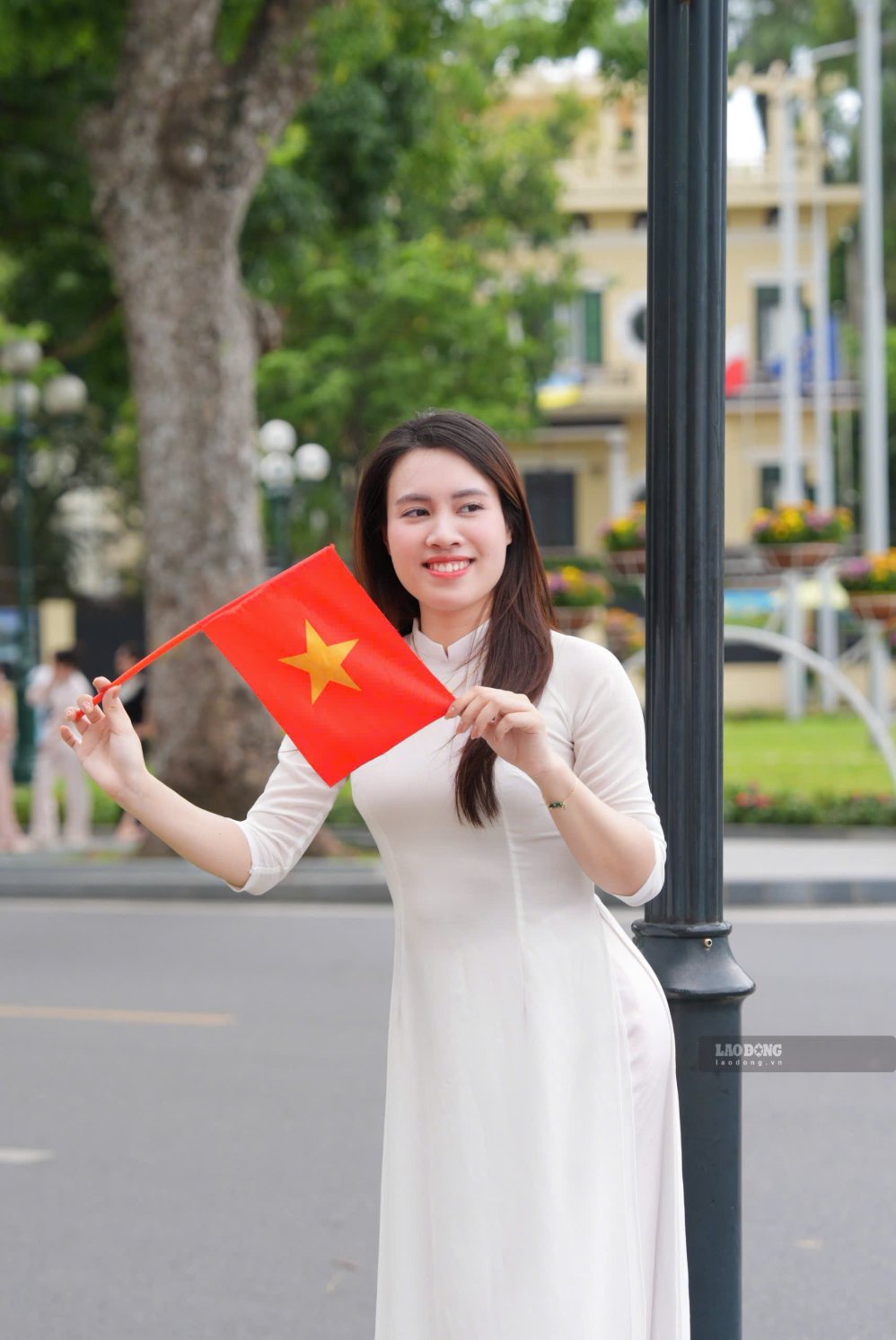
This is also a suitable angle for everyday-style photos, capturing the Hanoi atmosphere in September days.
Ministry of Foreign Affairs Building
Not far from the Ho Chi Minh Mausoleum area, the Ministry of Foreign Affairs building with its characteristic yellow architecture is also sought after by many people. The building has a classic architecture, standing out among the green trees, creating a different background compared to the angles taken around Ba Dinh Square.
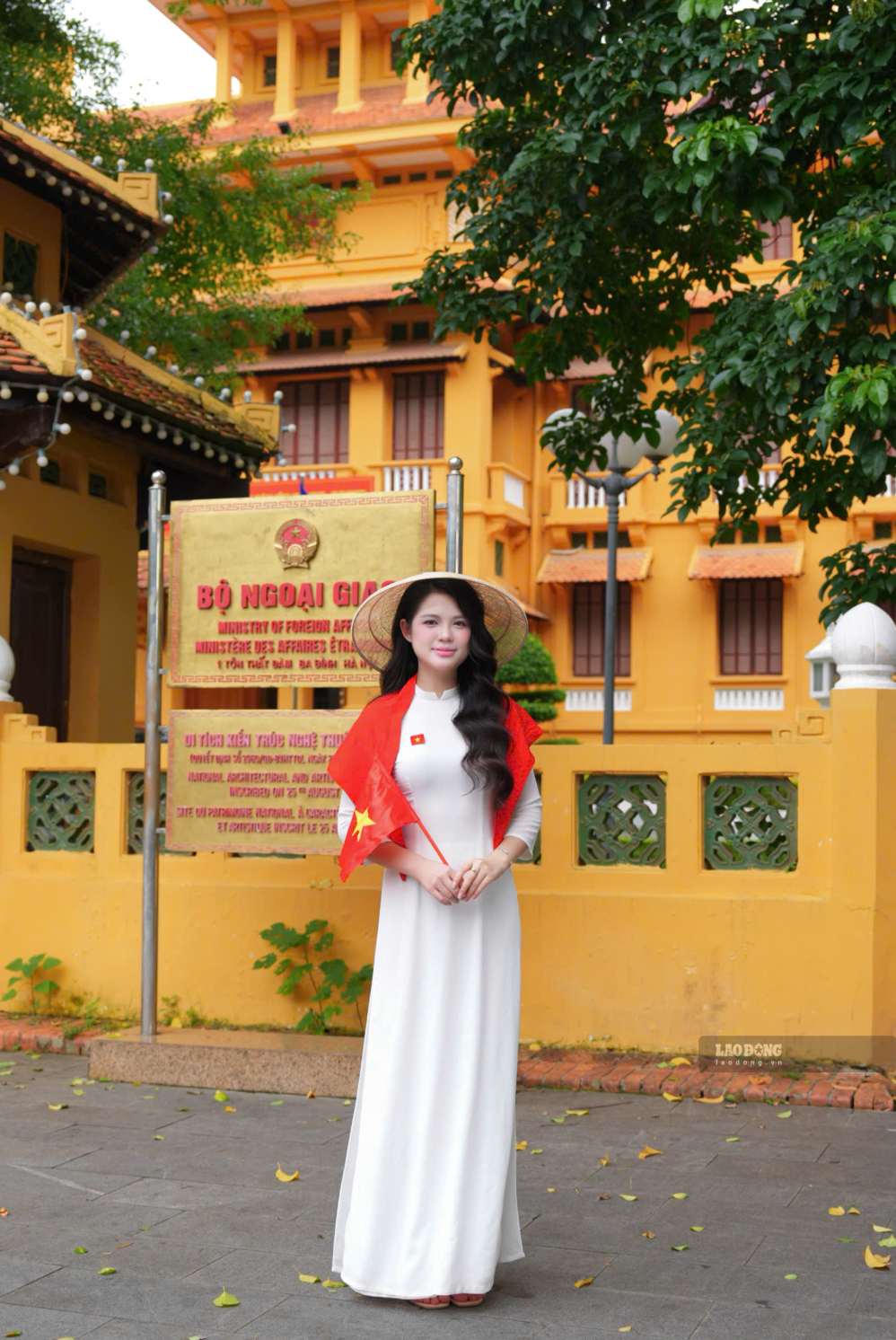
In white ao dai, conical hats and national flags, visitors can record pictures that are both traditional and evoke Hanoi's architectural imprints.


