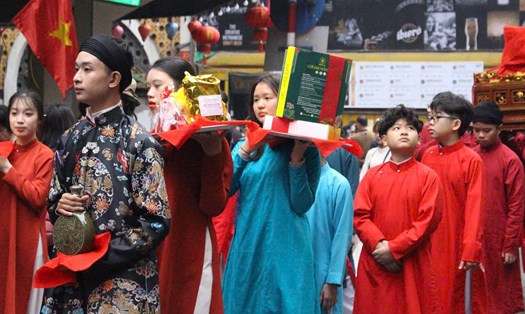
For decades, when mentioning traditional Vietnamese costumes, the most familiar image in contemporary life is still Ao Dai. This image often appears mainly on holidays, Tet, rituals or in school environments. However, besides Ao Dai, Vietnamese history also possesses a diverse system of costumes, associated with each dynasty, social class and different cultural spaces.
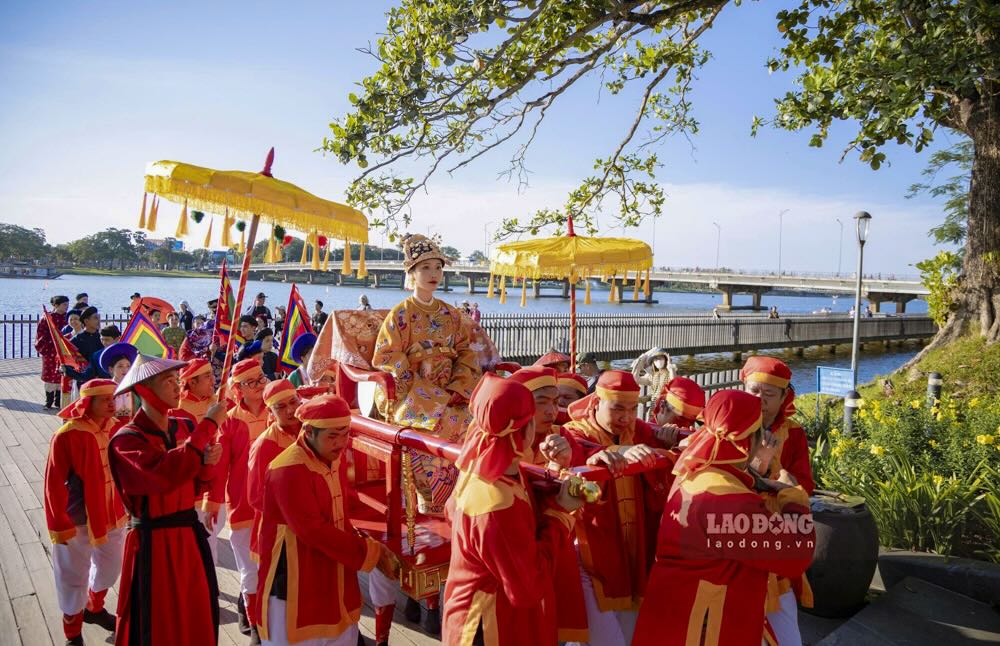
Since around 2014, the movement to learn about traditional costumes - Vietnamese costumes has begun to decline among young people, starting from the need to find the broken pieces of costume culture. Instead of stopping at beautiful dressing, this movement aims to research historical documents, restore the shape of costumes, patterns, structures and how to use them in the original context.
By the 2018 - 2020 period, many historical-based historical sketches were gradually released, laying the foundation for the " shape" of Vietnamese costumes in modern life. However, the lack of systematic documents and public access space is still a big challenge, causing Vietnamese traditional costumes to not really step out of the small community.
From personal curiosity to choosing a long-term commitment
Observing the development of the movement, while noting that the documentation system on traditional costumes still has many gaps, in 2019, Vu Duc, representative of the founding group Bach Hoa Bo Hanh, decided to establish Great Vietnam - a unit specializing in researching and practicing Vietnamese royal costumes.
Sharing about this decision, Vu Duc said: At that time, I realized that if there were no groups working seriously and systematically, Vietnamese costumes would easily be misunderstood or agreed upon with costumes from other countries. I want to do something methodical enough to create a long-term foundation.
Bach Hoa Bo Hanh, with 3 core members: Vu Duc, Quynh Nga and Gia Loc, was initiated from the first season in 2022. Quynh Nga is a familiar young face in the Vietnamese-American community, having participated in the Thuy Trung Nguyet project since 2020.
Gia Loc attracted attention with the image of a male student of the Foreign Trade University wearing traditional school uniforms. Currently, because Gia Loc lives and studies abroad, Vu Duc and Quynh Nga take on the main responsibility.
Recalling the opportunity to cooperate, Vu Duc said: "We come to Vietnamese costumes from very different paths, but we meet in the same desire of how to make young people no longer see traditional costumes as not too far away in daily life".
The March date and the decision not to wait
In March 2022, during a sudden meeting between Vu Duc and Quynh Nga, the idea of a group of people wearing Vietnamese costumes parading in public spaces was mentioned. After a short period of silence, Vu Duc proactively proposed to do it immediately.
He recalled: I told everyone that if I dont do it now, I dont know when I can do it. Vietnamese costumes need to step out into life, not just in paintings or photos".
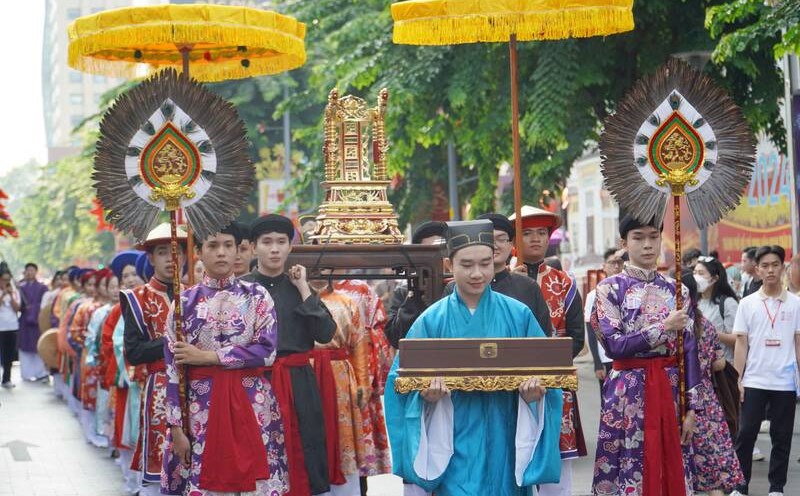
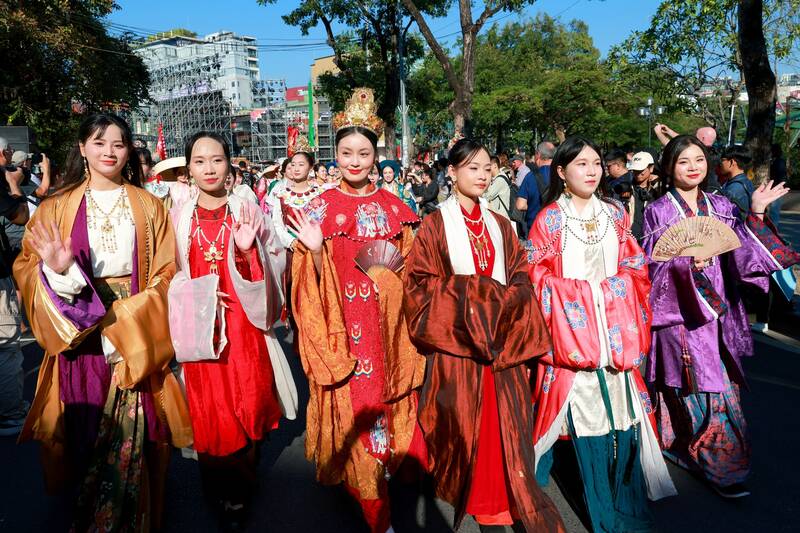
The first Bach Hoa Bo Tranh season was held on a weekend in June 2022 at Hoan Kiem Lake walking street, with the participation of about 100 people. According to the organizers, this is not simply a parade but like a direct meeting of the community of Vietnamese costume lovers, to share and introduce the research and practice results of individuals and organizations.
At the time of the first season, many people - even in the research community or authorities - still did not really understand the Vietnamese costume parade. Right on the walking street, the civil defense force once expressed surprise at other costumes far from the familiar image of Ao Dai.
Mr. Duc acknowledged: "Vietnamese uniforms have not disappeared. It is only in the past few decades that knowledge about traditional costumes has been disrupted, causing many people to no longer recognize their true appearance.
According to the founders' thinking, Bach Hoa Bo Hanh aims to create an open space - where participants can wear ao dai and traditional costumes many times a year, instead of just limiting them to the holidays. Only when Vietnamese costumes appear enough in everyday life, will people gradually find them familiar and no longer feel strange.
Cultural space rich in identity
After 6 seasons of Bach Hoa Bo Hanh, parading from the South to the North, along with enthusiastic and energetic young people, the parade always surprised the audience with its scale and especially the diversity of traditional costumes of Vietnam.
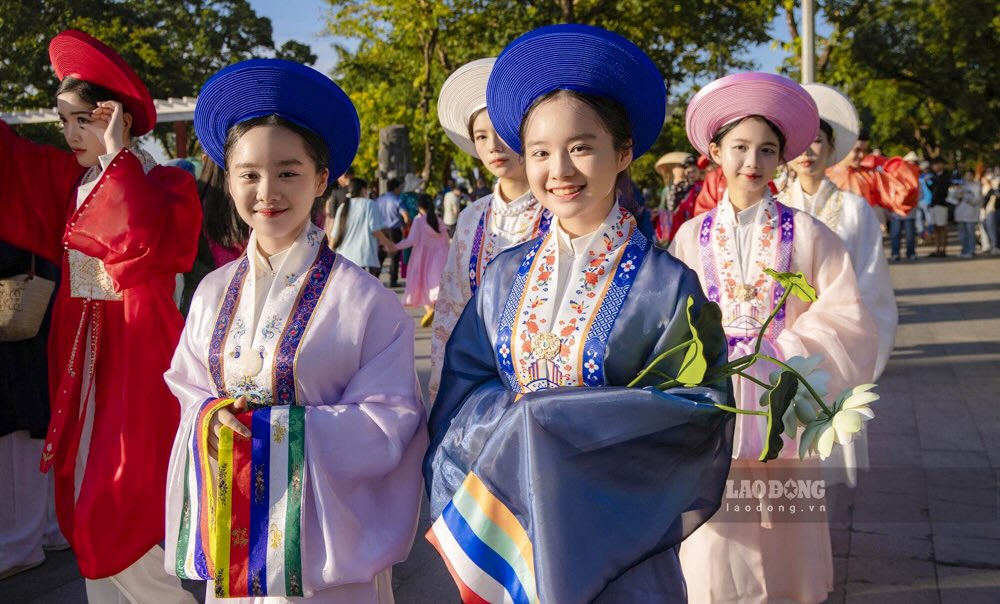
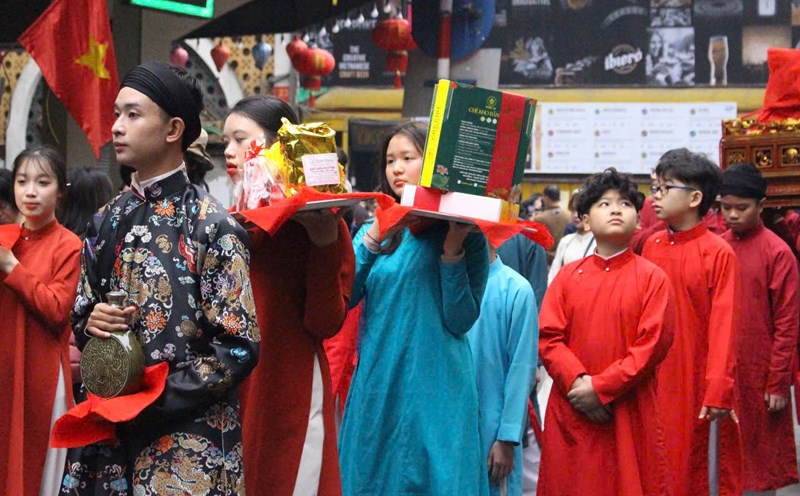
The parade stands out on the streets with the rich colors of traditional costumes, from five-panel ao dai, four-panel ao dai, traditional costumes to modern ao dai, blending together to create a cultural space rich in national identity.
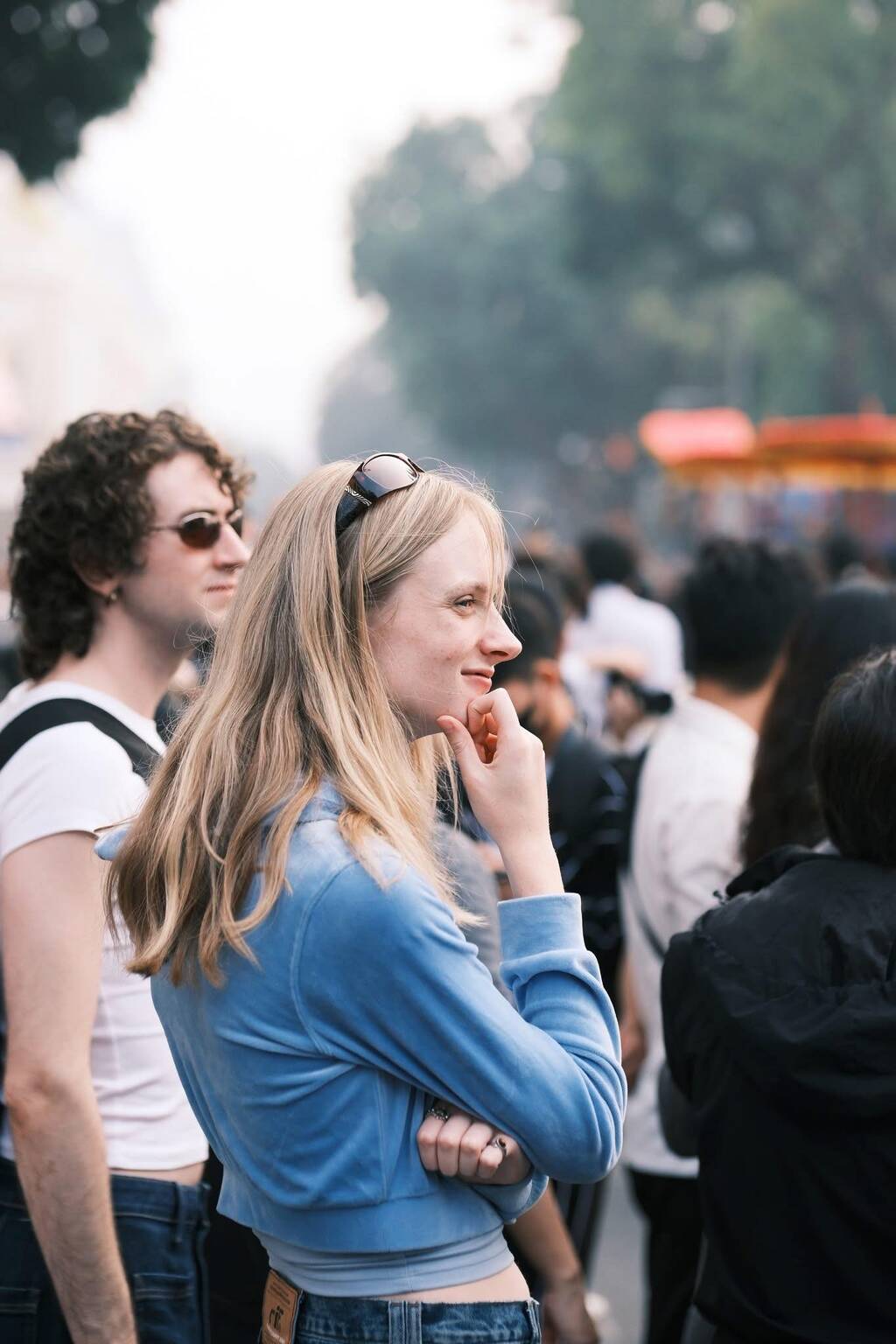
Ann Fitzroy, a tourist from Northern Ireland who happened to see the Bo Hoa Trang group, said she felt overwhelmed when attending the Hanoi Ao Dai Festival for the first time in 2025. What impressed her most was the diversity of traditional Vietnamese costume designs, from styles to sophisticated variations, with a brilliant yet harmonious color palette.
According to Ann, the festive atmosphere is both vibrant and energetic, bringing a feeling of ease and comfort to the attendees. She was especially excited to see with her own eyes the traditional ao dai in many different styles, clearly expressing the cultural identity of Vietnam.
The female tourist also shared her desire to wear Ao Dai at least once in her life, because according to her, traditional costumes in her hometown often tend to be about performing rather than being associated with life.
For Ann Fitzroy, the traditional costume parade not only honors the beauty of identity, but also fully conveys the value of Vietnamese cultural heritage, leaving a deep impression on international visitors.
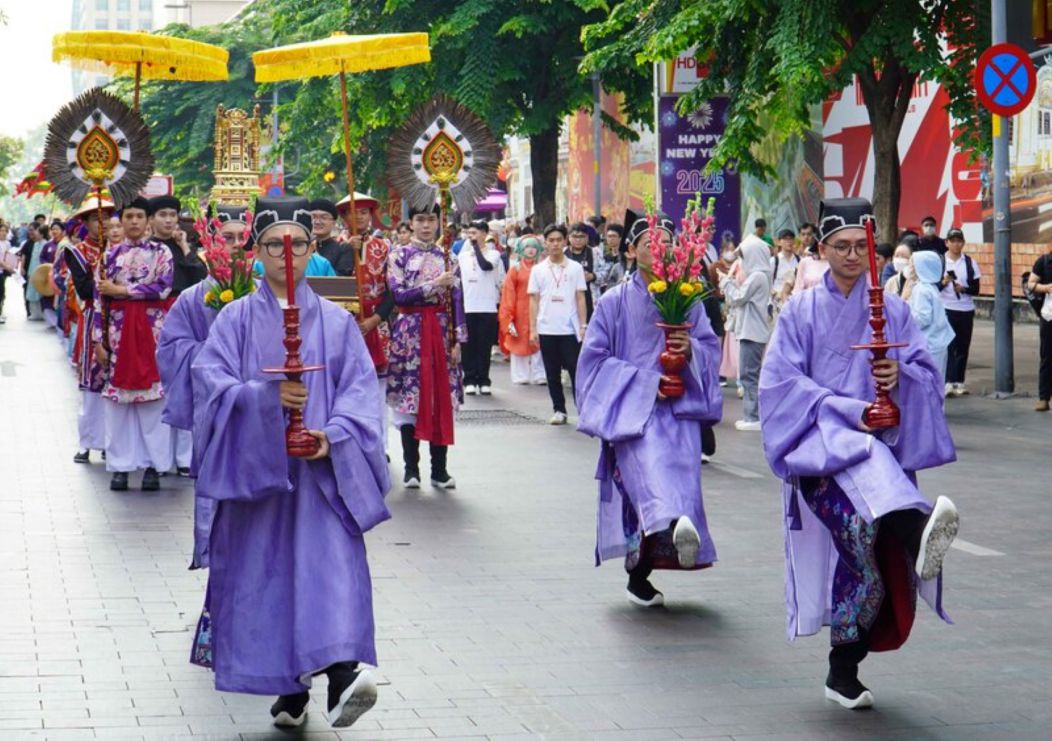
After each event, the image of the group of people wearing traditional costumes strolled through the space of a modern city not only leaves a visual impression but also evokes a profound dialogue about cultural identity.
From familiar ao dai to elaborately restored traditional costumes, each step of the parade is an effort to bring the Vietnamese costume heritage back to contemporary life, closer to the public, especially the younger generation. This is also the foundation for traditional values to continue to be preserved, spread and develop sustainably in today's cultural flow.
Through the seasons of organization, Bach Hoa Bo Hanh is no longer a small-scale community activity but is gradually taking shape as a cultural event with an increasingly expanding scale, present in many large cities across the country.
2025 marks a clear step forward in this journey when the 5th "Flower Culture and Culture" Vietnamese costume Festival will be held at Nguyen Hue Walking Street, Ho Chi Minh City, within the framework of the Ho Chi Minh City Ao Dai Festival 2025. This event brings together more than 1,000 young people, creating a vibrant cultural living space in the center of a modern urban area.
The program is organized by the Ho Chi Minh City People's Committee, in coordination with the Department of Tourism and the City Women's Union, showing the increasingly clear support of state management agencies for practical activities and spreading traditional costume culture.
Not only expanding in scale, 2025 also marks symbolic milestones of the Bach Hoa Bo Hanh journey, such as the first festival in Spring, marking the 1,000th day since the first season (June 2022 - March 2025).
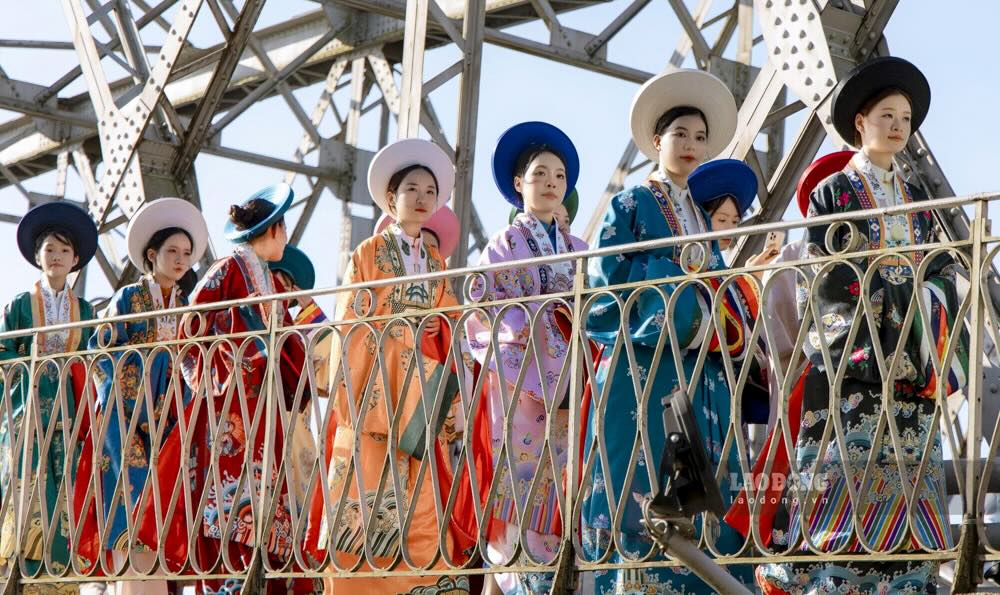
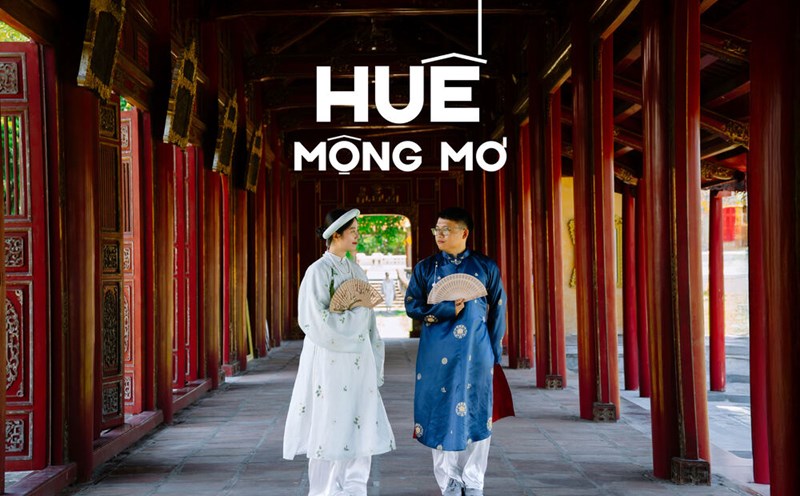
After Ho Chi Minh City, Bach Hoa Bo Hoang will continue to be present in Hanoi within the framework of the Hanoi Ao Dai Tourism Festival - Thang Long Festival - Hanoi 2025, and expand to the ancient capital of Hue with the 6th "Bach Hoa Bo Hanh" Vietnamese costume Festival, taking place during the Hue Community Ao Dai Week of Hue Festival 2025.
The parade with traditional ao dai and traditional costumes was organized systematically, combining historical elements and contemporary art space, contributing to bringing the image of Vietnamese costumes closer to the public and tourists, especially in the context of major tourism - cultural festivals of the city.