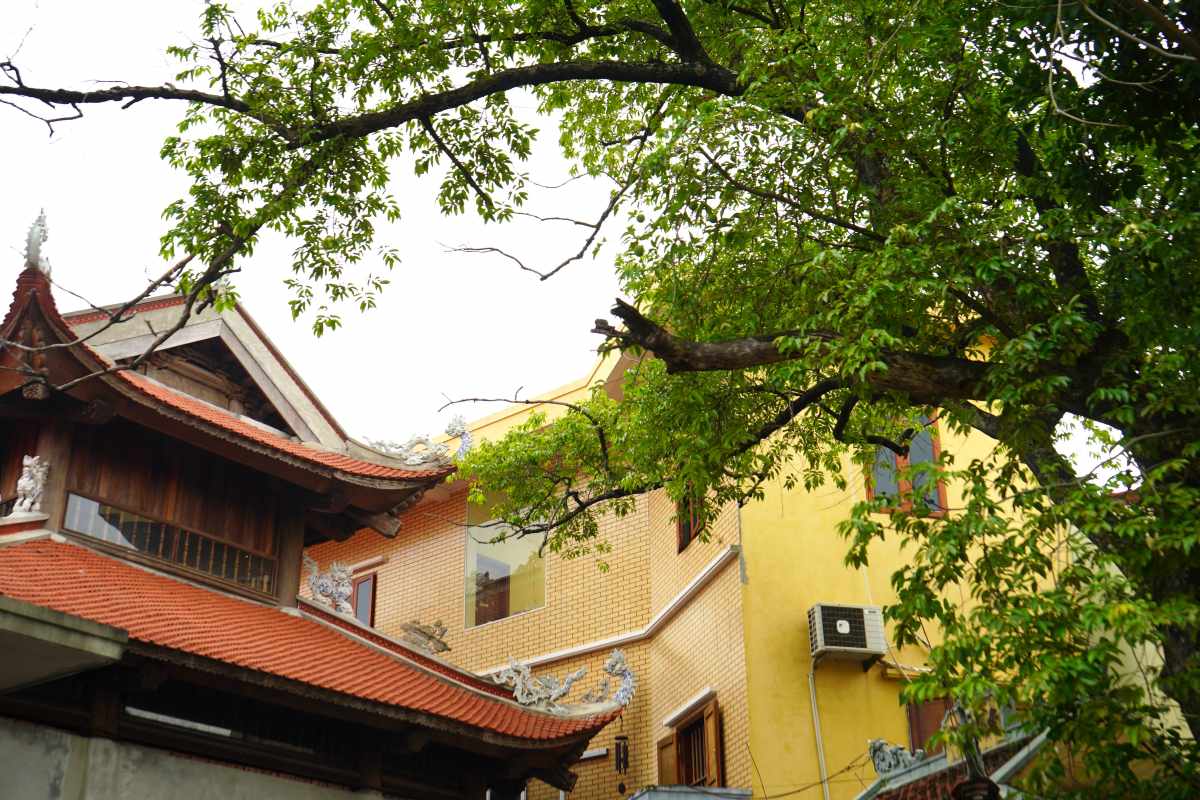
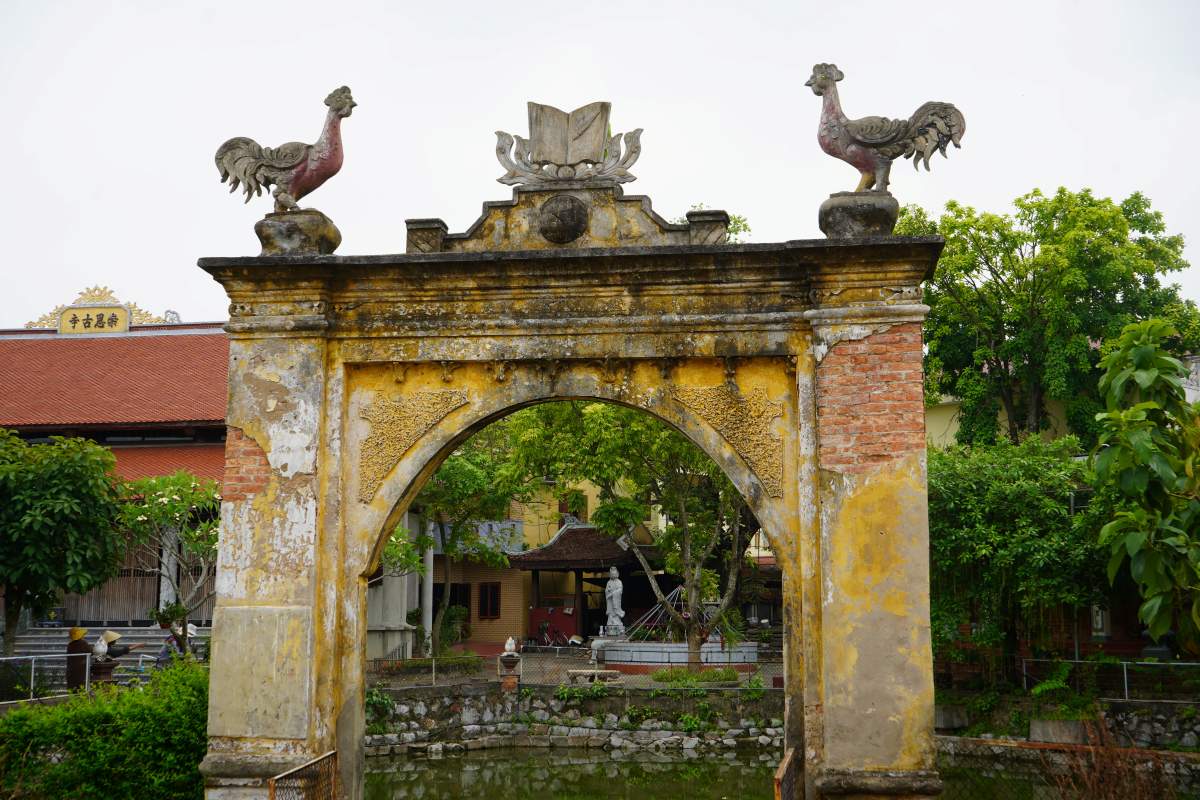
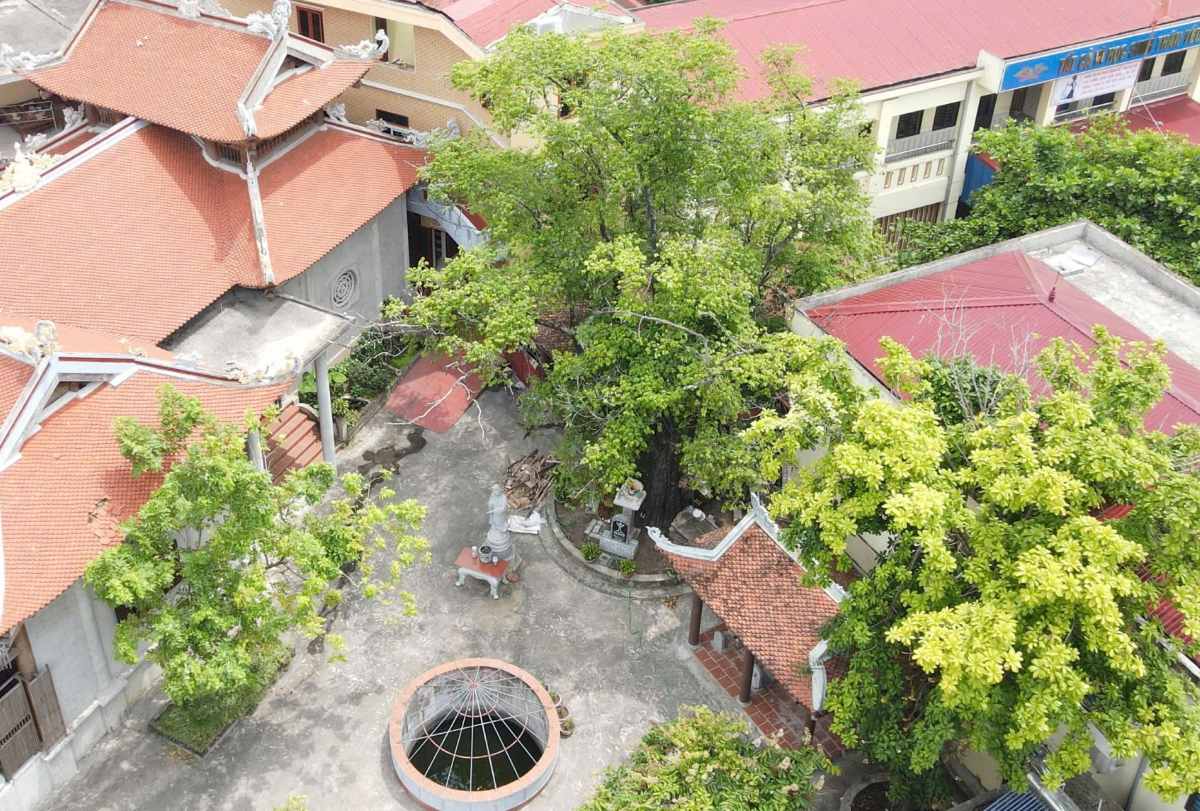
Sung An Pagoda, also known as Phu Ke Pagoda, is located in Tien Lang commune, Hai Phong city. The pagoda is built on a high mound, with an area of nearly 1,000 m2, spacious and cool landscape under layers of ancient trees.
According to the stele, the pagoda was restored in the 5th year of Vinh Tri, the reign of King Le Huy Tong (1680), proving that the pagoda existed very early (first half of the 17th century).
Legend has it that during the Tran Dynasty, this place was a military food warehouse serving the resistance war against the Mongol Yuan army. Previously, Sung An Pagoda was a large-scale architectural work with many palaces, hundreds of precious Buddha statues and a system of three gates, bell towers, ancestral houses, Dragon Eye well and surrounding ancient trees.
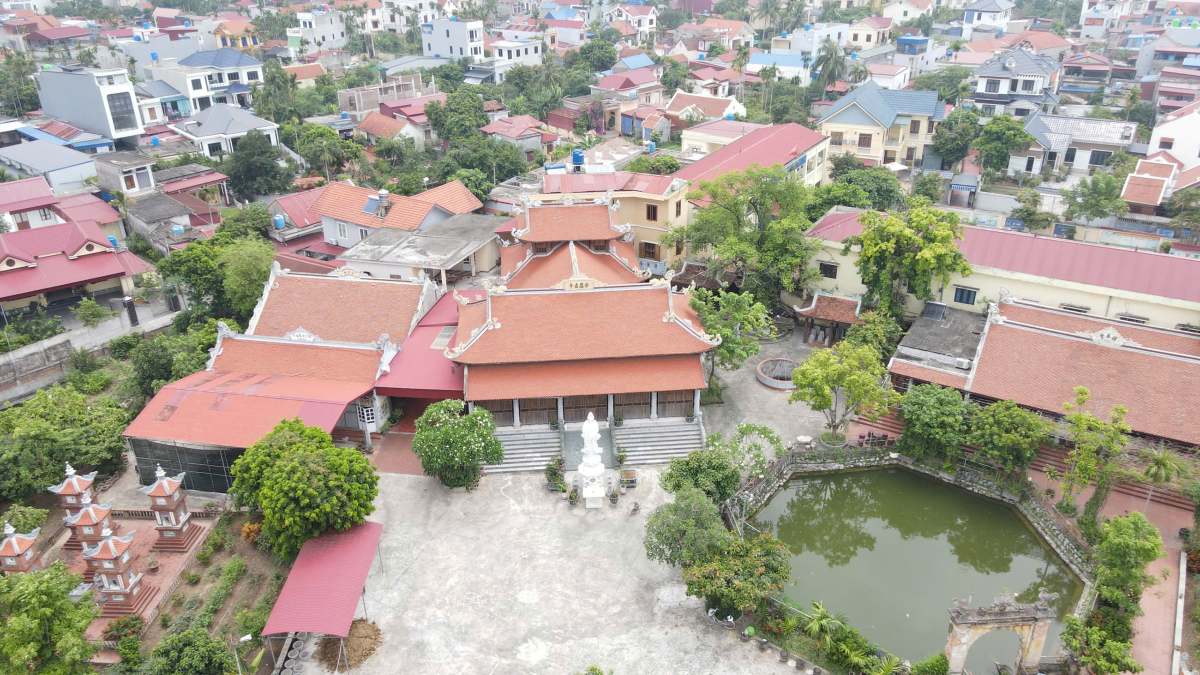
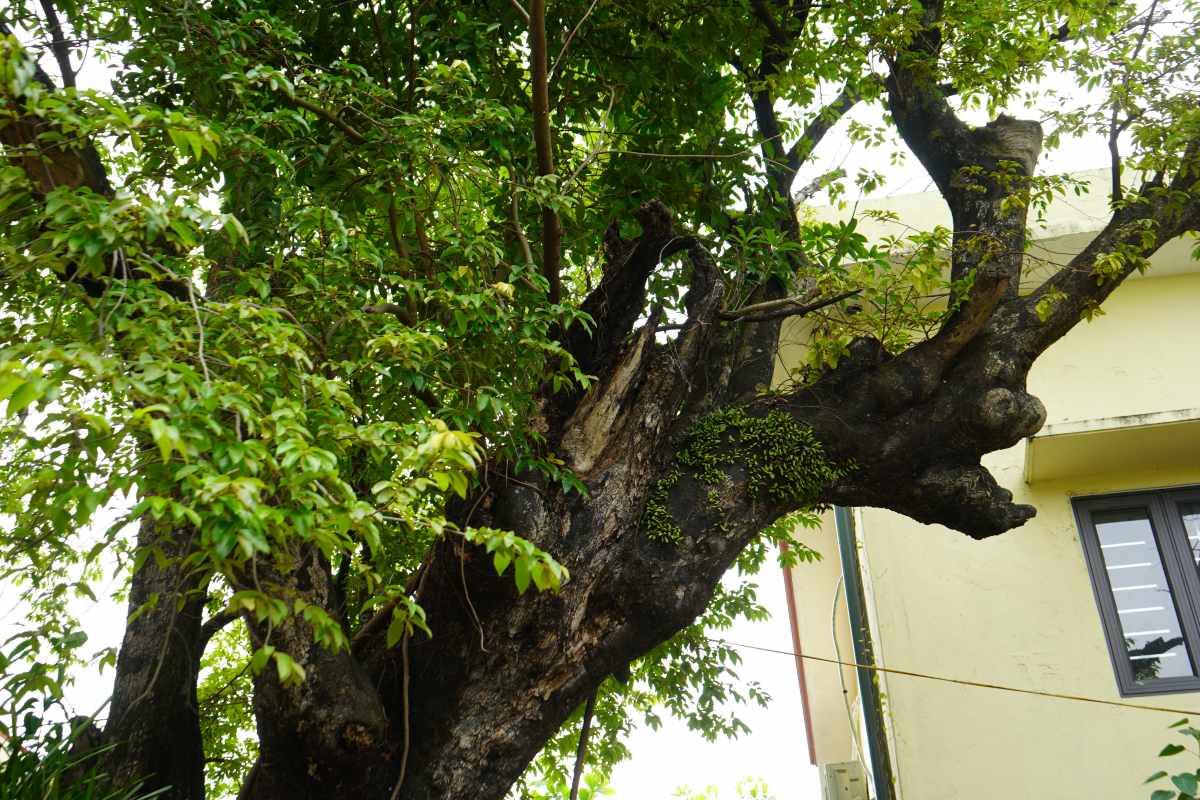
Prominent in the ancient tree system of Sung An Pagoda is the persimmon tree located behind the harem, which is over 400 years old. The persimmon tree is about 20 m high, with a canopy of hundreds of meters wide. From the root to the trunk, it is so large that only 3 adults can embrace it.
According to Mr. Nguyen Van Uy (64 years old, Trung Lang Dong village, Tien Lang commune), from a young age, when Mr. Uy went to school behind the pagoda, he saw a large persimmon tree, with its foliage like a giant umbrella, providing shade for the whole area. Later, after many heavy storms, many branches were broken, and the foliage also narrowed. However, the persimmon tree is green all year round, and in autumn, the persimmon fruit ripens, fragrant in one corner.
For the villagers, not only is it a rare ancient tree, the persimmon tree is also a witness to the history of the Sung An pagoda - one of the old pagodas in Tien Lang.
In 1950, the French colonialists occupied Tien Lang, occupied Sung An Pagoda as a fortification and then destroyed it almost completely, only the ancient persimmon tree and Mat Rong well existed as rare traces of the ancient pagoda.
After the war, villagers gradually renovated the pagoda together. Along with that, taking care of the ancient persimmon tree to become increasingly green and lush. By 2015, the persimmon tree in the pagoda grounds was recognized as a Vietnam Heritage Tree.
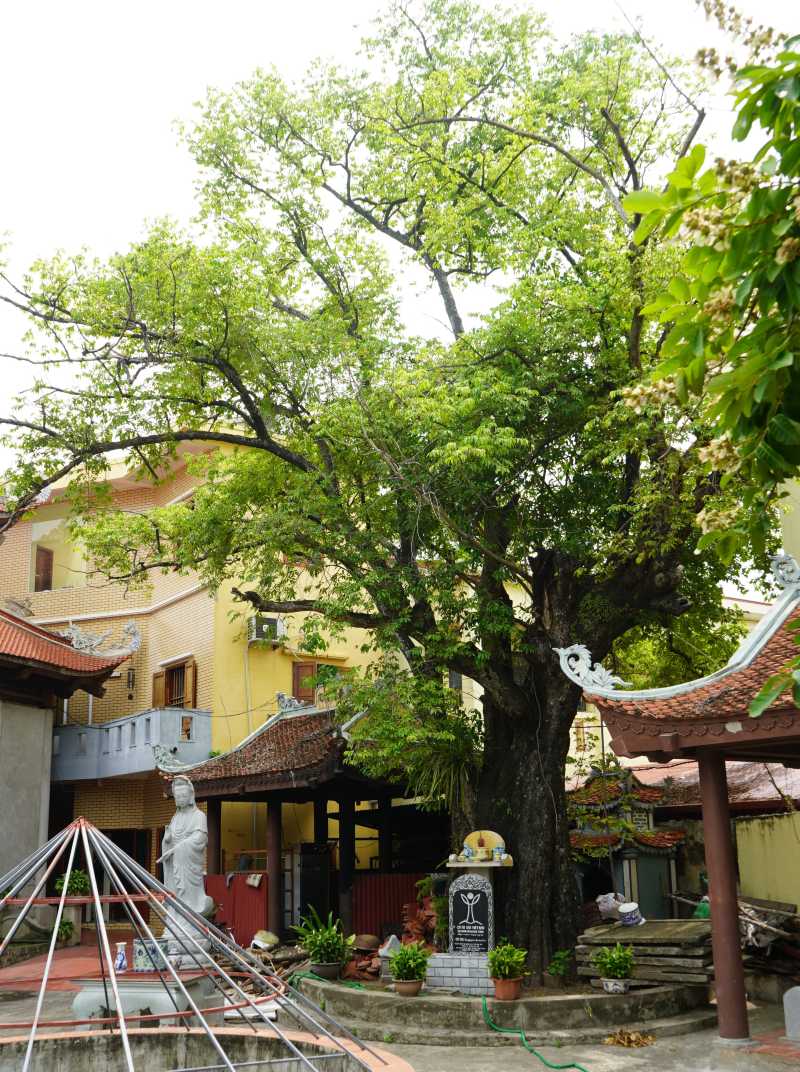
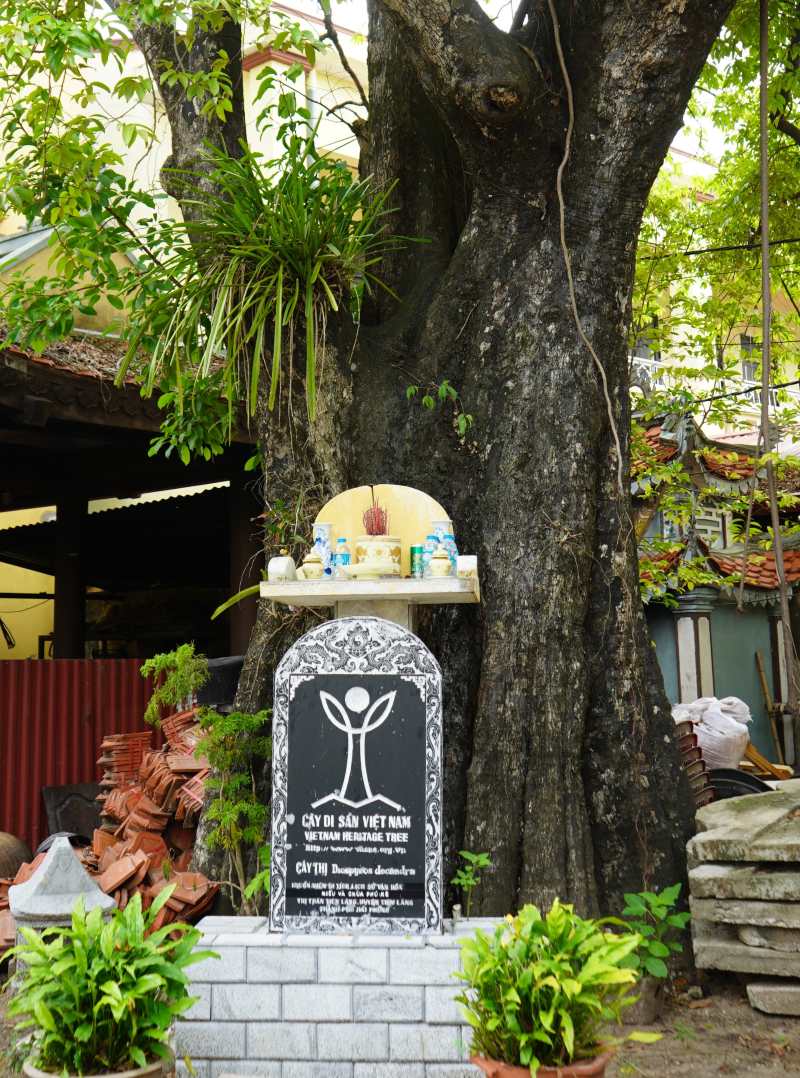
Along with the ancient persimmon tree, Sung An Pagoda also has an ancient tree system such as 3 polar banyan trees including Tu Chi banyan tree, Ba Chac banyan tree and Vong Chua banyan tree. Trees inside and outside the campus interspersed with lush greenery, lushly covering the ancient pagoda, creating a poetic and ancient landscape so that everyone stepping into the meditation gate feels peaceful.
Next to Sung An Pagoda are Phu Ke Temple and Ben Vua Temple, creating a complex of spiritual cultural relics, containing many historical and cultural values of the local community.
Every year, every Spring, Phu Ke village opens a traditional festival with many rich and diverse activities: rituals, book processions, wrestling competitions, Chinese chess, human chess... attracting a large number of tourists from all directions to participate. On January 28, 2005, the City People's Committee issued Decision No. 178/QD-UB recognizing Phu Ke Temple and Pagoda (Sung An Pagoda) as a city-level historical and cultural relic.