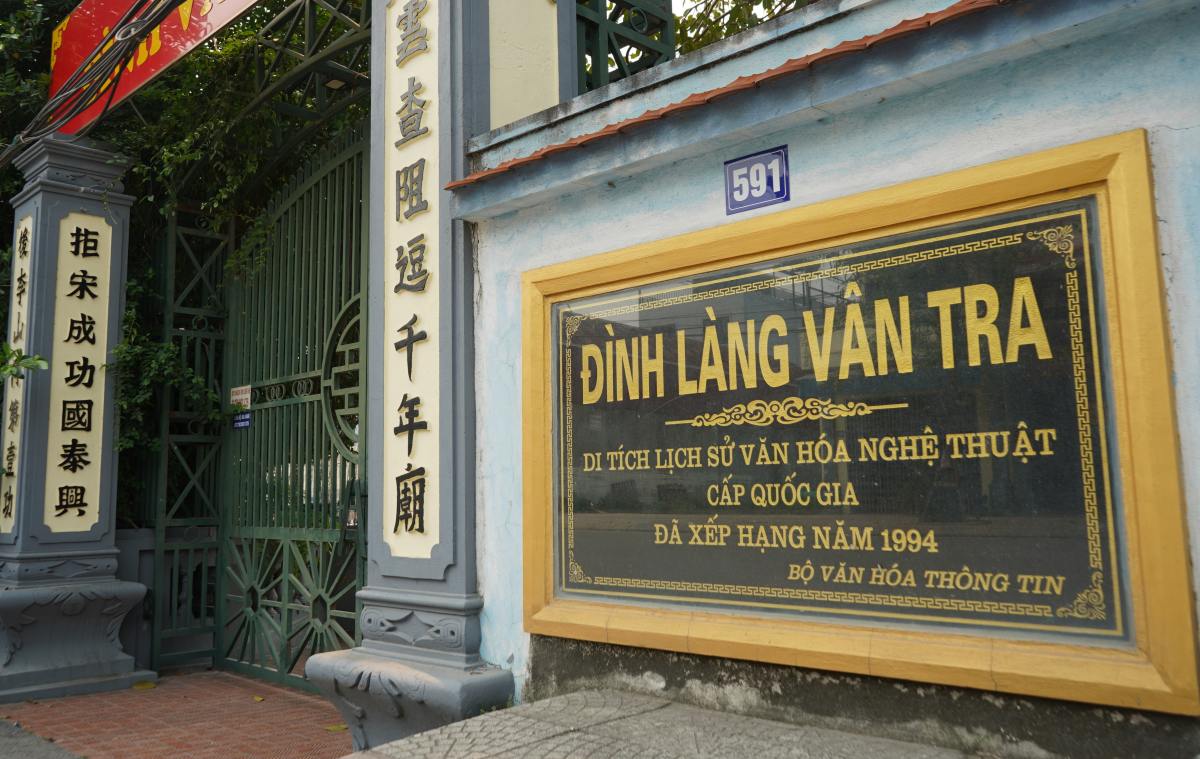
Van Tra communal house (An Hai ward, Hai Phong) is an ancient architectural art work, with a relatively massive scale and quite intact and solidly preserved. The communal house worships Dao Loi Cong - a martyr general of the Ly Dynasty (1010-1226).
According to information from the City General Science Library, Dao Loi Cong (Dao Van Loi) was born in Van Tra, An Duong district, now An Hai ward, Hai Phong. According to the ancestry of Loi Cong than from Van Tra Temple, Dao Van Loi is the son of Mr. Dao Cam Moc, founder of the Later Ly Dynasty (1010-1225), from the mountainous region of Kim Nhan, Chau Hoan. His mother is Do Thi Uyen, daughter of Mr. Do Huong, a famous family in Van Tra.
According to the History of the Hai Phong Party Committee, at the age of 24, Dao Loi Cong passed the first exam, was promoted to the position of Academician of the Academy, and gradually promoted to the position of Phu Uy Son Hoa, Lang Giang.
After that, he was summoned to the court by King Ly Thai To, appointed as Do dai lang.
In the year Quy Suu, the 4th year of Thuan Thien (1013), Dao Loi Cong contributed to suppressing the Man invaders; continuing to support the three dynasties of Ly kings to pacify the Chiem army, pacifying Nung Tri Cao as a traitor.
When the Song invaders invaded, obeying King Ly Thanh Tong's orders, he again sent troops to suppress them.
When he burned, King Ly Thanh Tong bestowed the title "Lôi Công thượng đẳng thần" and ordered the construction of a temple to worship him at the place where he burned.
The people of Van Tra village remembered his merits and also repaired his house, built a spirit name to worship, passed down from generation to generation.
Thus, Van Tra communal house worships the tutelary god as a hero who has contributed to the country and the people - from opening land and establishing villages to driving away foreign invaders and reducing disasters for the people.
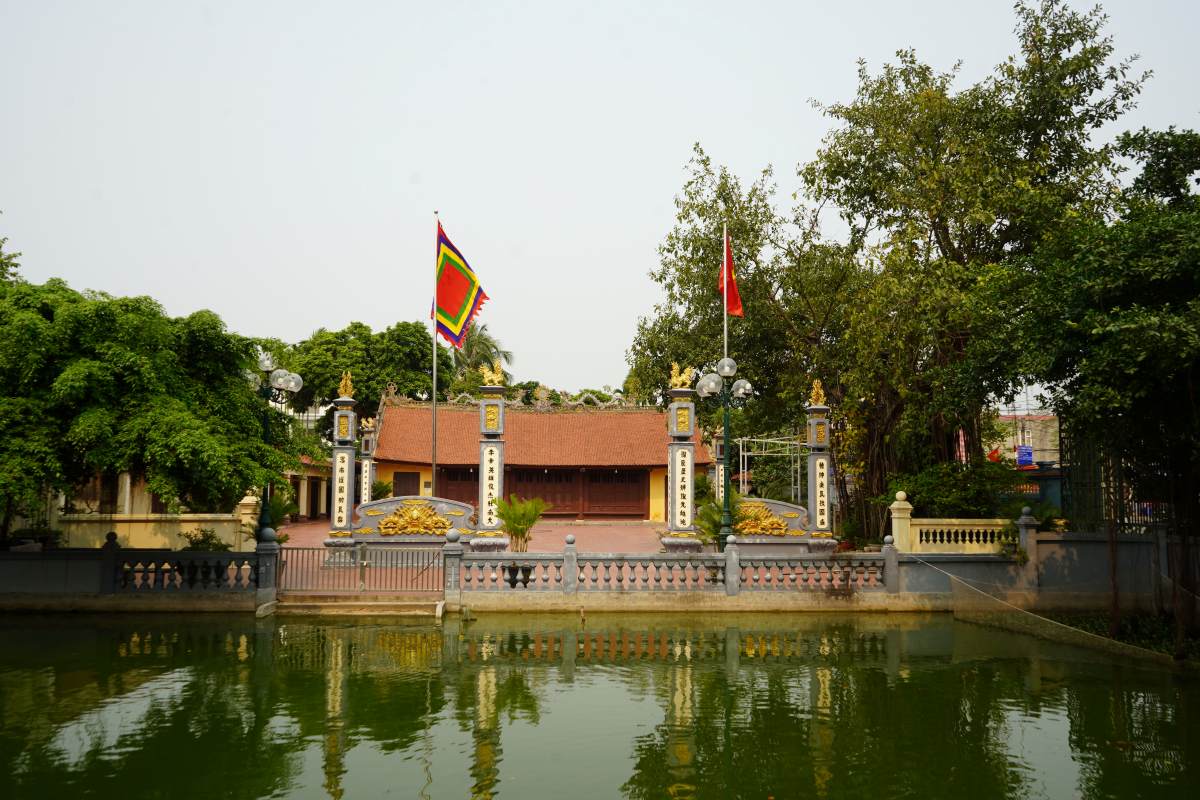
Van Tra communal house has a Tam-shaped structure, facing Northeast.
Through the rows of Han characters embossed at the beginning of the front hall of the communal house and the memory of the elders in the village, Van Tra communal house was built in the nineth year of Bao Dai (1934) along with the time of dismantling the small communal house to take materials to build a pagoda.
The communal house is built on a "privileged" land with the "snake-chasing snake" shape. The communal house mound is located in the Southeast of Van Tra village, in the shape of a snake's head, and the snake's tail is the area of Van Tra Pagoda today.
The main architecture consists of 3 buildings, arranged in the style of the letter Tam, but the number of compartments each building has different architectures. The buildings have roofs placed close together to create depth for the interior, located in a continuous position convenient for worship and arrangement of objects.
The communal house is one of the ancient architectural works in Hai Phong, proving the heroic tradition of resisting foreign invaders in the Ly - Tran period in our country in general and in Hai Phong in particular.
At the relic site, many valuable artifacts, dating from the 17th century onwards, are still preserved and maintained, such as the Bat Cong palanquin made of golden heart wood, lacquered, and brightly gold-plated, dating from the late 19th century; the 0.9 m high and 0.32m wide altar with the ancestral title and aerial designation of the historical figure worshiped: "Lôi Công Vân Y linh, Phù quốc trợ thuận, phả hóa hoàng loan huệ vận an dân, tế thế tước hồng ân đại vương"; the set of bát bửu, chấp kích thờ made of wood, lacquered and gold-plated, along with 3 royal decrees of the Nguyen Dynasty. In 1994, Van Tra communal house - pagoda was recognized as a national historical and artistic relic.