
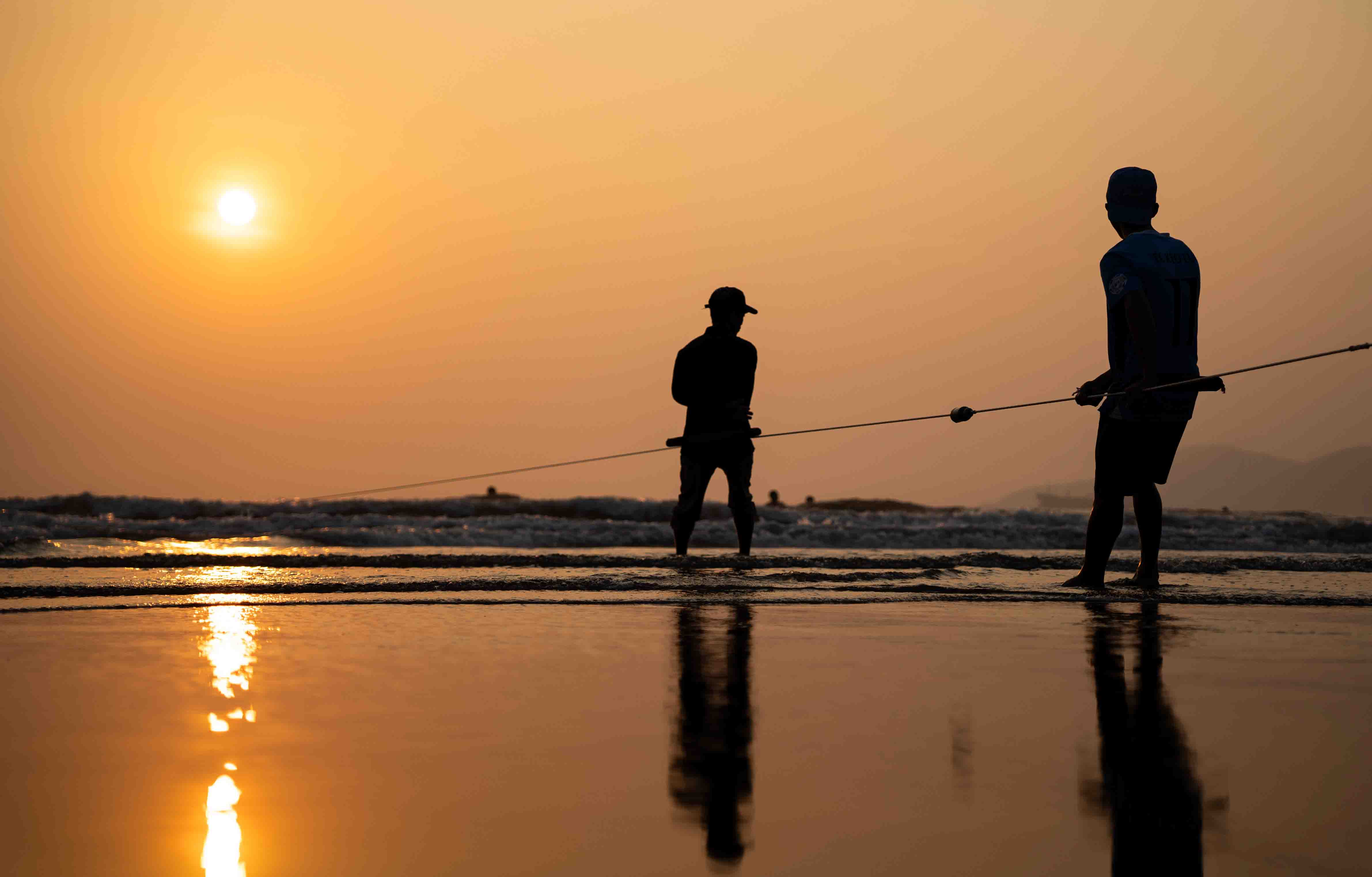
As soon as the sun rises from the sea, Cua Lo beach is bustling with the calls of fishermen practicing trawling.
In the golden dawn of the water, shadows of people pulling nets stretched out on the wet sand creating a vibrant labor scene.
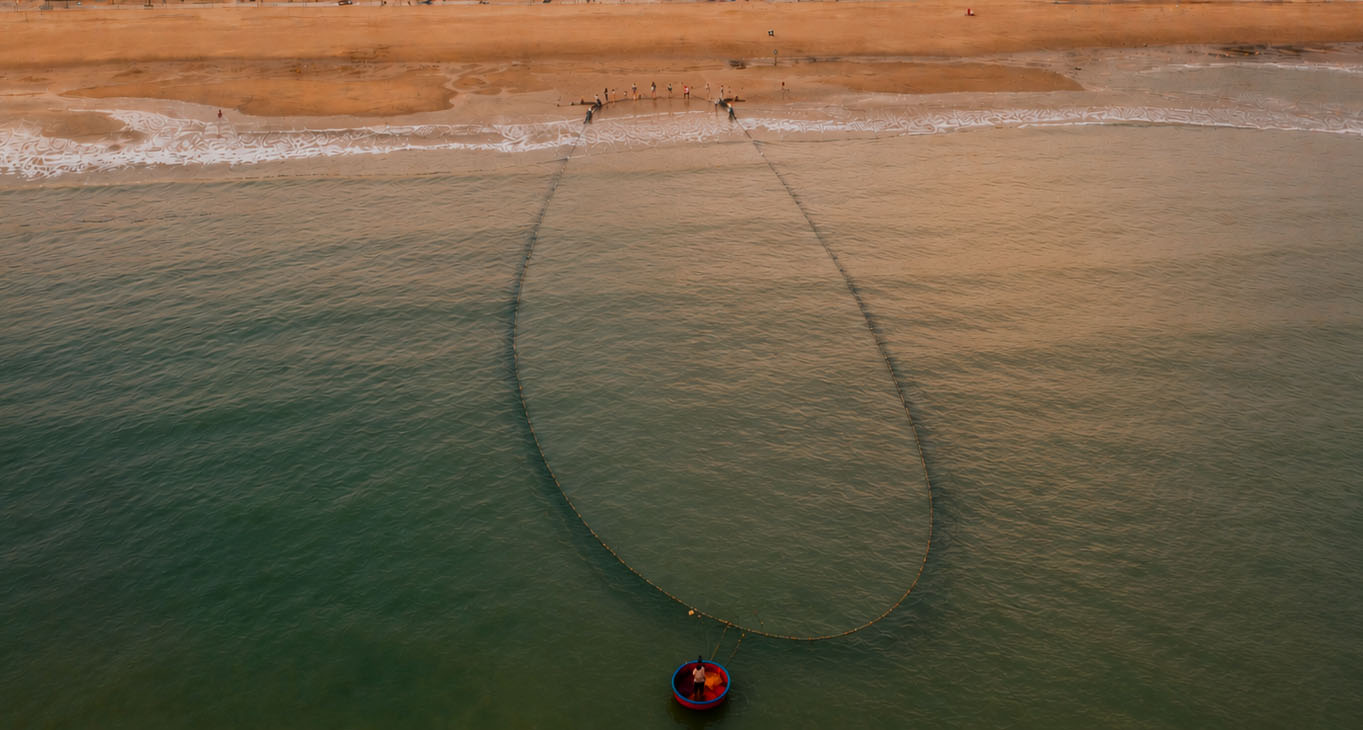
Rùng net is a large net, made from large, thick ropes, with a length of up to about 800m.
To prepare for a batch of nets, fishermen will first fix one end of the net to the shore with wooden stakes. Then, they use basket boats to carry the remaining end of the net to sea about 500-600m from the shore.
When they reach the marked location, the fishermen begin to cast nets. The basket boat moves in an arc on the water surface, forming a closed net in the middle of the sea. Looking from above, the net is like a soft stroke embracing the coastal water.
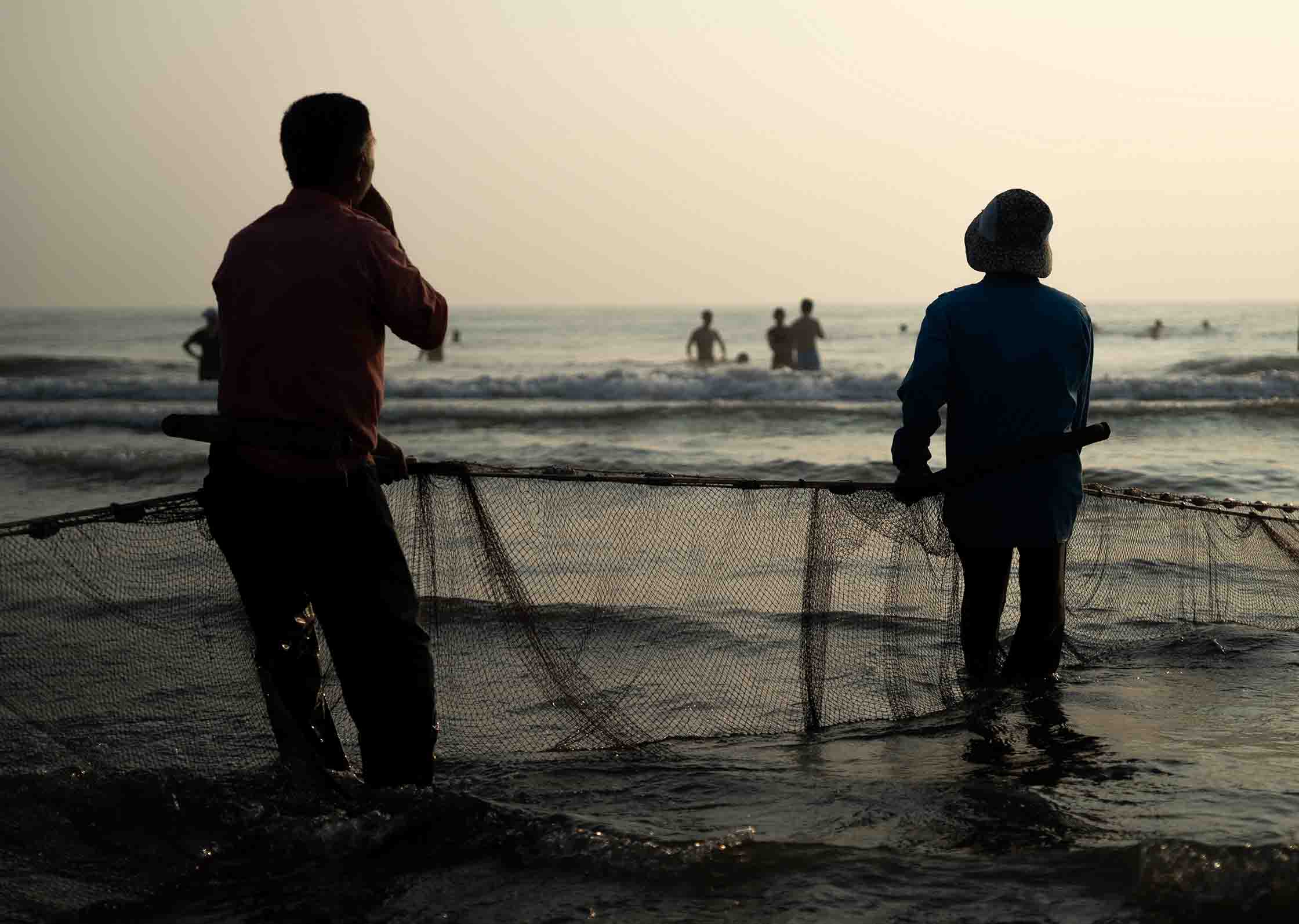
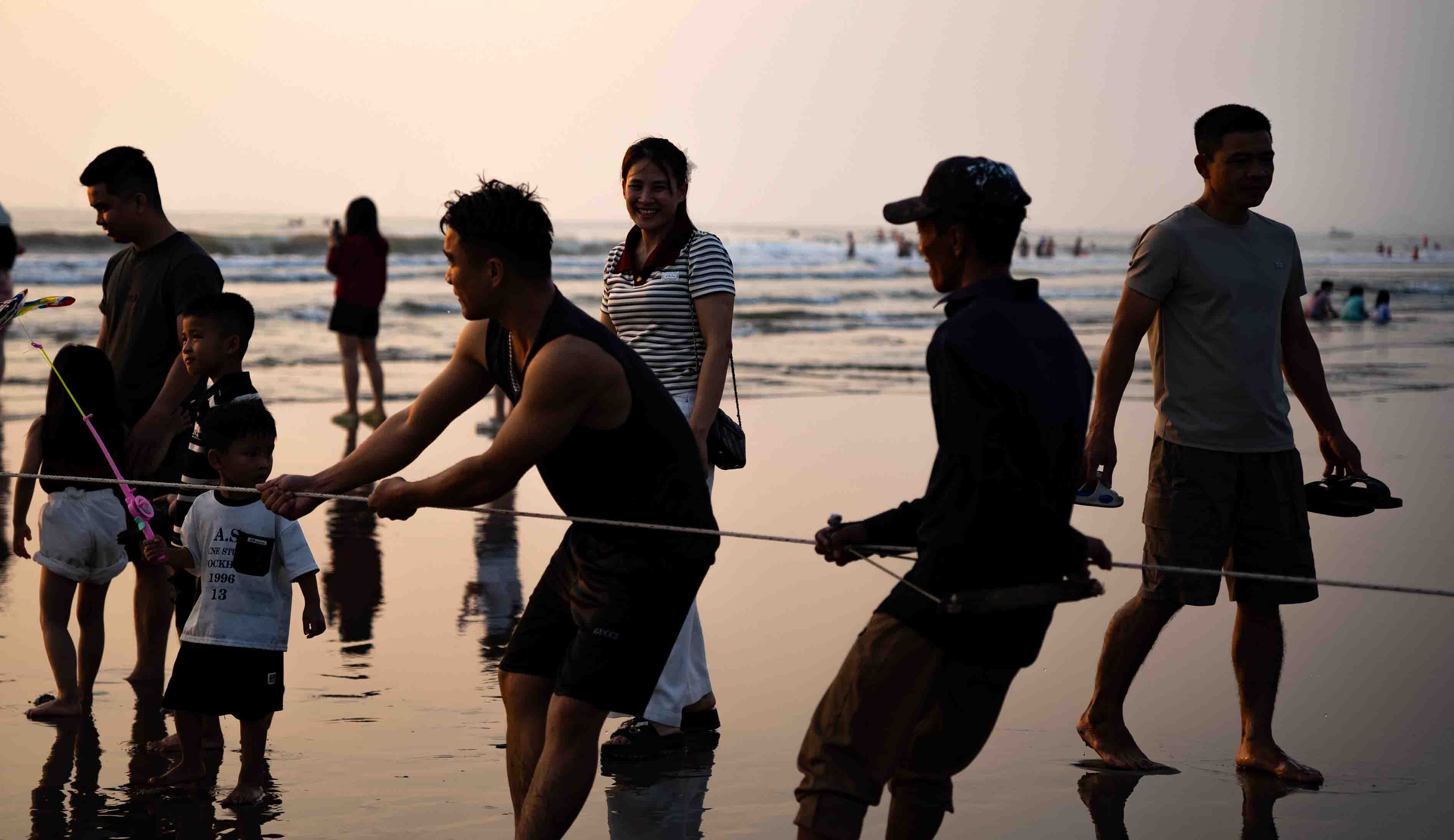
When the net is completely dropped into the sea, the remaining end of the rope is brought ashore for everyone to pull together.
Dozens of people divided into two groups standing along the edge of the waves, their hands tightly holding the ropes, pulling and stepping back steadily. Therefore, fishermen here often jokingly call this profession the profession of "going backwards" at sea.
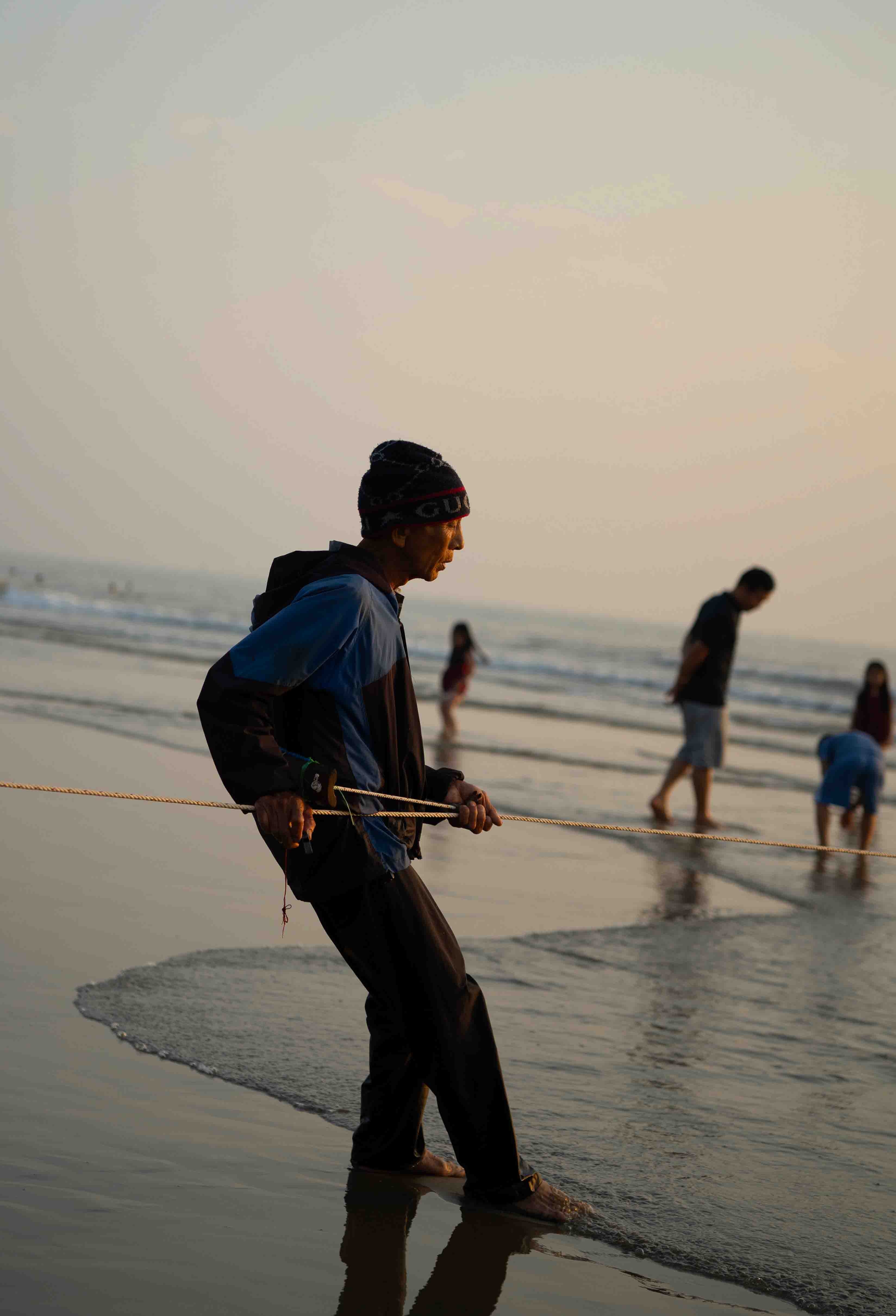
Mr. Nguyen Van Binh, a fisherman with more than 20 years of experience in trawling, said that each batch of nets usually takes more than 2 hours, depending on the water level and fishing season.
“Some days we have a big catch, pulling up a quintal of fish, but also some days only a few small kilograms of fish, not enough effort for dozens of people,” Mr. Binh shared.
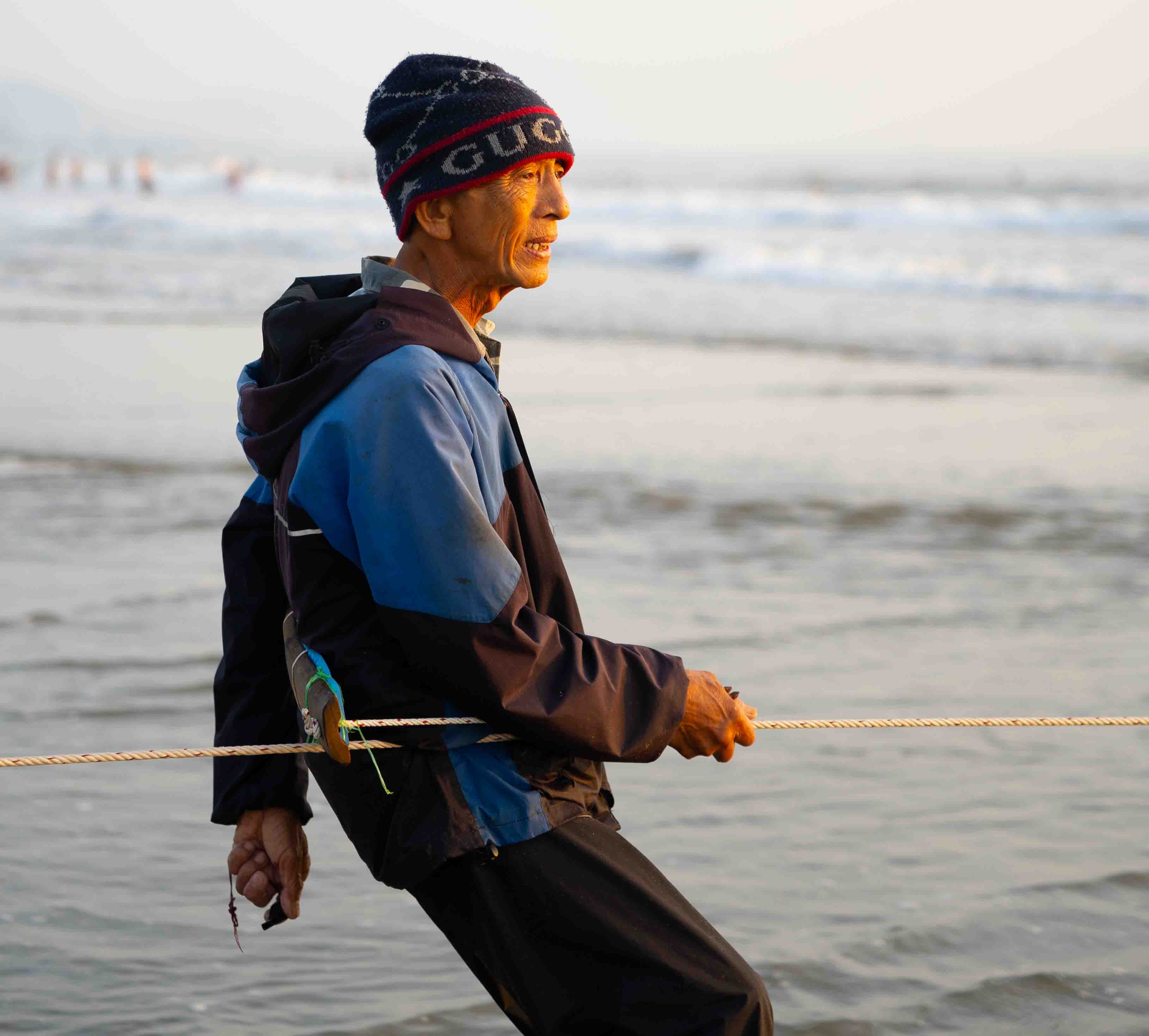
According to local fishermen, the technique of fishing with "rung" nets requires close coordination of many people.
Each person has their own tasks, from preparing nets, rowing boats to cast nets, holding ropes to pulling and harvesting fish.
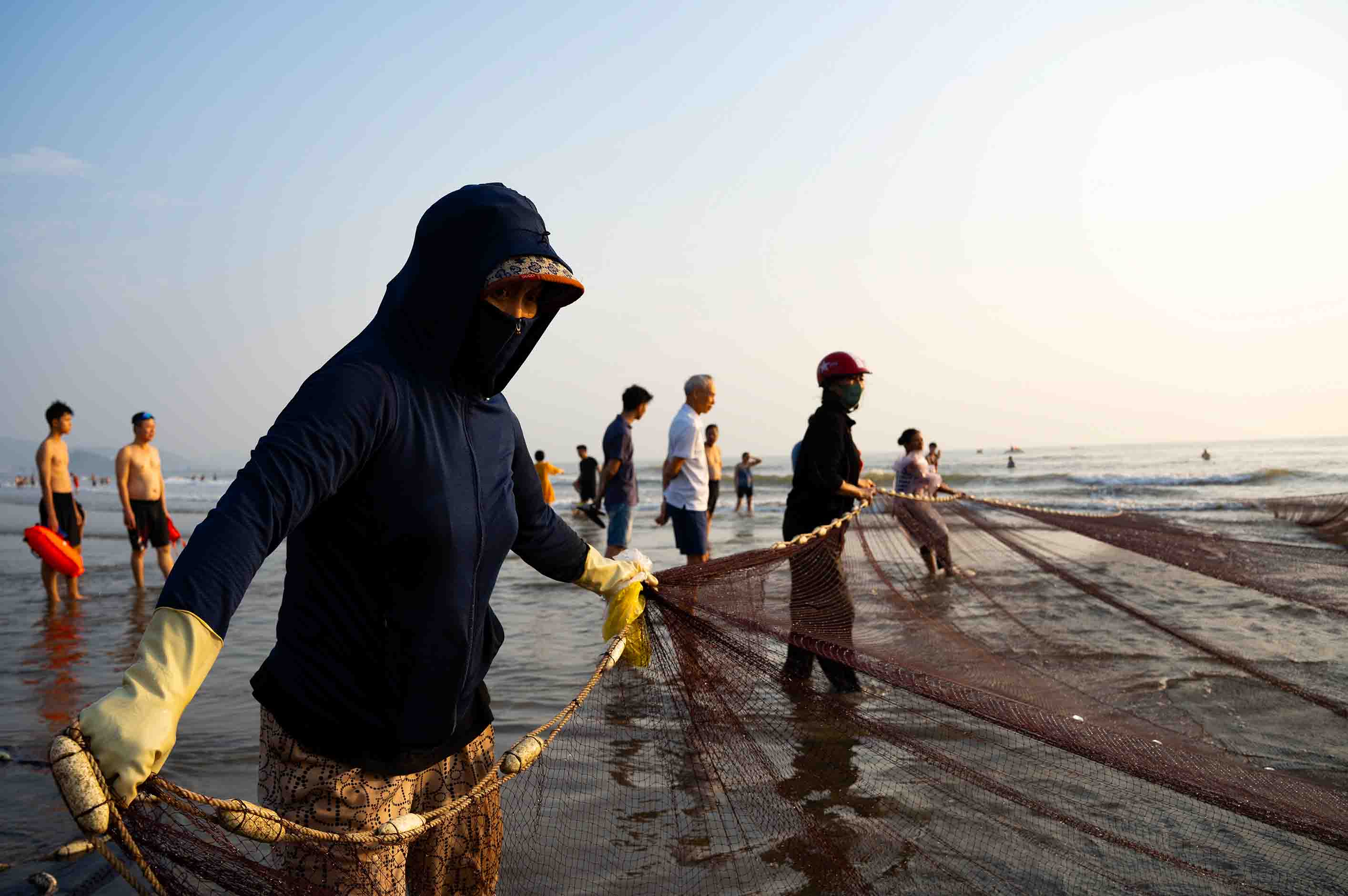
The spirit of solidarity and mutual support is the decisive factor for the success of each net.
When the two ends of the net gradually closed, hundreds of small fish, shrimp, and squid sparkled under the early morning sun.
Interestingly, seafood here is usually sold in bundles, baskets or trays.
There are small fish for only a few tens of thousands of dong, but there are also delicious fish that are priced at hundreds of thousands of dong right at the beach.
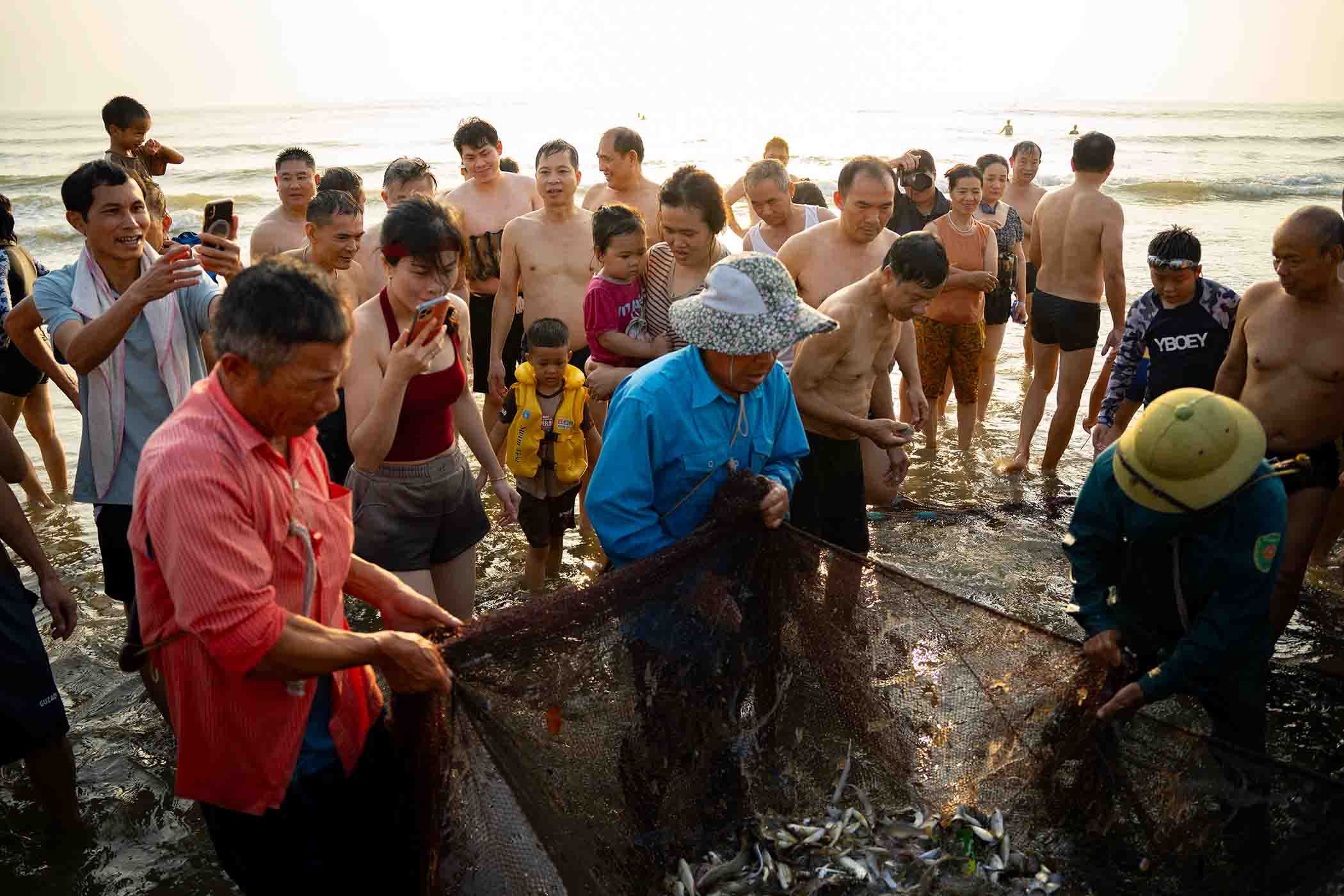
Not only bringing income to fishermen, the net pulling profession also cultivates village and neighborhood affection, connecting coastal communities.
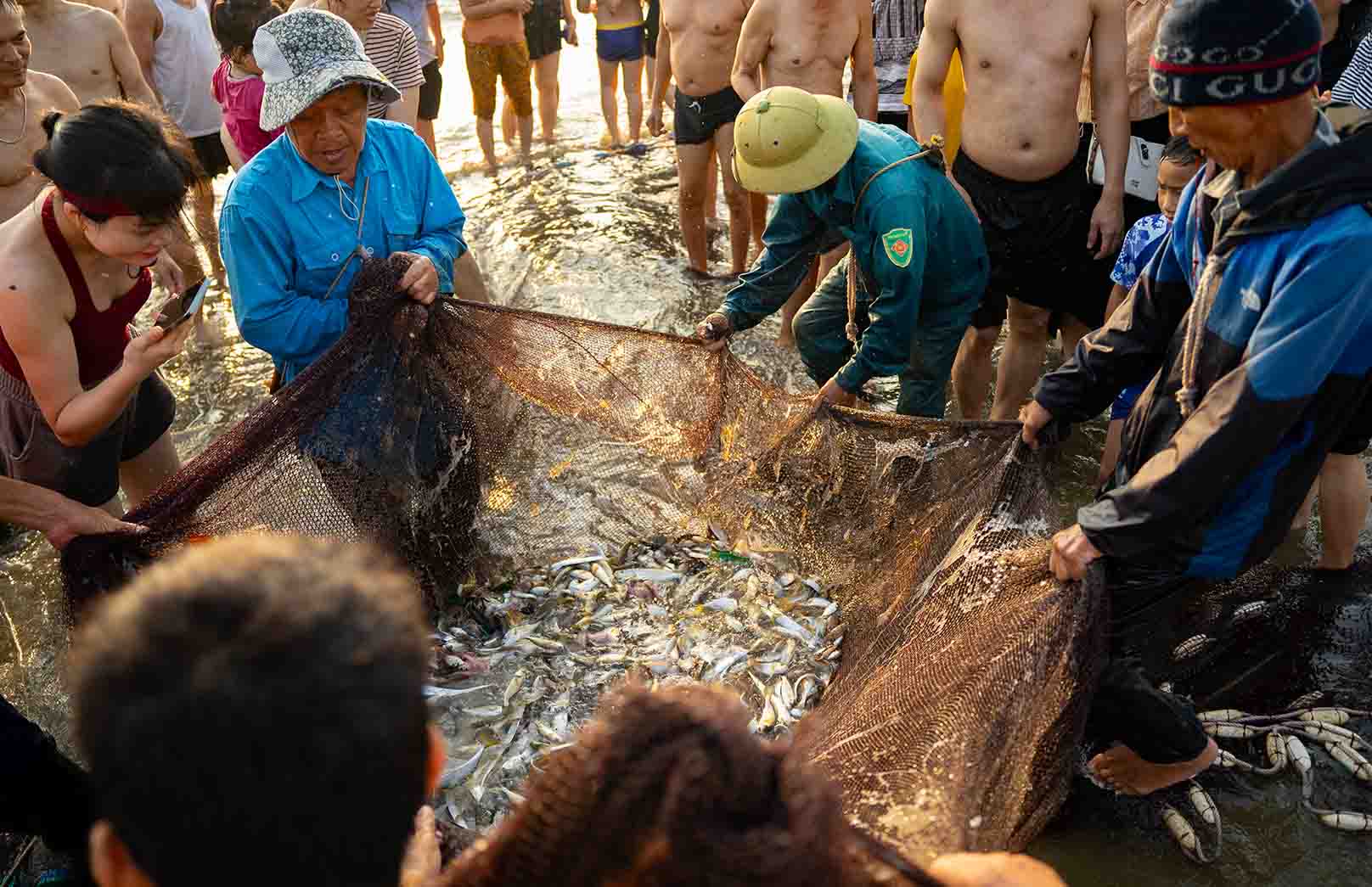
In the vast space of the sea and sky, backward steps on the sand, the sound of net pulling and the image of people gathering around the fish have created a very unique beauty of labor in Cua Lo sea area.
Not only is it a livelihood, the net pulling profession has also become an interesting experience, attracting tourists every time they come to Nghe An beach.


