
3 famous generals of the Hung Due Vuong era
Tri Yeu communal house worships 3 tutelary gods, Chang Rong Dai Vuong, Cao Son Dai Vuong and Quy Minh Dai Vuong. According to legends and genealogy, at Lang Xuong Cave, Gia Hung district, there is a Nguyen family, originally descendant of a tycoon named Cong Linh, whose wife is Cao Thi Nham. One day, Mr. Linh went to Tam Dao mountain to pick medicine, leaning on a stone table to rest for lunch. In his dream, he saw two divine generals, one wearing a tiger's hat, wearing a red brocade robe, riding a pink horse claiming to be Cao Son Than Vuong. One wearing a seven-season hat, wearing a blue brocade robe, riding a white horse, claiming to be Quy Minh Than Vuong.
Soon after, his wife gave birth to 2 handsome, simple, and unusual sons. One person had a red birthmark on his forehead in the shape of a square seal, so he was named Cao Son. The other person had hands longer than his knee, with seven moles on his face, resonating like bells, and moles arranged on both shoulders into the words "Hien Minh", so he was named Quy Minh.
Both grew up quickly and became healthy, eager to hunt and hunt, and diligently practiced martial arts. At the age of 12, his parents passed away, Tan Vien Son Thanh brought the two brothers Cao Son and Quy Minh to live together. In about a few years of purity, the three brothers respected each other like siblings. Tan Vien was given a magic bamboo stick by Thai Bach Tinh Quan, and was given a book of wishes by Long Vuong, capable of dispelling dangers, saving suffering, saving people, and helping people. Saint Tan Vien divided Cao Son and Quy Minh as the left and right shoulder gods, both following the mountainous territory to govern.
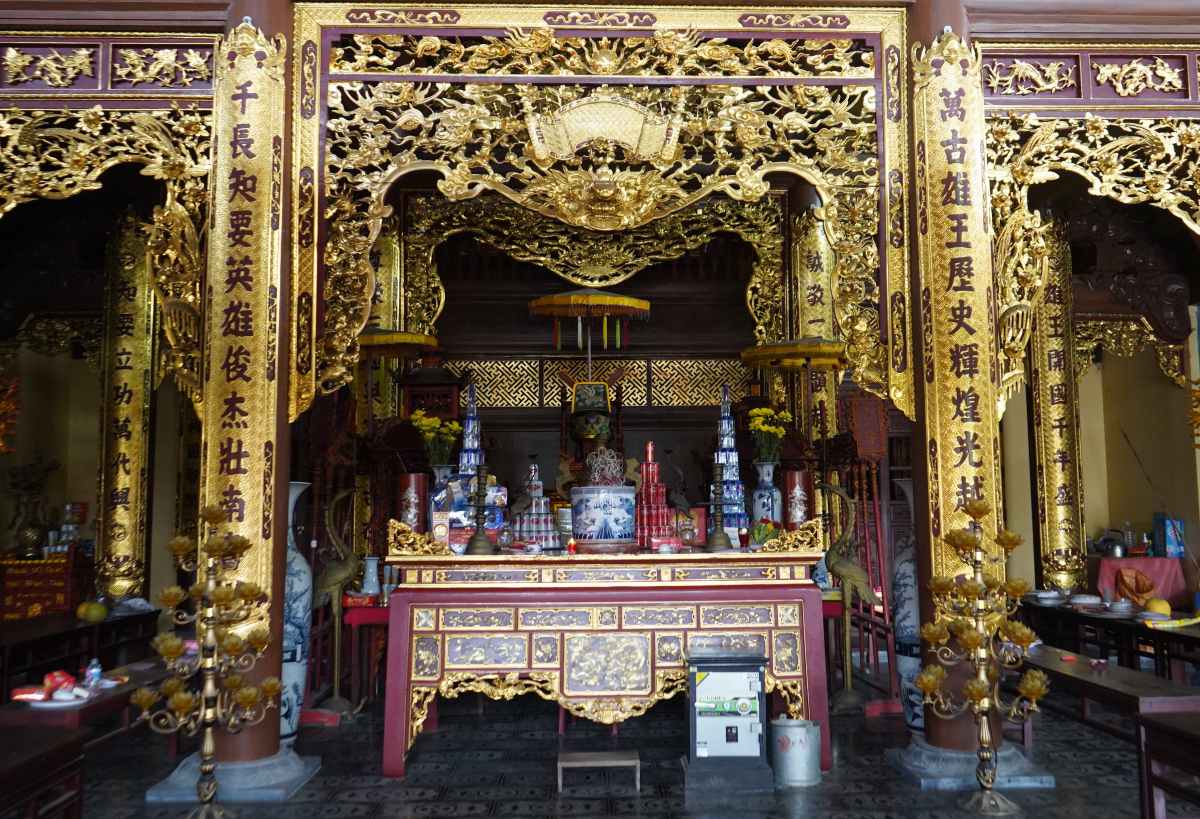
When Thuc Phan invaded, King Hung Due Vuong appointed Tan Vien Son Thanh as the Grand Marshal to command the five army lines, appointed Cao Son as Ta do dai Dai phu, and Quy Minh as Huu do dai Dai phu. During the years of peace in the world, the two men went to inspect many places to pacify the people.
When they arrived in Dong Trang region in Tri Yeu, the two men met Chang Rong, the son of Mr. Tran Lan and Mrs. Nguyen Thi Mieu. When he was born, Chang Rong had a face like a dragon's face, eyes as bright as a tiger's eyes, from a young age he had a heroic spirit, ingenuity, and superior strength. Heroic people around the region came to ask to be under his command up to hundreds of people. His gang often went to collect wealthy people's property to help the poor. Knowing Chang Rong's background, Mr. Cao Son and Mr. Quy Minh immediately admitted him and made Chang Rong a deputy general.
Chang Rong returned to Tri Yeu's hometown to recruit troops, build a defense system, and then contributed ideas to help Cao Son and Quy Minh defeat the enemy. Due to their glorious achievements, Cao Son and Quy Minh were appointed by King Hung as Head of the State of Restriction and Left Chancellor of the State of Restriction. Chang Rong was appointed Binh Nhung Hau. Trang Tri Yeu was appointed as the land of Ho nhi, exempted from taxes and labor taxes. Chang Rong spent money to buy more fields and ponds and gardens to divide equally among the people, and taught the people to grow cereals, raise silkworms, and weave silk.
During the Nguyen Dynasty, the king appointed Mr. Cao Son and Quy Minh as Thuong Dang Than and many communes around the area worshiped them. King Khai Dinh in the 9th year (1924), appointed Chang Rong as "Dragon Dragon Than, tôn Than, Thuong Dang Than".
Containing historical values from the Hung Kings era
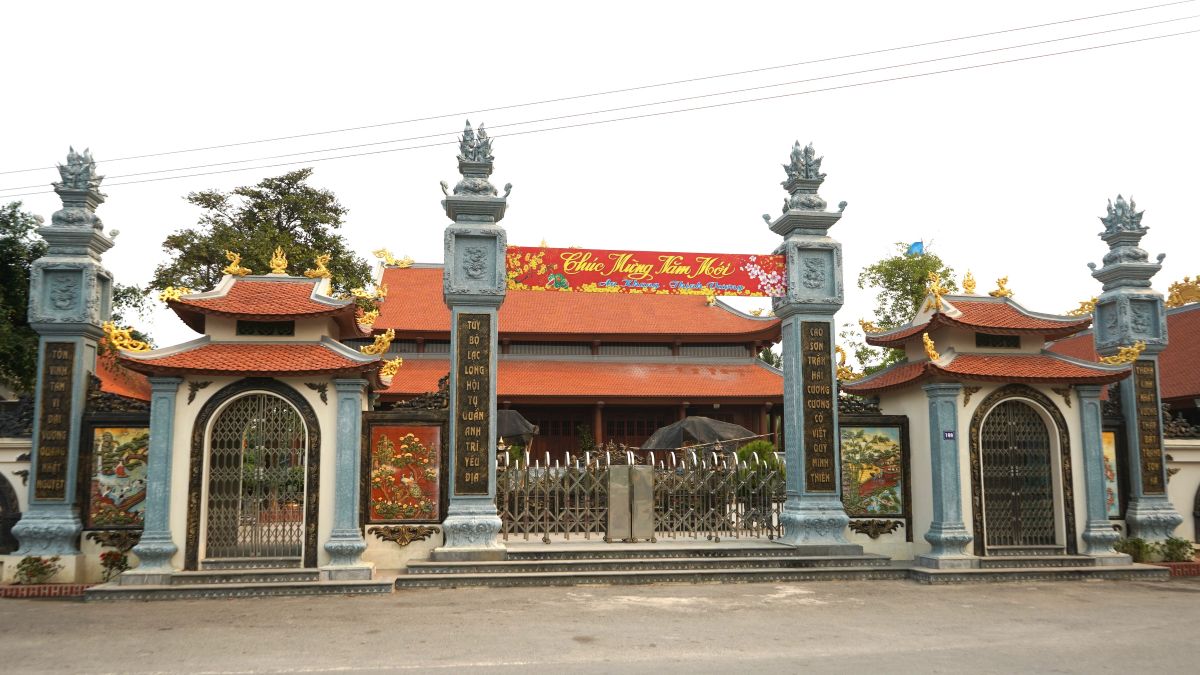
According to the elders in the village, Tri Yeu communal house was started in the Later Le Dynasty in the 17th century, the communal house is located on the southern hill of the village. In front of the communal house, there is the Lach Tray river, flowing day and night towards the sea, far and wide reflecting on the Tuong Son mountain range, facing Southeast, the Thien Van mountain range. During the Nguyen Dynasty, the communal house was repaired many times, the last restoration, on the tiles and curtains of the communal house, the absolute date was recorded as 1894 (Giap Ngo year).
Tri Yeu communal house was previously made of traditional materials, with the architecture of the front and rear facade, the 5-compartment, 2-compartment Great Hall, the three-compartment Dinh-shaped building, the three-compartment Central Hall, and the three-compartment Imperial Palace. In 1968, due to the conditions and historical circumstances at that time, Tri Yeu communal house was demolished, leaving only the rear palace to use materials for some local projects. In 1983, based on the rear palace, local people built an additional 5-compartment front hall. In 2021, with the public sponsor's large financial assistance, Tri Yeu communal house was rebuilt with a large architectural scale.
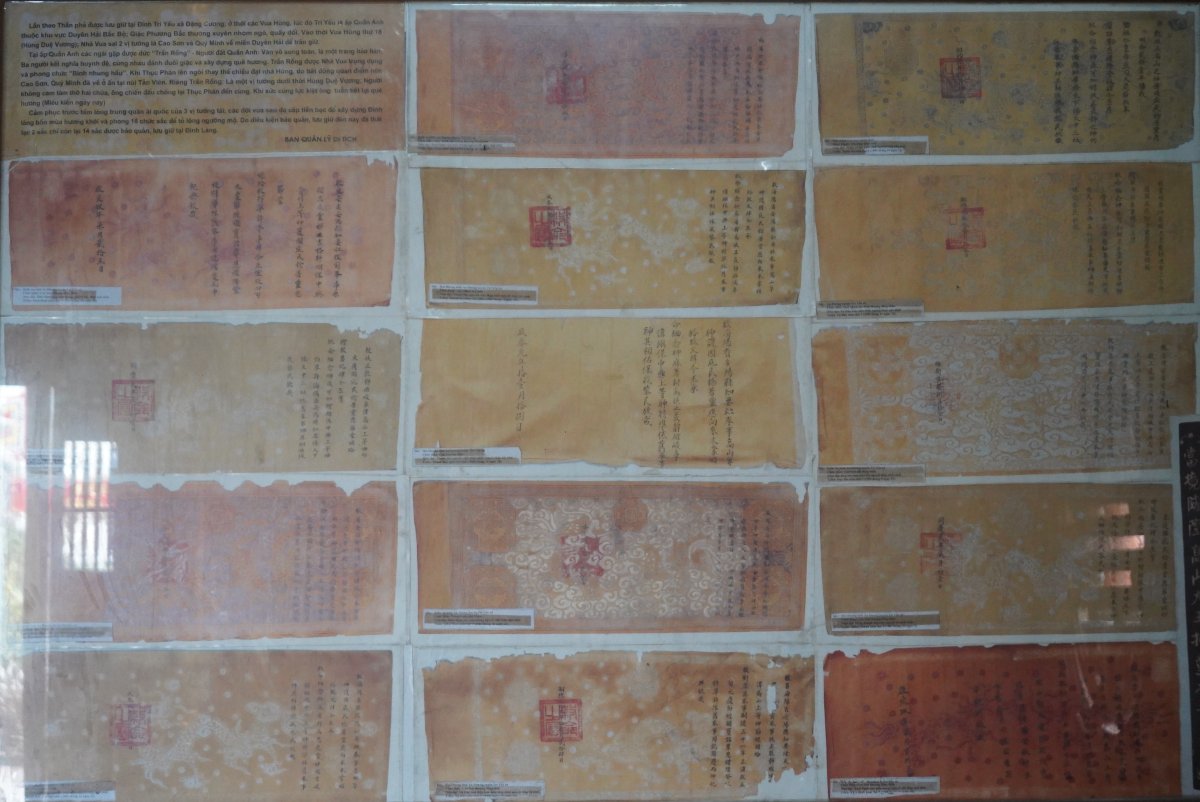
Through many ups and downs of history, Tri Yeu communal house has also preserved a number of valuable antiques in the history of fine arts such as lacquered bat cong palanquins, silver-glazed palanquins, gold-plated palanquins, dating from the late 19th century; Long dinh made of golden heart wood, dating from the late 19th century; incense burners made in the 18th century; shrines, thrones, ancestral tablets, a complete set of worship made of precious wood created in the late 19th century. Tri Yeu communal house also preserved quite a few royal decrees of the Nguyen Dynasty for the tutelary gods. In the courtyard of the communal house, there is still a stele made of solid blue stone, the stele was erected in the 10th year of Duy Tan (1916).
Mr. Do Dac Hai, Management Board of Tri Yeu communal house relic, said that every year, the Tri Yeu communal house festival is held on February 8th of the lunar calendar. During the festival, the procession of sacred dragons is solemn and joyful, with ceremonial sceptres, guards, umbrellas, flags and fans carrying the saint away very enthusiastically. Villagers organize ceremonies at the temple and then bring the sacred incense bowl to the communal house to open the festival.
In bumper years, with favorable weather, the village festival lasts until the full moon of February. Especially in the village festival, there is a fabric weaving contest, reminding of the merits of Chang Rong who taught Tri Yeu villagers to plow and weave fabric from ancient times. In addition to the above-mentioned village festival, during the year, people also organize ceremonies such as: April 5th, the birthday of Duc Chang Rong; December 6th, the sacred day; August 15th, the new rice offering ceremony...
With historical and cultural value, Tri Yeu communal house was ranked as a national historical relic in 1991. To date, the communal house is one of the few relics containing historical values from the Hung Kings era, marking the transitional period of history from the Van Lang state to the Au Lac state.


