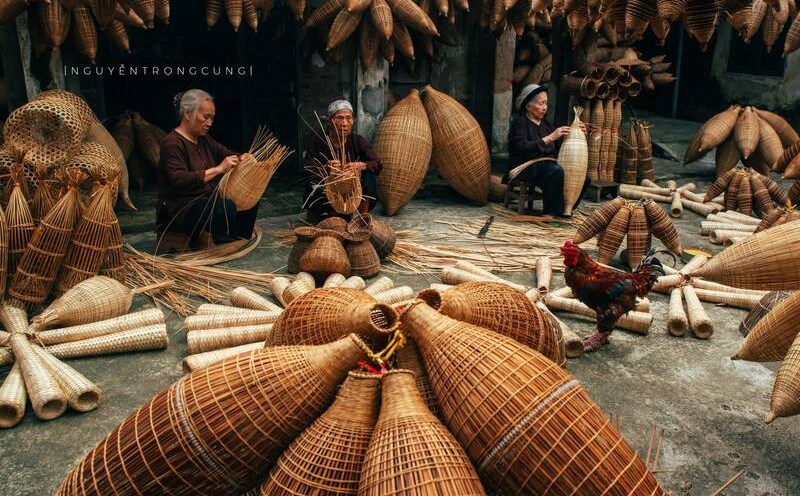
Traditional craft villages have long been considered a place to crystallize the most persistent cultural values of each land. There, each handicraft product not only has a function but also contains historical periods, customs and the rhythm of life of an entire community.
However, in the modern flow, many craft villages are struggling to find a place when the market is narrowing, income is unstable and young people are gradually leaving their old jobs.
Instead of choosing to break old things to follow trends, many young people are looking to enter the craft village by listening, respecting and being creative in moderation. The return of young people with creative thinking and a sense of respect for those original values is opening a new direction, helping craft villages not only survive but also find a foothold in contemporary life.
Maintaining the "soul" of the bell village hat
Chuong village (Thanh Oai, Hanoi) has long been famous for its traditional conical hat making profession, and once sang in the song: "Chang hat, silk crab, Do village sports carried".
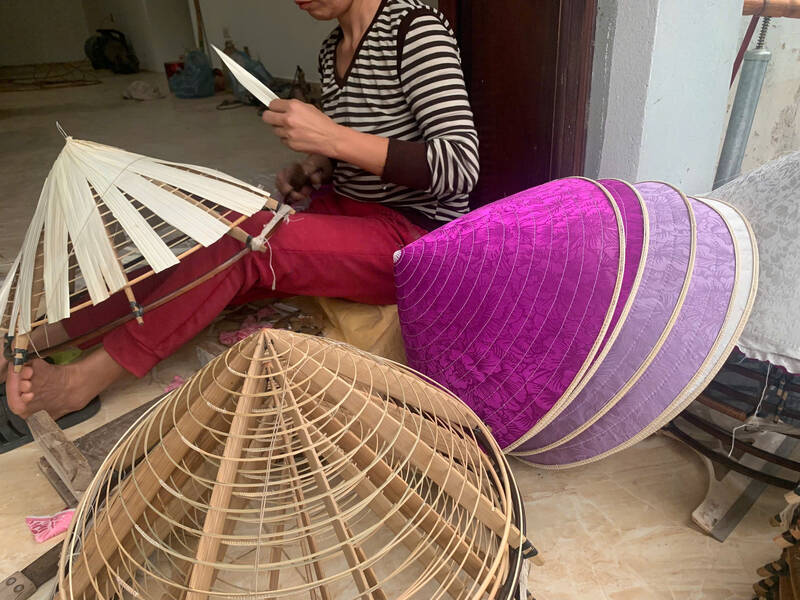
Each hat is the crystallization of about 10 meticulous manual stages, from processing leaves, exposing them to the sun, exposing them to the hat, cages, and cracks. However, in modern life, conical hats are gradually becoming an image associated with the previous generation, rarely appearing in the daily lives of young people.
Starting out as students majoring in Tourism and Travel Services Management, Tran Thi Thuy Linh and Mai Thi Khanh Huyen (both born in 2002, from Ninh Binh - formerly Nam Dinh) had the opportunity to interact with many craft villages and local cultural values during their studies. It was those experiences that made the two young girls soon realize the dangers of traditional handicraft products, including conical hats.
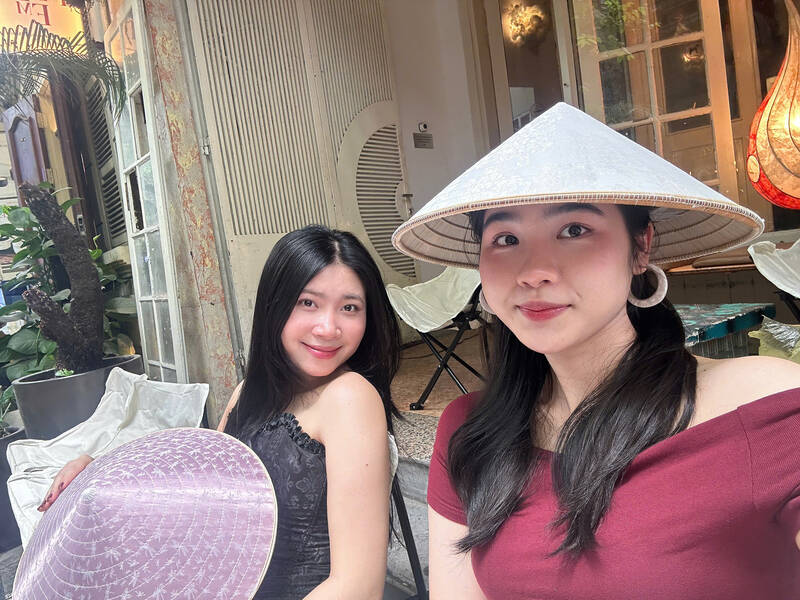
In early 2025, Linh and Huyen decided to spend time and effort to implement the Non Thau project, with the desire to renew the conical hat of the bell village in particular and the conical hat of Vietnam in general without losing the "soul" of the original manual. For them, creativity does not mean dismantling, but is an adjustment to make the product more suitable for the aesthetics and needs of the younger generation.
Traditional conical hats that were previously only swept to create shine and color, have now been supplemented with 3D hidden silk lining with neutral, light color. Some models are printed with beige sticks, hung with bows or hand-painted in modern style. Despite the change in form, the group still retains the traditional hat weaving technique of the villagers, considering it an irreplaceable foundation.
After a long journey of working with skilled workers, Thuy Linh learned a valuable lesson: The biggest thing we learned from the villagers was meticulousness and absolute concentration. Because to tie a beautiful hat, each needle must be really tactful and patient.
We also learn how to preserve and promote traditional conical hats, while knowing how to adjust them to suit today's youth. Although we have included many new ideas in the product, we still respect the traditional techniques of the ladies and gentlemen.
From a handmade hat to a community livelihood
From a project started with personal love, Non Thau has gradually created a stable output for craftsmen who have been attached to conical hats all their lives. If in the past, handmade hats were only made by hand only when they were free, now the workers have knit the hats regularly every month, with the quantity reaching hundreds of them.
This is also a good sign to help maintain the pace of the profession and the love of family work. According to Thuy Linh, it is estimated that on average, tailors will earn from 3 to 3.5 million VND per month, with an estimated income per day of about 80,000 to 120,000 VND.
The young girl shared honestly: "A skilled worker who focuses on working 8-10 hours a day can only complete 1-2 high-quality hats. Most of the teachers weave hats at home, interspersed with family work, so productivity depends a lot on health and free time. Having regular orders not only brings them a more stable source of income, but also a spiritual joy when traditional crafts are still respected by society.
In addition to the domestic market, conical hats from bell village are gradually reaching more customers, especially young people and foreign visitors. Currently, most of the products are known through Vietnamese customers ordering and sending them to international friends as gifts bearing the strong mark of Vietnamese culture. This is also the pride of the group when the conical hat was chosen to represent the image of the homeland.
Recently, on the occasion of the 80th anniversary of the August Revolution and the National Day of the Socialist Republic of Vietnam (A80), Non Thau has produced about 50-60 hats for sale on the market, including many custom-made models with patriotism messages.

Each one costs from 350,000 - 650,000 VND, depending on the hand-painted patterns. In particular, there are hat models that are designed and made only once according to the specific requirements of each tourist.
The biggest challenge is how to express patriotism in a subtle way, not showing off but still being able to convey emotions.
In the coming time, we plan to connect with travel and travel companies to include conical hats in Welcome to Vietnam gifts for international tourists, and participate in cultural exchange programs to spread the image of conical hats from Vietnam in a closer way, Thuy Linh confided.
In an increasingly competitive market, Linh and Huyen see the attention for conical hats as a positive signal, showing that traditional values still have a foothold if approached with appropriate thinking.
There, each hat is not only a handmade product, but also a bridge between the past and the present, between the craft village and contemporary life - where young people contribute to continuing the story of Vietnamese conical hats with their own respect and creativity.
According to the Vietnam Craft Village Association, in recent years, craft villages across the country have had many positive changes, developing according to diverse trends, notably the model of combining traditional production and craft village tourism. Many craft villages and craft streets are gradually becoming a space representing cultural identity and tourism image, while creating connections to promote development.
Meanwhile, the Asian Tourism Development Institute (ATI) assessed that linking tourism with craft villages not only opens up new sources of livelihood for local people but also contributes to preserving and spreading traditional cultural values.
To develop craft village tourism sustainably, it is necessary to take the community as the center, while focusing on preserving the cultural values and typical landscapes of each locality, ensuring the proactive participation of the local community in the process of building and managing tourism products.
With about 5,400 craft villages, including nearly 2,000 traditional craft villages, in recent times, craft village tourism in Vietnam has been gradually affirming its role in cultural preservation and promoting local economic development. Many typical destinations such as Bat Trang pottery village (Hanoi), Van Phuc silk village (Ha Dong, Hanoi), Dong Ho painting village (Thuan Thanh, Bac Ninh) ... not only preserve long-standing artistic values but also attract millions of visitors each year through unique experiential activities.