
Located in Jiangxi province (China), Canh Duc Tran has long been famous as the "ceramic capital" of the world. What makes Canh Duc Tran fascinate tourists today is not only the ancient pottery kilns or royal traces, but also the rhythm of heritage life that is still flowing strongly in every street corner.
Living heritage space in the heart of the city
The greatest tourist attraction of Canh Duc Tran lies in the spectacular transformation of industrial heritages into creative spaces. Typically, the Dao Khe Xuyen art area - formerly a state-owned pottery factory, is now renovated into a bustling cultural complex with 22 historical pottery workshops preserved intact.
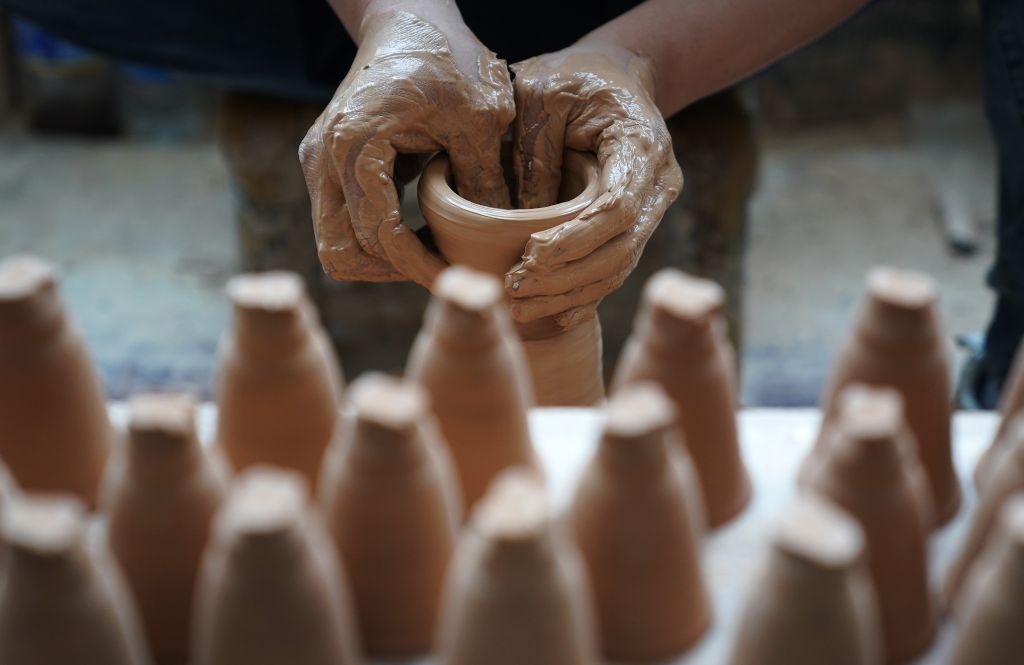
Here, visitors can witness master artisans practicing traditional handmade pottery techniques, participate in pottery rotation classes or immerse themselves in the bustling art night market.
This place also formed the "Jingpiao" community - gathering thousands of young artists and about 5,000 international experts and designers to settle and create. The intersection between traditional skills and modern artistic thinking creates an open atmosphere, making the city a rendezvous for global handicraft enthusiasts.
From broken pottery to masterpiece
Tourists coming to Canh Duc Tran are also impressed by the culture of "reviving broken pottery" deeply ingrained in urban life. Historically, broken pottery and broken kiln bricks were once used by people to encroach on rivers, raise roadbeds and build house walls. Under the streets of Canh Duc Tran is a foam foundation made from pottery waste that helps to drain rainwater effectively, protecting the city from the risk of flooding.
Inheriting that tradition, young brands and designers in the locality are bringing the concept of circular economy into tourism and life with highly aesthetic recycled ceramic products.
Many brands have collected discarded ceramics, grinded them finely, refined them, and applied 3D sand mold printing technology to create flower vases, food sets, and high-end decorative works with unique beauty. Even recycled ceramics are crafted into waterproof bricks to serve green architectural projects and urban art projects.
The harmony between historical depth, vibrant creative space and sustainable green lifestyle is the solution to the endless attraction of Canh Duc Tran, turning the "ceramic capital" into an unmissable destination on the international cultural tourism map.
Previously, on July 25, Canh Duc Tran officially became China's 61st World Heritage Site, opening a new chapter for the development orientation of the "ceramic capital" that is over 1,700 years old.


