
In the coastal tourist city of Cua Lo (Nghe An), Yen Luong temple and traditional festival Phuc Luc Ngoat preserve cultural and religious values associated with the life of ancient Nghi Thuy fishing village residents.
Yen Luong Temple was started in Nham Tuat year (1682), the third year of Chinh Hoa reign of King Le Hy Tong. After nearly 350 years, the relic still preserves many traditional architectural features with items such as nghi mon gate, elephant tower, horse tower, lower hall, middle hall and upper hall.
Associated with the life of fishermen, the temple worships the four Saints Nuong along with the scenery of Thanh Hoang, Tam The Buddha, Cao Son Cao Cac, Than Nong, the fish god (Ngu Ong) and the mountain god of Lan Chau island. Incense sticks and incense bowls to worship the four Saints Nuong are carried from Con Temple in Quynh Phuong region.
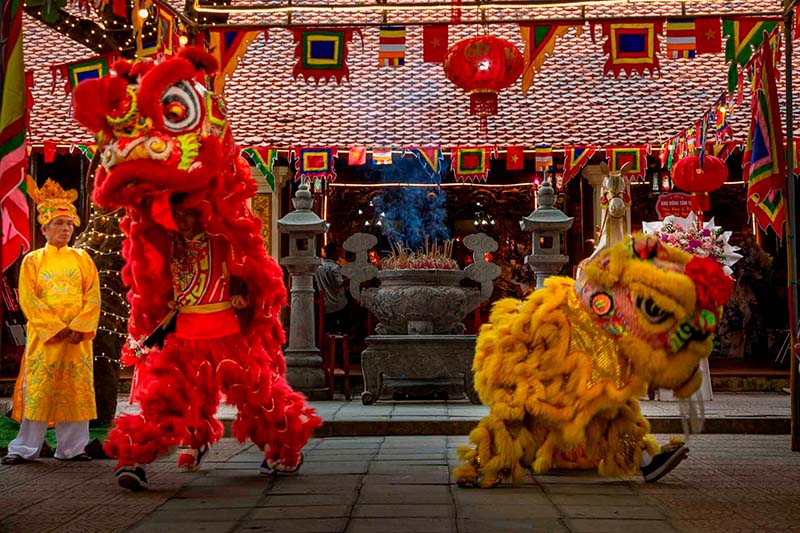
Every year, the temple organizes two important festivals. The Ky Yen festival takes place on the full moon of the second lunar month, praying for peace at the beginning of the year and hoping for a favorable sea season. The Phuc Luc Ngoat festival takes place in mid-June of the lunar calendar, an occasion to thank the gods for sheltering the village through half a year of rain and wind.
Phuc Luc Ngoat has a history of about 400-500 years. According to ancient customs, every three years in the years of Ty, Ngo, Mao, Dau, Yen Luong village organizes the Great Festival from June 14-16 of the lunar calendar. The festival was systematically restored from 2007 and in November 2023, it was listed by the Ministry of Culture, Sports and Tourism in the list of National Intangible Cultural Heritage.
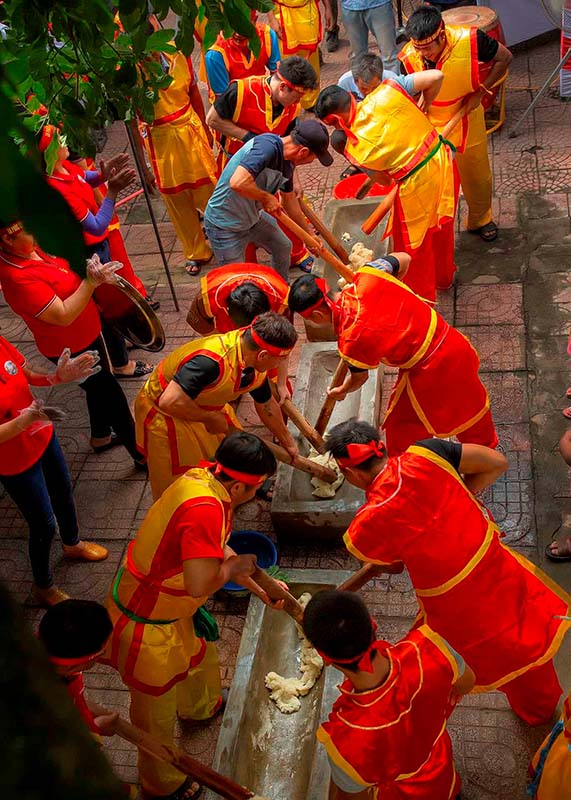
A special feature of the festival is the custom of mixing sticky rice cakes. Healthy young men pound sticky rice, then women use banana peel molds to create phong oan offerings.
The highlight of the festival is the Vong Nghinh ceremony at sea combined with a road palanquin procession. Dozens of fishing boats decorated with national flags and festival flags advance to the sea area about two kilometers from the shore, towards Con Temple. Here, the chief priest reads the prayer text, offers offerings and invites the sea gods to witness.
After the train docks, the tablets and sacred objects of the gods are carried by palanquin through the streets, with the participation of a large number of people and tourists. The Ca Ong worshiping ceremony is also performed through nghinh Ong rituals, offering money to the virtuous and main rituals.
The festival part takes place with tug-of-war, volleyball, net weaving competition, cheetah singing competition and folk songs Vi and Giam of Nghe Tinh.
From sea rituals to community activities, Phuc Luc Ngoat contributes to preserving the beliefs of coastal residents, strengthening village solidarity and creating more value for Cua Lo heritage tourism.


