
The sound of horse hooves in the countryside garden
Thoi Son islet located in the middle of the Tien River (belonging to Dong Thap province) is one of the familiar community ecological destinations for domestic and foreign tourists. Coming here, tourists not only visit fruit orchards, enjoy Don ca tai tu music, but also experience riding horse-drawn carriages around the winding small roads in the green orchards.
Unlike modern vehicles, horse-drawn carriages take tourists slowly. Each wheel turn is a breath of the countryside. Sitting on a rustic wooden carriage, listening to the sound of horse hooves tapping evenly on the concrete road surface, tourists can easily feel the life and people of the Mekong Delta, along with the cool wind blowing in from the Tien River.
For local people, horse-drawn carriages used to be a familiar means of daily life. Over time, as modern transportation developed, horse-drawn carriages gradually disappeared in many places. Especially in Con Thoi Son, thanks to being associated with tourism, the image of horse-drawn carriages is not only preserved but also becomes a unique "brand".
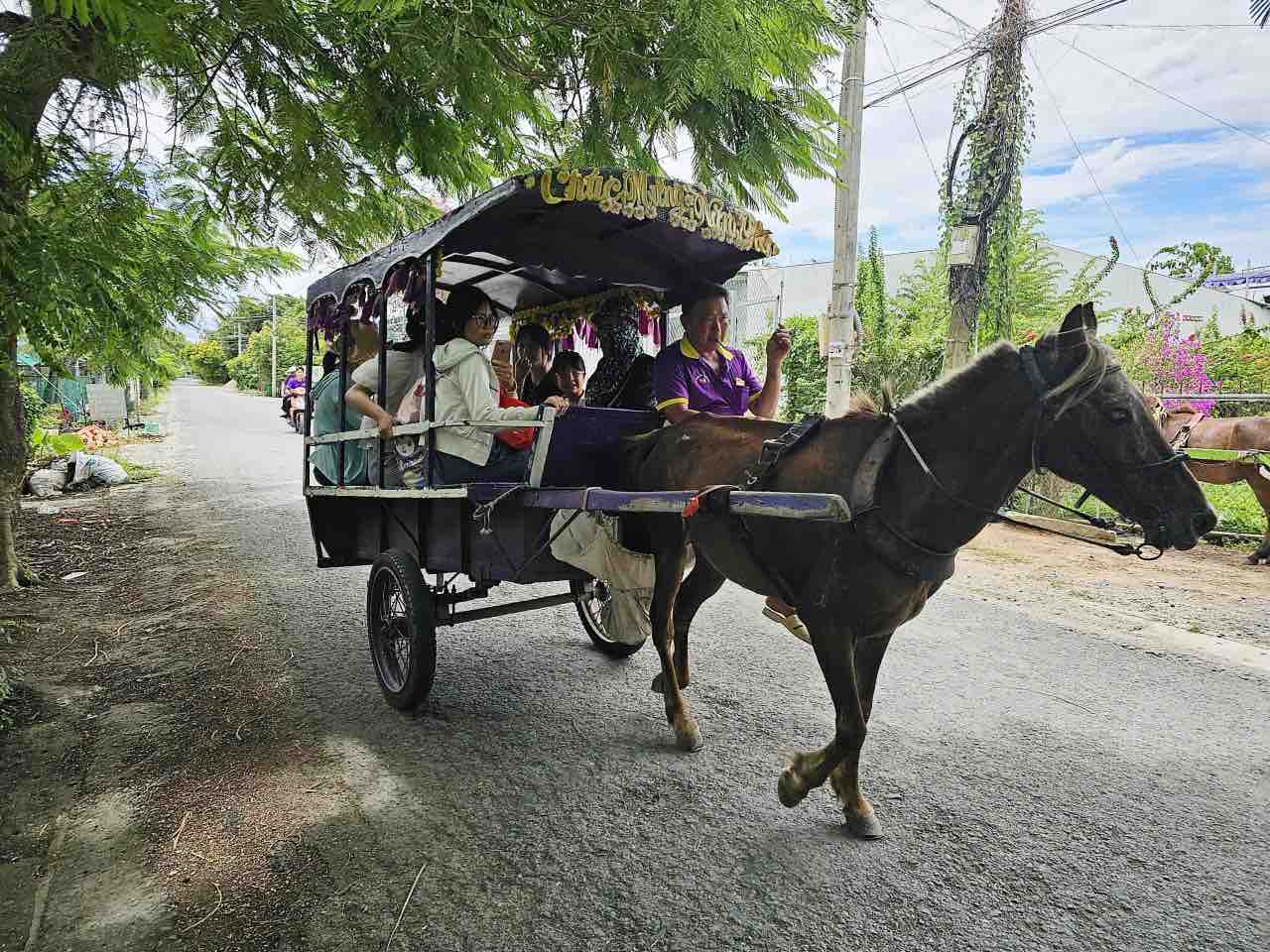
A horse-drawn carriage driver attached to the profession, Mr. Lu Van Doi (Vinh Long province) shared that before, he only used the carriage to transport goods and people in the neighborhood.
When tourism developed, horse-drawn carriages were renovated, with additional seats and roofs to serve visitors. "Thanks to tourism, we maintained our profession, and people here also have more jobs, without having to leave the country far away," Mr. Doi said.
Developing tourism from horse-drawn carriage products
Dr. Tran Huu Hiep - Vice Chairman of the Mekong Delta Tourism Association said that eco-tourism - garden tourism with horse-drawn carriage products creates the "backbone" of a half-day or one-day tour. The journey passes through the boat wharf, sitting in a horse-drawn carriage, visiting fruit gardens, people's kitchens, experiencing handicrafts and watching the sunset. Each stop needs interactive activities such as picking fruit, cooking, making cakes, knitting to extend stay time and increase on-site spending. At this time, horse-drawn carriages not only carry people, but also carry the connection circuit between community-based tourism products.
According to Mr. Hiep, to improve service quality, it is necessary to escape the situation of fragmentation and spontaneity. The appropriate direction is to form cooperative groups or tourist horse-drawn carriage cooperatives, unify prices, uniforms, service processes and customer behavior.
Short-term training in safety, first aid, communication and local storytelling skills will help each trip become a "mini tour". The application of technology to receive bookings, feedback, and statistics of passengers helps better manage and limit unhealthy competition.
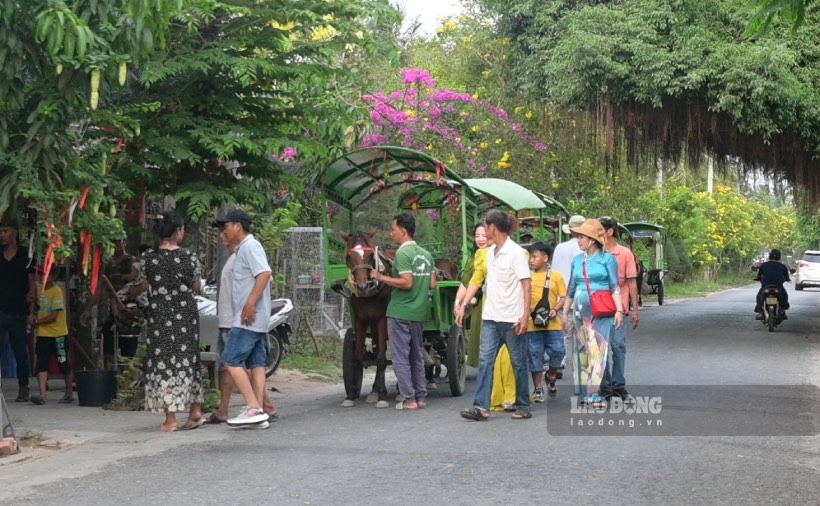
To make this model both attractive and safe, it is necessary to standardize routes, short - medium - long routes, with experiential stops such as garden houses, wharves, and craft villages. In parallel, there are technical standards for vehicles: brakes, steps up and down, roofs, maximum number of passengers, operating speed. A beautiful tourism product must start from respecting the horse - the "laborer" center of experience," said Dr. Tran Huu Hiep.
Dr. Tran Huu Hiep believes that, in terms of policy, localities should consider horse-drawn carriages as a link in the community tourism economy. There needs to be preferential credit to renovate vehicles, build standard barns; support insurance for workers; integrate grassroots veterinary medicine into the model. The most important thing is a clear legal framework so that people can feel secure and stick with it for a long time, not being "biased" by spontaneous and undirected activities.
In the context of green tourism, horse-drawn carriages have a great advantage: low emissions, low noise, landscape harmony. The challenge lies in the risk of being considered "outdated" if services are not upgraded and animal welfare is not ensured.
The problem posed is "green but must be civilized", clean, safe, with stories, with standards. If done, horse-drawn carriages will become a vivid proof of sustainable tourism based on the community.
In the long term, the development orientation must harmonize the soul of the countryside and modern needs. The soul of the countryside lies in dirt roads, village stories, rustic car shapes; modern needs lie in safety, cleanliness, convenient service placement, and transparent information. When these two factors meet, the horse-drawn carriage model will not be museumized, nor will it be commercialized crudely. It will live as part of the community, nurturing livelihoods and keeping the necessary slow pace for Mekong Delta tourism," said Dr. Tran Huu Hiep.


