
Rice flower is also known as mộc miên, hồng miên or specifically in the Central Highlands, the flower is called pơ lăng. Rice trees are common in Northern rural villages. The giant rice tree stands majestically at the beginning of the village, by the water wharf, by the river or next to ancient communal houses and pagodas; some trees grow alone in the middle of the field. The tree is tall, with a wide canopy, rough trunk, and leaves bare in the flowering season.
Not brilliantly ostentatious, rice flowers just quietly bloom. Sometimes overnight, the flowers have lit up a corner of the sky like torches from who knows when, marking the transitional moment from Spring to Summer. In the memory of many people, the kapok tree is often associated with the image of the old village - where there is a communal house yard, a well... Under the kapok tree, people can rest, chat after working in the fields, or drink a cup of green tea, a village gift at the village's water stall.
As for photography lovers, the rice flower season has become a special "date" in the North before every sunny summer. Nguyen Khanh Vu Khoa, from Ho Chi Minh City, is one of the photographers who just had a completely impromptu "hunt" for the rice flower season.
I don't have a specific plan for this trip. Initially, it was just after a journey from the Northwest, my friend and I decided to turn down to Ninh Binh to change the atmosphere. But right at that time, it was the kapok flower season, so the journey almost completely changed direction - whenever we saw a kapok tree anywhere, we would pull over to take photos, regardless of morning, noon or afternoon," he shared.
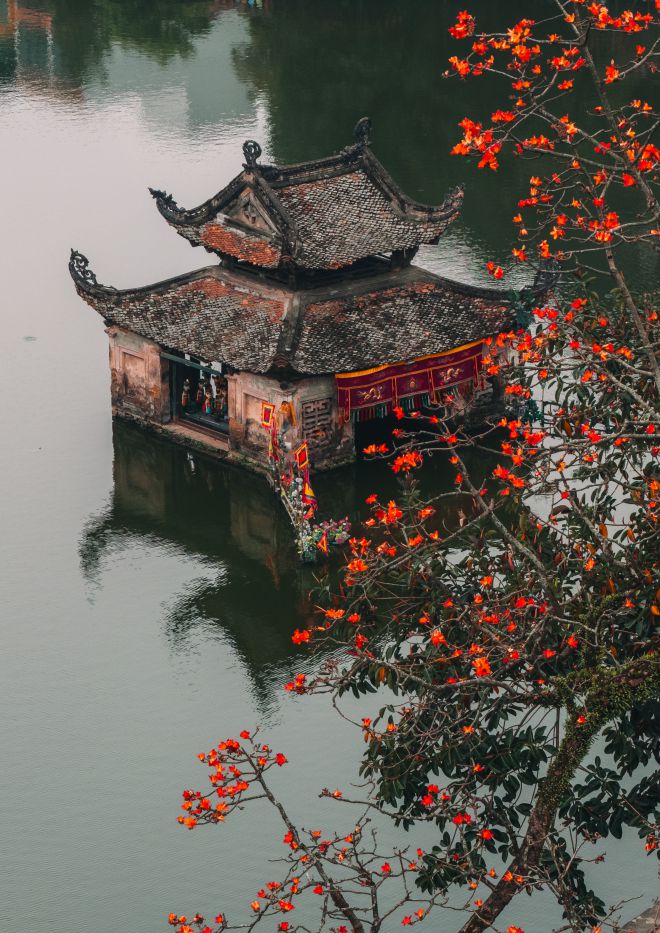
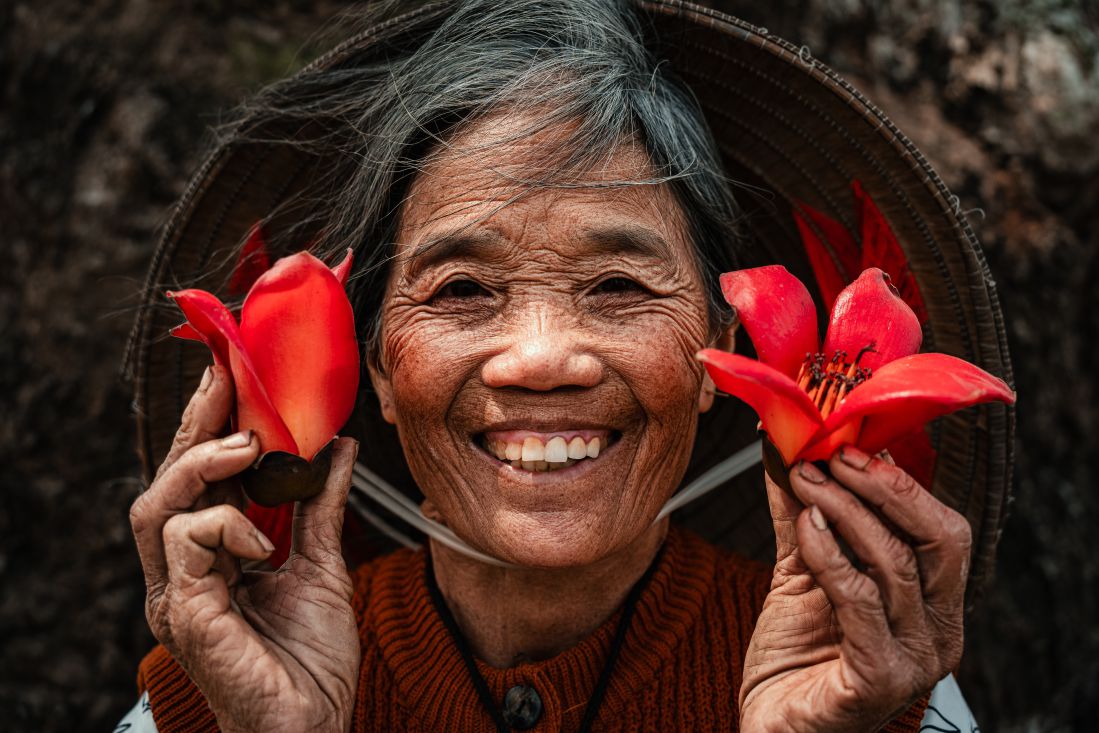
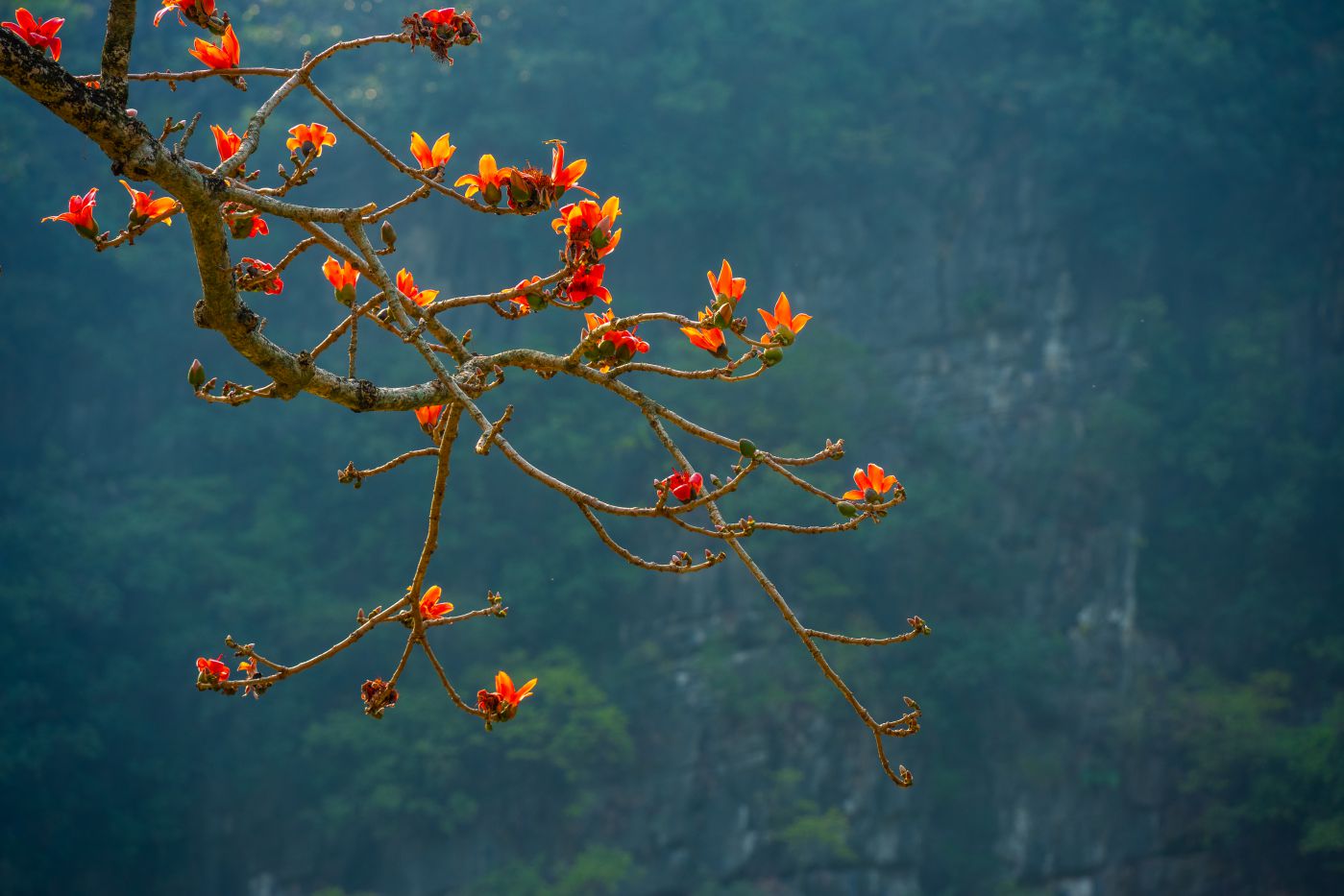
In Ninh Binh, Mr. Khoa focused on two locations: Yen Mo and the Bich Dong pagoda area. Yen Mo's kapok flower season brings many surprises, from the journey of finding a way to approaching the scenery. "At first, I considered it as a reconnaissance, both taking photos and observing, but I had not really figured out what I wanted. The next day I returned at noon to take photos of the kapok flower tree, it seemed deserted but it was very crowded. In the end, the whole group had to wait for more than an hour to have a completely empty frame," he said.
It was during that waiting period that a very ordinary detail became the highlight for the photo set. "I noticed an old woman selling water nearby and invited her to take a photo. For me, photos only really have soul when there is local people, and her naturalness has created the spirit for the photo," the Ho Chi Minh City photographer shared.
The journey of hunting for rice flower season photos continues through many points such as: Bich Dong, Trang An, Hang Mua... to old Ha Nam (Ninh Binh), and Hanoi. For him, the most valuable thing is not a perfect photo set, but the experience.
I don't hunt for sunsets, I don't watch the golden hour. In this trip, I accept random moments - I photograph what I encounter, if there are beautiful photos, it's lucky. But thanks to that, I feel more clearly the peace of the Northern countryside and the people here," Mr. Khoa said.
In the eyes of the Ho Chi Minh City photographer, the people in the Northern countryside are cute, simple and sincere like many farmers he has met on the journey along the Central and Southern regions. The grandmothers and mothers are not afraid to help visitors from afar, welcoming them warmly.
The impromptu flower season trip is a "healing" journey - for the first time, Mr. Khoa went to take pictures of the countryside in a completely free way, without arrangement, and without too much expectation, in addition to recording what he really felt. Next spring, he plans to return to Ninh Binh, Bac Ninh, Thai Nguyen... to record the beauty of the Northern countryside under the red canopy of rice flowers.


