
In the world, Nicobar pigeons (Caloenas nicobarica) are distributed in small islands and coastal areas of the Nicobar archipelago, Indian Ocean.
In Vietnam, this species was recorded in Con Dao nearly 20 years ago, also known as collar pigeon, white-tailed pigeon or vulture pigeon. In November 2022, Con Dao National Park discovered them appearing at Bay Canh Island.
In terms of taxonomy and evolution, the Nicobar pigeon is the only surviving species of the genus Caloenas. Genetic studies have determined that this is the closest surviving relative of the extinct Dodo bird (Raphus cucullatus).
This bird has a distinctive identifying feature with its feathers that refract light, shining with ribbons of emerald green, blue and bronze. Around the neck there are long plumes hanging down, contrasting with a short tail. They mainly move underground to find forest seeds, using muscle urns and gravel swallowing into their stomachs to crush hard seed shells.
Nicobar pigeons have a very low natural reproduction rate, and female pigeons usually only lay one egg in each breeding season. This species is currently classified as endangered in the Vietnam Red Book.
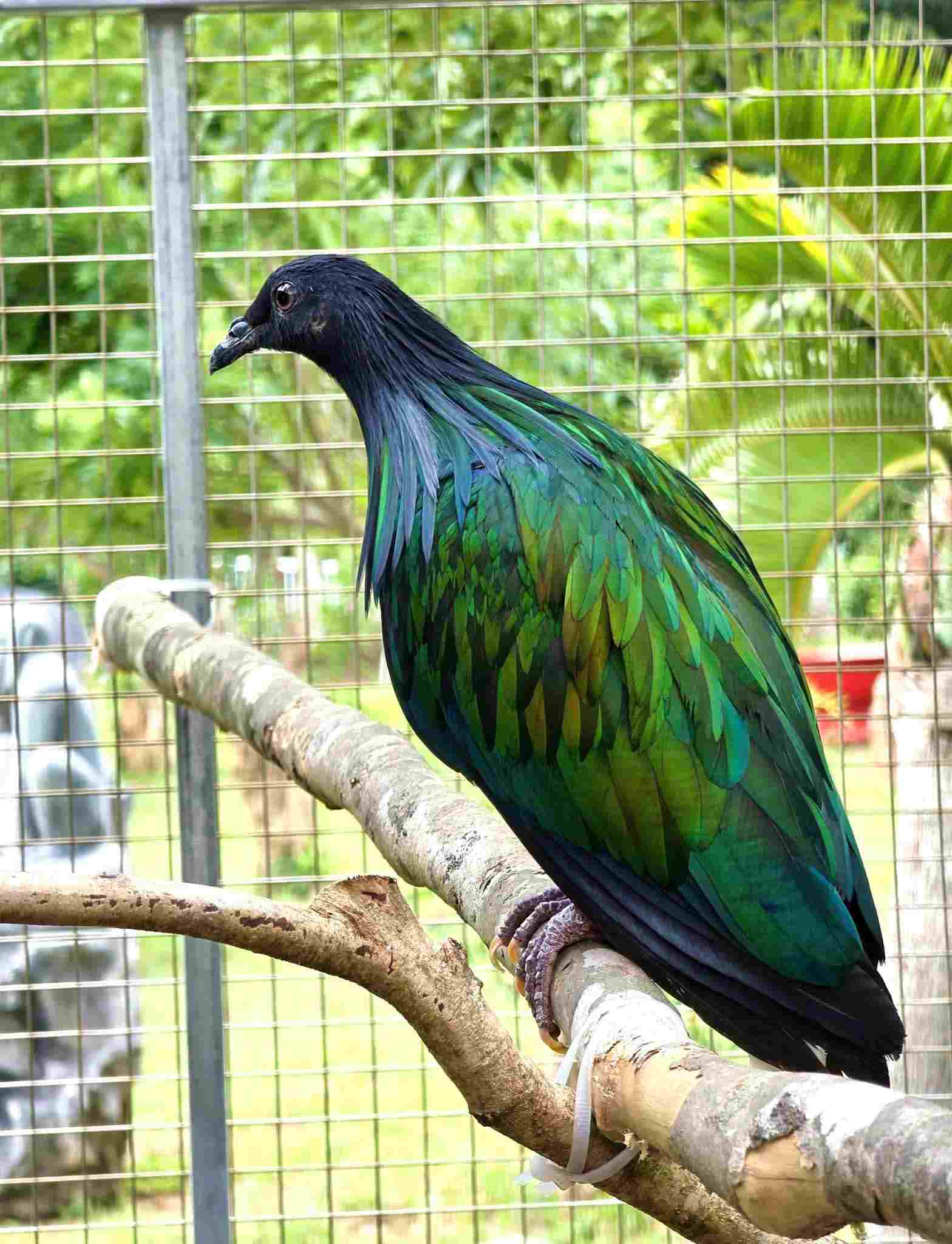
Over the past time, people on Con Dao have regularly proactively handed over the Nicobar pigeons found in residential areas to the Con Dao National Park Management Board. After receiving them, these individuals are medically checked, nurtured and rehabilitated before the forest rangers release them back into the natural environment.
Con Dao National Park currently has a total managed area of more than 19,800 hectares, including about 5,800 hectares of forest and 14,000 hectares of sea. This is an area with high biodiversity, recording 25 species of mammals, 85 species of birds, 32 species of reptiles, 13 species of frogs and toads and more than 1,700 species of marine life.


