
Long An Pagoda (also known as Ong Mot Pagoda) is located near Cai Rang floating market area, Can Tho City. The pagoda has a history of more than 90 years, nổi bật with Buddhist architecture of the Northern Sect and a large campus with many green trees.
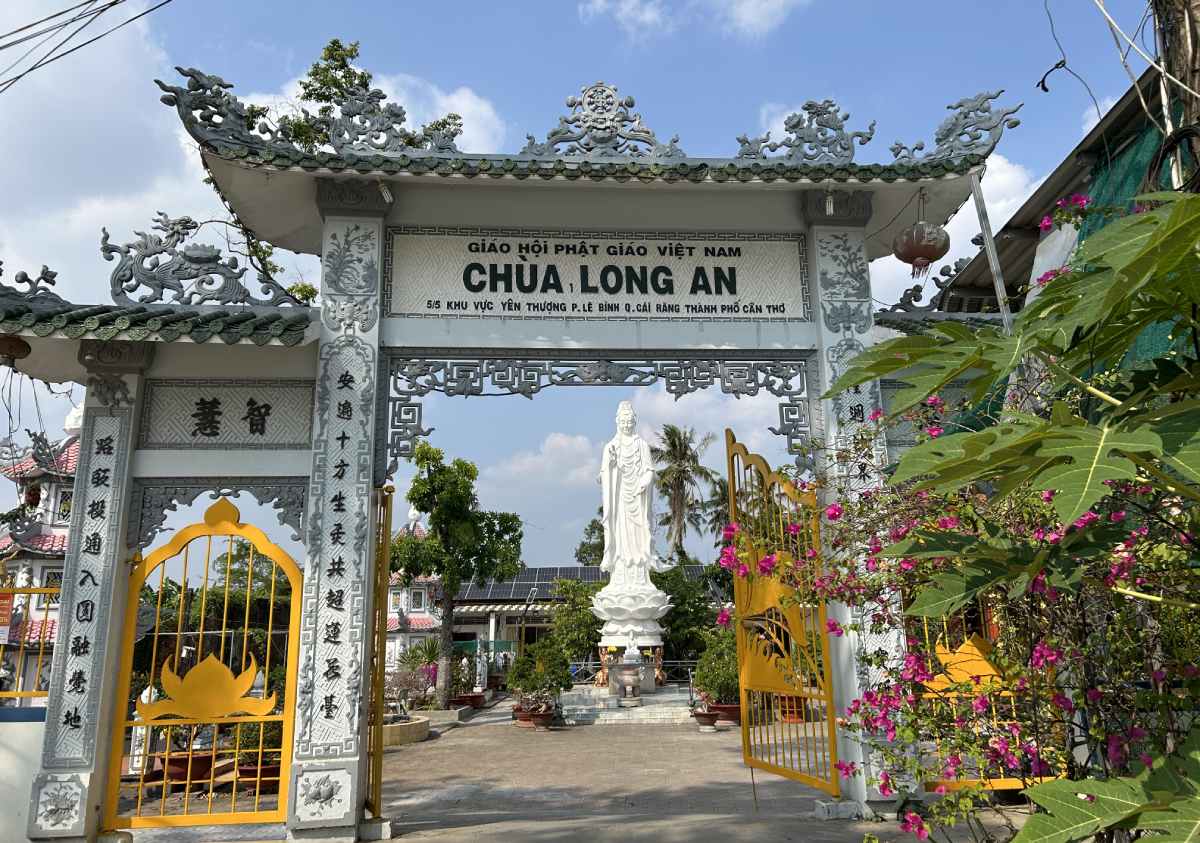
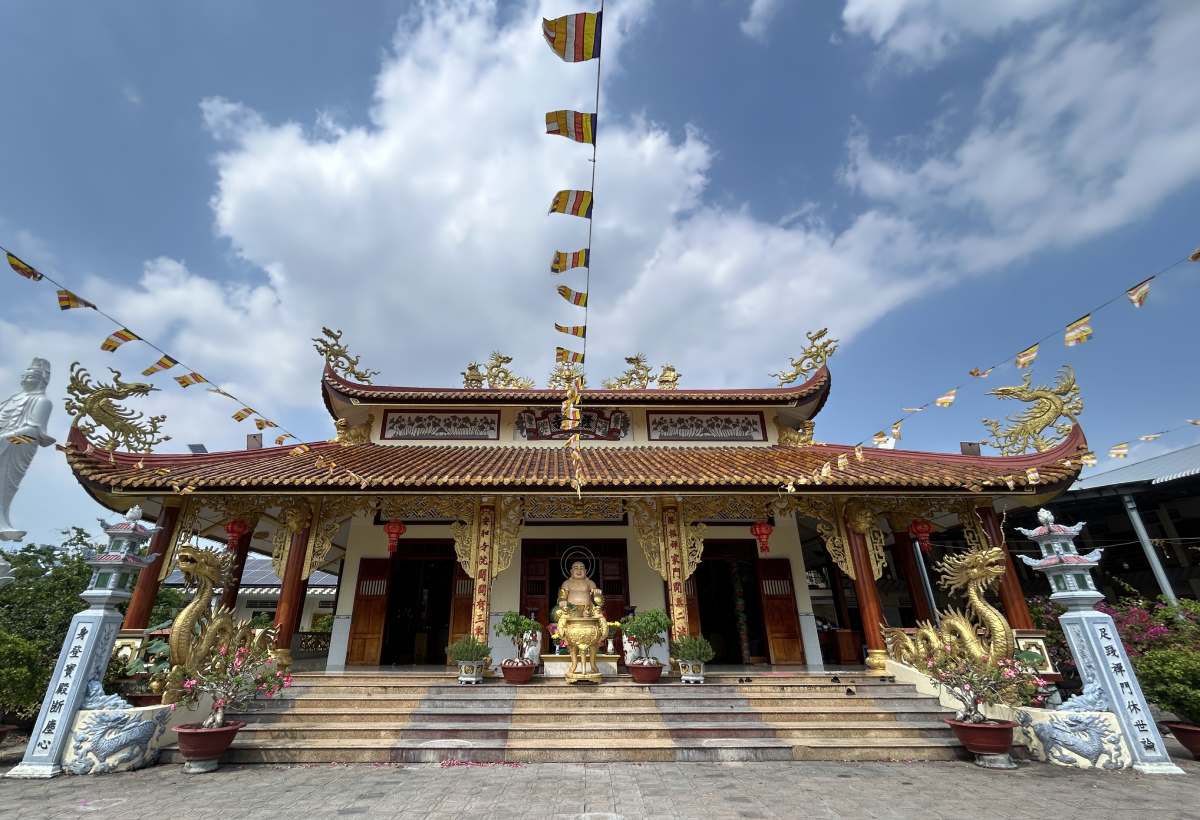
According to historical records, the pagoda was built in 1927. When it was first formed, the pagoda had a main hall of about 100 square meters and the Hau To house of about 150 square meters, built with brick walls and tiled roofs.
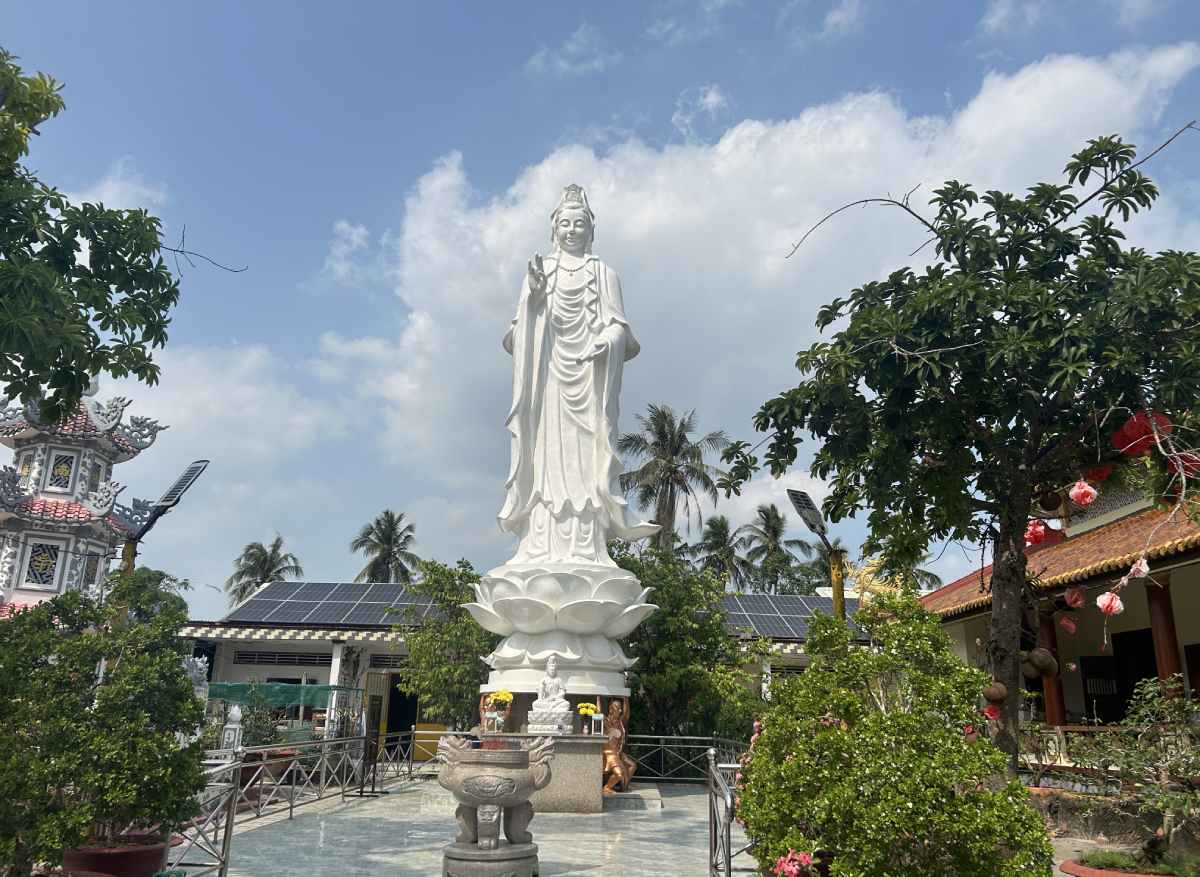
In the process of development, the pagoda has been restored and expanded many times. In 2008, the pagoda built a large open-air Quan The Am Bodhisattva statue in the campus.
Long An Pagoda has an area of about 5,000 square meters. The pagoda gate is built in a three-entrance style, yin and yang tiled roof, decorated on top with the image of "two dragons competing for a pearl" and the Dharma wheel symbol.
Inside the campus, there is a temple to worship Ngu Hanh Nuong Nuong, tomb towers of former abbots and many green trees creating a peaceful space.
Prominent in the pagoda's yard is the Quan The Am Bodhisattva statue about 5m high, placed on a lotus pedestal nearly 3m high, in front there is an incense burner and a stele engraved with Uncle Dai Bi. This is a familiar stop for many Buddhists and tourists when visiting the pagoda.
The main hall of the pagoda is built in the Dinh-shaped architectural style, bearing the characteristics of the Northern sect with a combination of Vietnamese architecture and Chinese influence. The pagoda roof is tiled with yin and yang tiles on two floors, decorated with many dragon, unicorn, phoenix and lotus motifs.
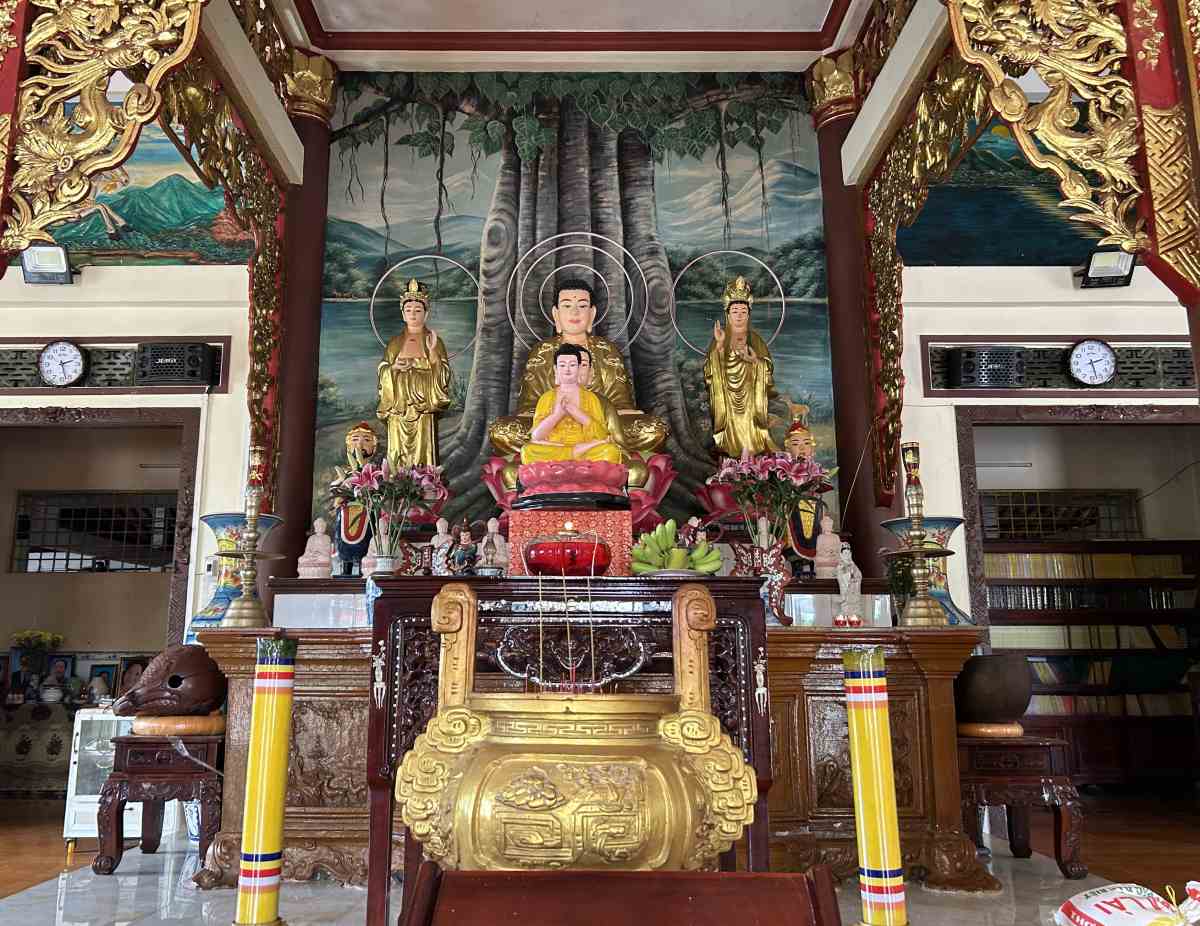
Inside the main hall is Dai Hung Buu Dien with the altar of Tam Thanh Tay Phuong: Amitabha Buddha in the center, on both sides are Quan The Am Bodhisattva and Dai The Chi Bodhisattva. In addition, there is also the altar of Quan Thanh De Quan, Dia Tang Vuong Bodhisattva and many Dharma protection statues.
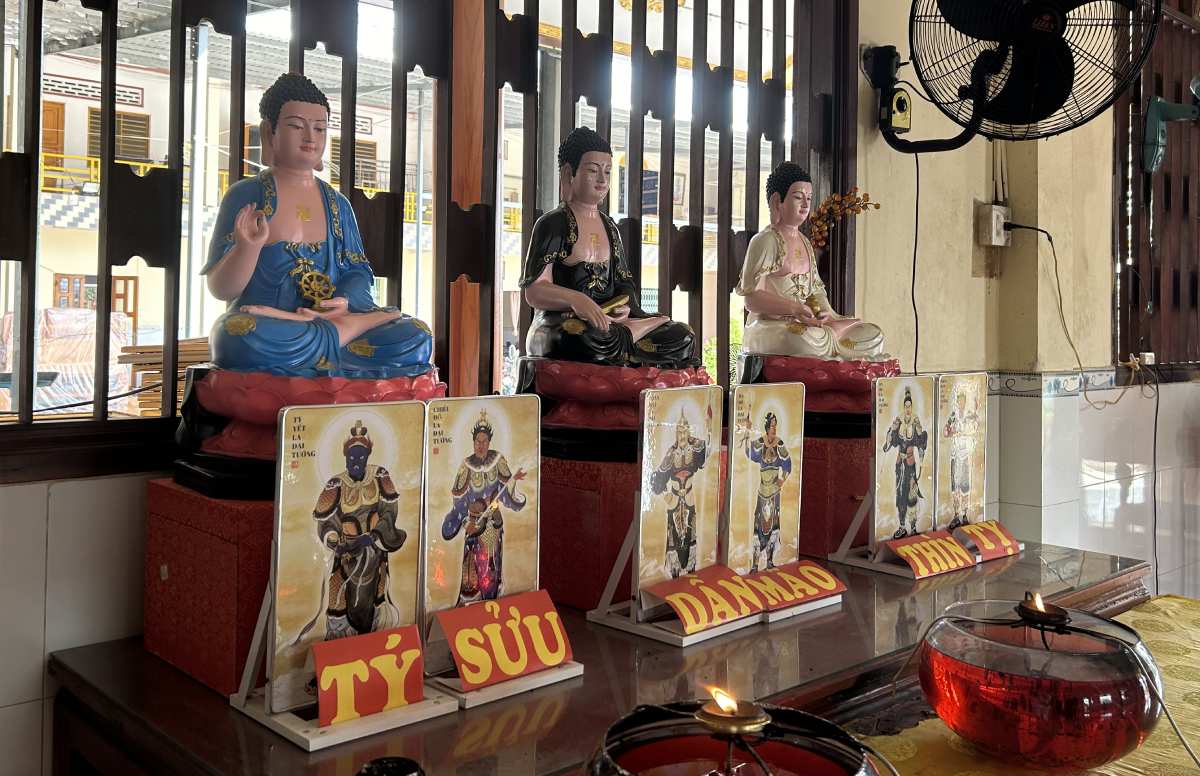
Not only is it a religious activity spot, Long An Pagoda is also a place to organize many Buddhist festivals such as the Quan Am Via festival (February 19, June 19, September 19 of the lunar calendar), Vu Lan festival, Buddha's Birthday or major full moon days of the year.
Talking to Lao Dong Newspaper, a representative of the pagoda said that for many years, the pagoda has maintained activities to nurture lonely elderly people, people in difficult circumstances and implemented a model of connecting Buddhists to participate in environmental protection in the locality.
Thanks to that, the ancient pagoda near Cai Rang floating market is not only a spiritual destination but also imbued with human values in the Can Tho river region.


