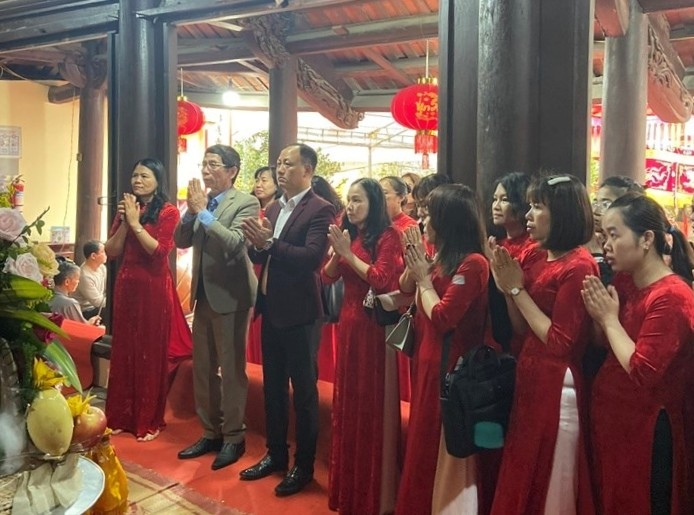
Ancient temple worshiping Duc Vuong Ngo Quyen
According to information at the Department of Cultural Heritage, Phuong Luu temple in Dong Hai commune, An Hai district, former Hai Phong city (now Dong Hai ward, Hai Phong city) is a place to worship national hero Ngo Quyen and his eldest son Ngo Xuong Ngap - two people who made great contributions in the first Bach Dang battle in 938. The temple was built around the 17th century.
According to legend, Duc Vuong Ngo Quyen in Gia Vien, before the Southern Han army came to invade, set up a fort on the Gia Vien River (Cham River estuary to block the enemy). While preparing for the battlefield, Ngo Quyen and the Command Headquarters were stationed in Luong Xam village (now Hai An ward, Hai Phong).
The book "Dai Viet Su Ky" records: "In that Battle of Bach Dang, the enemy soldiers died countless, Hoang Thao was also destroyed at the battle, and the Southern Han King was afraid and withdrew his troops to Phien Ngung. The disastrous defeat of the Hoang Thao naval team shocked the Southern Han, completely abandoning the dream of invading our country.
According to information stored at Phuong Luu temple, with the merits of Duc Vuong Ngo Quyen, many dynasties have issued royal decrees honoring him as "Thuong dang toi linh Dai vuong"; "Ngo Vuong thien tu"; "the founder of national rejuvenation". In 1880, King Tu Duc issued royal decrees to 17 villages in the An Duong region to be allowed to worship Ngo Quyen, including Phuong Luu village. Remembering Duc Vuong Ngo Quyen's great contributions, the people honored him as Vi Phuc than of the village, Thanh Hoang of Phuong Luu village and worshiped him at the temple.
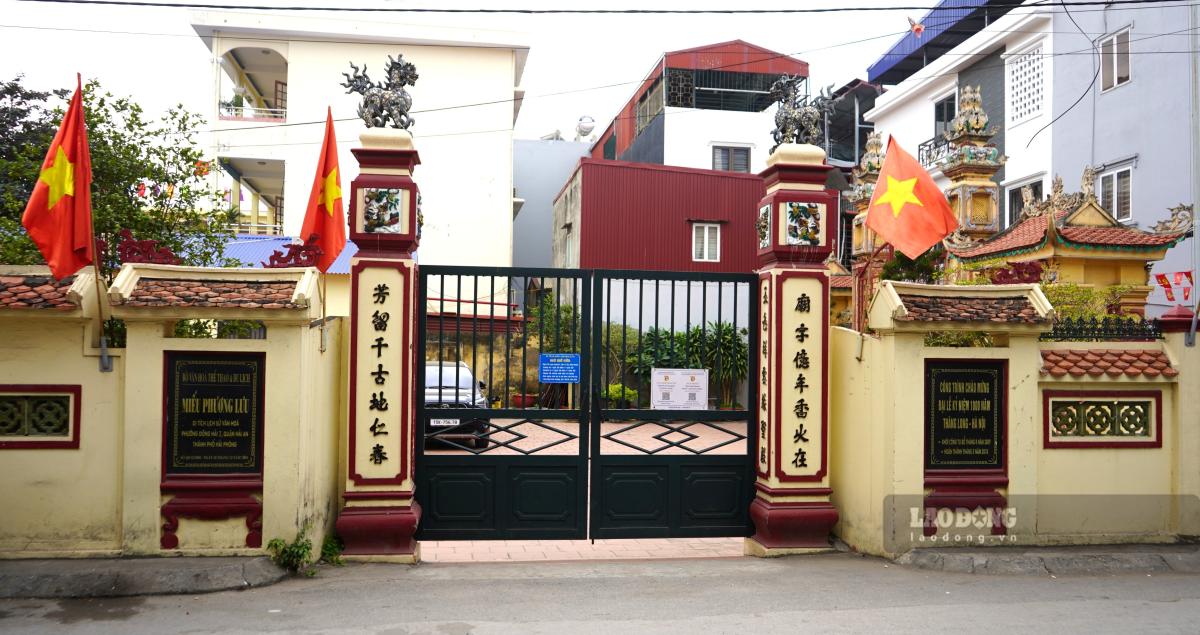
National relic in the heart of the city
Also according to information from the Department of Cultural Heritage, Phuong Luu temple is located on a high dry land, the main face of the relic is facing West. Seen from afar, this relic stands out with an ancient architecture "roof - corrugated iron", with many decorations and paintings on the roof flanks quite vividly, achieving ancient fine art value; the columns and walls of the relic are built of large brick, attached with mortar used with honey.
From an original architectural style of the letter Nhi, in Canh Thin year 1940, Phuong Luu temple was renovated by villagers in the style of the letter Dinh as it is today. The temple consists of 3 front halls, 2 rear palace halls, tiled roof with a nose, and a rotating west-facing door. With exquisitely carved architecture, thanh chồng rường, vì nách, cốn, bảy hiên, tàu góc with dao mác shapes, dragon shapes stylized to symbolize the power of emperors. The temple also preserves 11 royal decrees of the Nguyen dynasty, praising the merits of Duc Ngo Vuong Quyen and precious worship items such as: thanh long dao, long ngai, bai vi, khám thờ and thần tượng...
In 2001, Phuong Luu temple was ranked as a national relic. Every year, on the 17th day of the first lunar month, the Relic Management Sub-committee and local people organize a traditional incense offering festival to commemorate the great contributions of Duc Vuong Ngo Quyen. The festival is organized with solemn and solemn ritual activities and folk belief activities, imbued with cultural values, attracting a large number of people and tourists from all over.