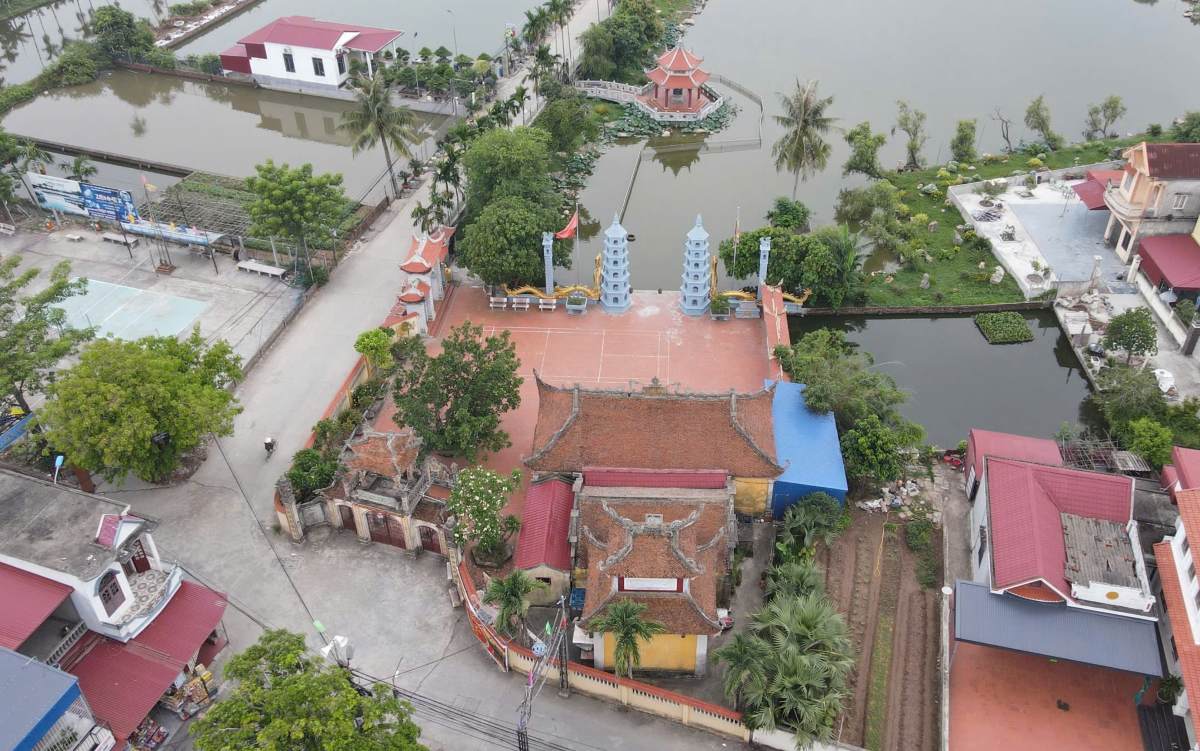
Ben Vua Temple, the name Quang Trach Linh Tu, is a place to worship Dai Can Thanh Mau and is one of the oldest religious works of Phu Ke village, Tien Lang commune. According to the genealogy translated by the Institute of Han Nom, the temple was built around the years 1370-1380, and now has a history of more than 600 years.
According to the genealogy compiled by Han Lam Vien Dong Cac Dai Hoc Si Nguyen Binh in 1572, the person who chose the land to build the temple was Mr. Hoang Cau - a person who understands feng shui. When he came to Hoai Van land (now Phu Ke village), he realized that this place has a "mountainy water turtle", "dragon crouching, tiger reversing", suitable for establishing communal houses and temples. After that, the villagers built the temple and then brought the spirits of the four Saint Nuong from Den Con to worship.
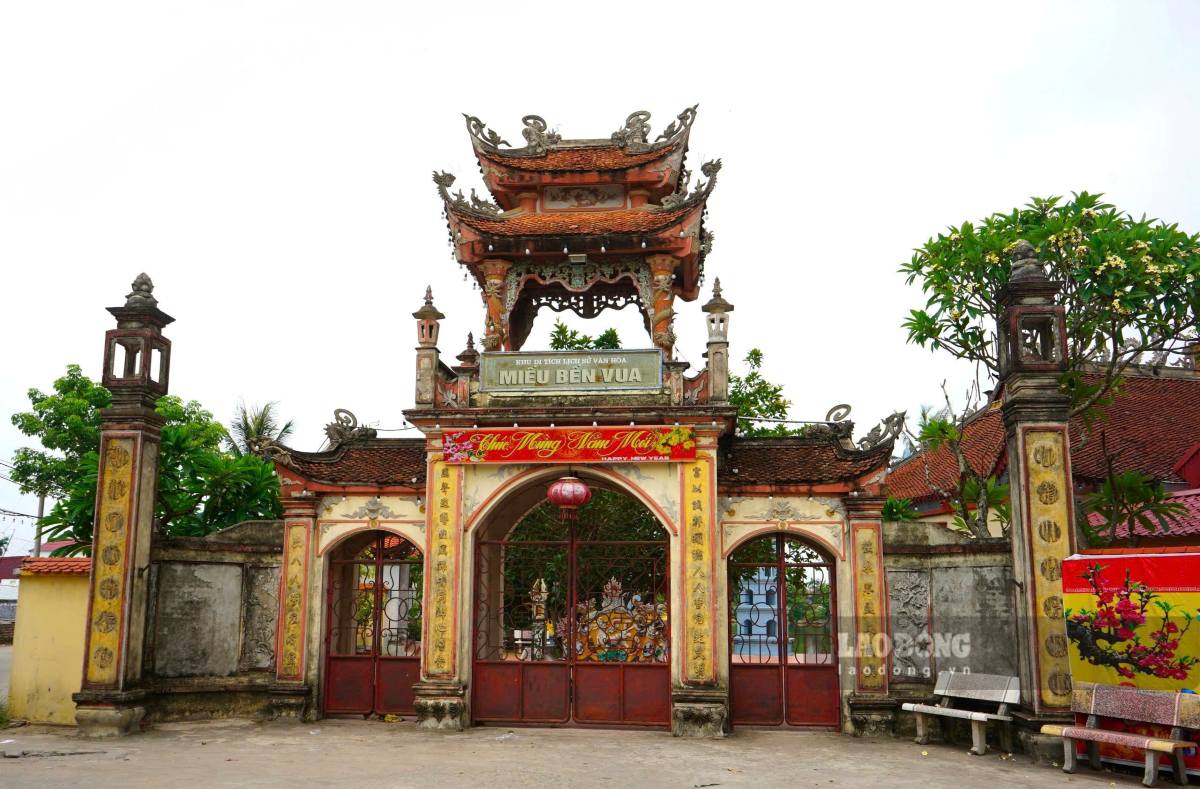
The temple is built on a land with the place name "Ben Vua". According to folk legend, this place was once the harbor of the king's boat during a royal visit to the region, from which the familiar name Mieu Ben Vua formed.
The ancients considered this a precious land, a place of "mountains and rivers", a place of "landly personality" with "golden stars leading blood", with "dragons worshiping tigers". Around the area where the temple is built, on the left, right and behind, there are high and long strips of land facing the temple. According to feng shui theory, these 3 high and long mounds are considered like 3 "Dragons" lying beside the temple. Because the scenery in front is vast and immense, after bringing the goddess of Dai Can Thanh Mau to worship, Phu Ke village temple was called "Quang Trach Linh Tu" meaning "Sacred temple by the wide lagoon".
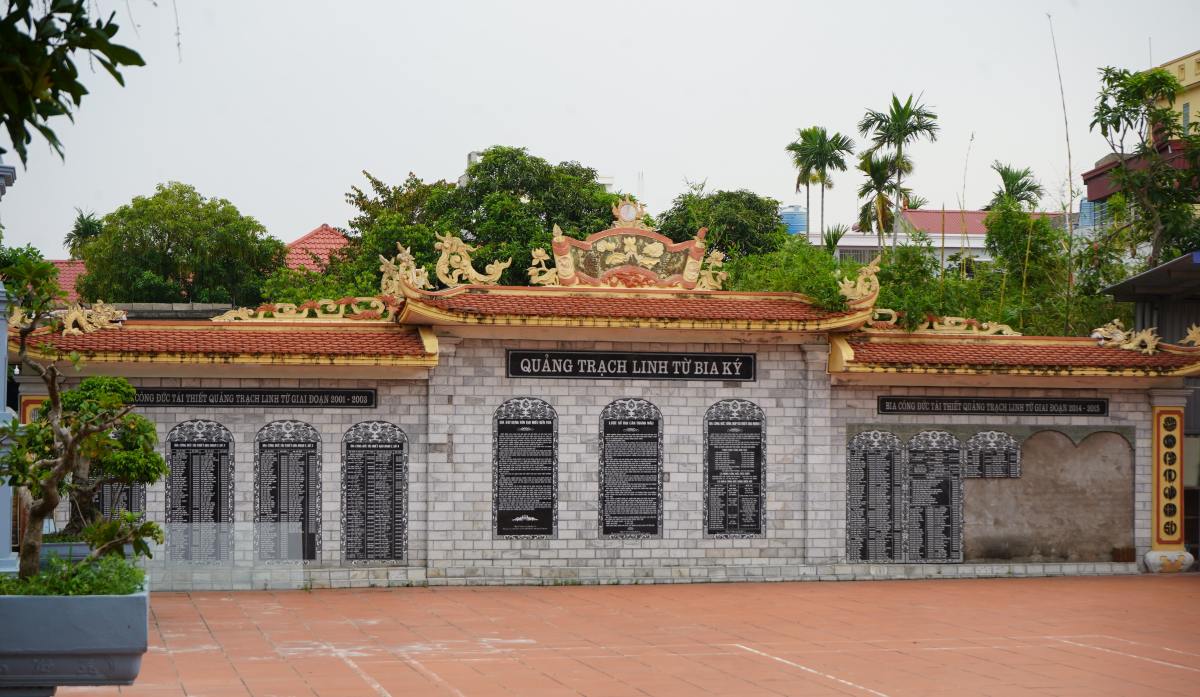
Ben Vua Temple has undergone many restorations and embellishments. Experiencing many historical upheavals, the temple was once destroyed in the resistance war against French colonialism. In 1951, to prevent French troops from returning to use it as a fortification, Phu Ke villagers voluntarily burned down the structure. After peace was restored, due to difficult economic conditions, people could only temporarily repair Bai Duong area to maintain worship.
In the period 2001-2002, Quang Trach Linh Tu was restored on the old foundation and inaugurated in January of the year Quy Mui (2003). The cost of renovating the temple was mainly contributed by Phu Ke village children voluntarily, and the rest was contributed by pilgrims.
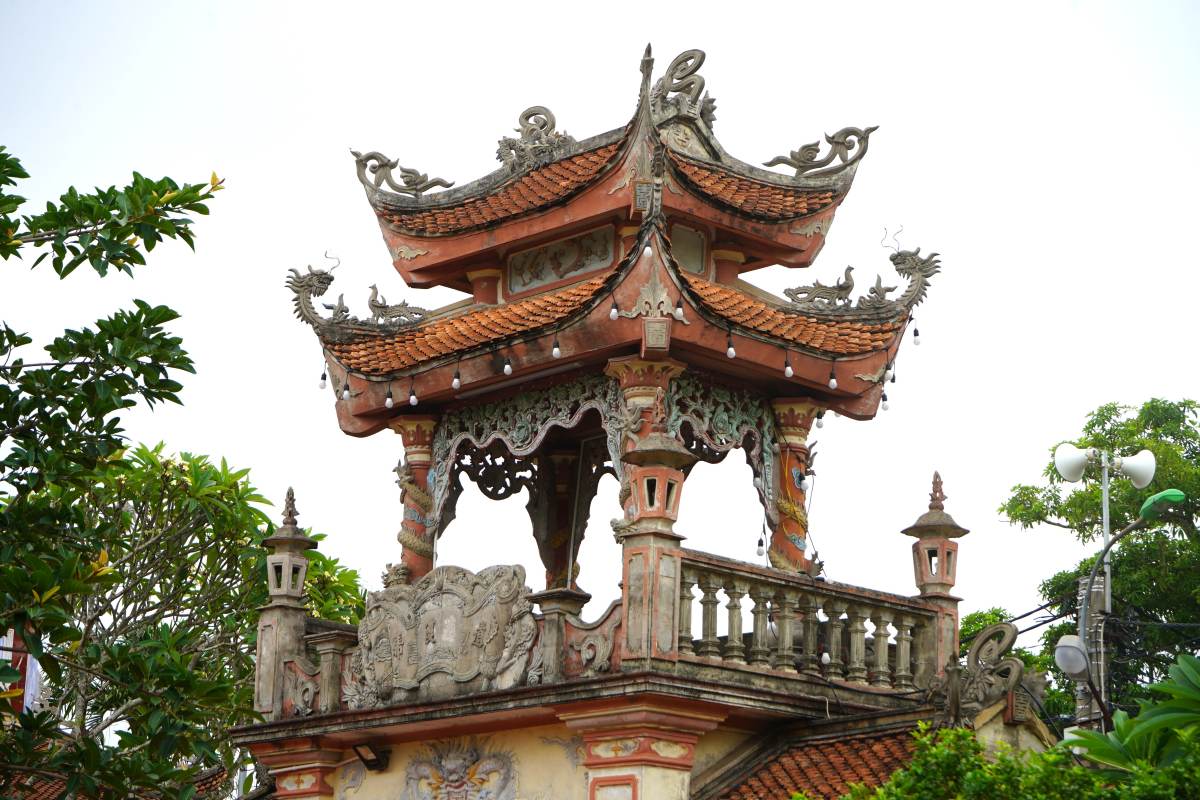
Although newly built, the temple still retains the traditional architectural layout with three buildings: the Foreground Hall, Bai Duong Hall and Hau Cung Hall in the shape of the letter Tam. The campus has been expanded, the front facing Loi Dam Lake still retains the access to the water wharf, recreating the image of the ancient King's Wharf. Two dragon statues, a seven-story tower and three-entrance gate contribute to honoring the cultural, historical and architectural values of the relic.
Today, Ben Vua Temple is not only a place for religious activities of Phu Ke people but also a destination to preserve unique cultural and historical values, reflecting the tradition of drinking water, remembering the source and the spiritual life of the local community over many centuries. Next to Ben Vua Temple are Phu Ke Temple and Sung An Pagoda, creating a complex of spiritual cultural relics, attracting a large number of tourists to Tien Lang on holidays and Tet.