
At the beginning of the new year, many families set off for spring travel, returning to sacred temples and pagodas to pray for peace, fortune, and at the same time find peace in their souls. Below are famous temples and pagodas in the North for spring travel at the beginning of the year.
Perfume Pagoda
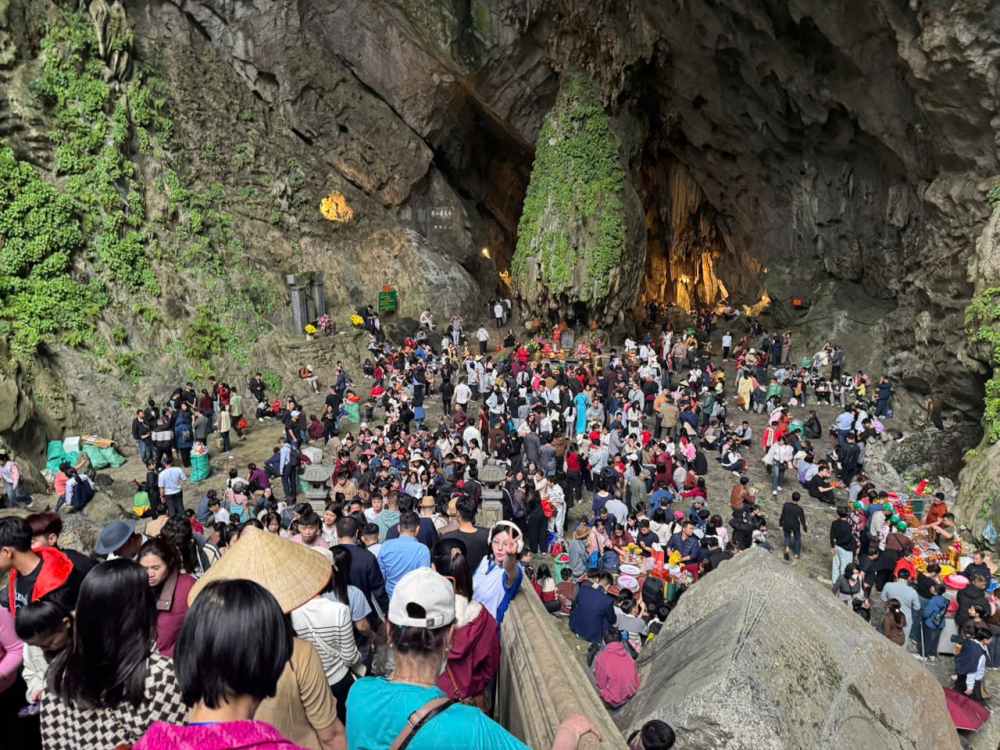
Located in Huong Son commune (Hanoi), Huong Pagoda is the most famous scenic - spiritual complex in the North. The complex is a system of dozens of temples, pagodas, caves, and shrines scattered in Yen stream valley, the center is Trong Pagoda (Huong Tich cave).
Perfume Pagoda has been ranked as a special national relic. Perfume Pagoda Tourism Festival opens from the 6th day of the first lunar month and lasts until the end of March of the lunar calendar, considered the longest festival in the country. However, right from the first days of the new year, crowds excitedly flocked to the festival.
The journey to Perfume Pagoda is a combination of sightseeing and worship: sitting on a boat on Yen stream, walking or by cable car to Huong Tich cave - which is known as "Nam Thien de nhat dong" (The most beautiful cave in the South). The space of overlapping mountains and spring mist creates a feeling of tranquility, helping visitors temporarily put aside daily worries.
Hung Temple
The Hung Kings Temple historical relic site located on Nghia Linh mountain (Hy Cuong commune, Phu Tho province) is a place to worship Hung Kings - people considered the ancestors of the Vietnamese nation. The Hung Kings worship belief has been listed by UNESCO as a representative intangible cultural heritage of humanity.
The main festival takes place on March 10th of the lunar calendar, but right from January, many delegations have come to offer incense to commemorate. The journey of climbing each stone step up to Thuong Temple not only carries the meaning of praying for blessings and fortune but also expresses the morality of "When drinking water, remember the source".
The space of palm forests, green tea hills and the system of Ha Temple, Trung Temple, Thuong Temple and Gieng Temple create a solemn and sacred complex. For many people, the spring trip to Hung Temple is also an opportunity to remember their roots and arouse national pride.
Tran Temple
The Tran Temple relic site in Nam Dinh ward (Ninh Binh) is a place to worship the Tran kings and mandarins with meritorious services during the Tran Dynasty. The complex includes Thien Truong Temple (Thuong Temple), Co Trach Temple (Ha Temple) and Trung Hoa Temple.
The Tran Temple seal opening festival takes place on the night of the 14th to the morning of the 15th of the first lunar month. According to folk beliefs, asking for a seal at the beginning of the year has the meaning of praying for fame, smooth career, national prosperity and peace. The seal opening ceremony has existed since the Tran Dynasty with the meaning of opening a new year of work for the court.
In recent years, organizational work has been tightened, ensuring security, traffic diversion and issuing seals in order to limit jostling.
Ba Chua Kho Temple
Located in Co Me area (Vu Ninh ward, Bac Ninh), Ba Chua Kho Temple is a familiar destination for businesses and traders every beginning of the year. According to legend, Ba Chua Kho had the merit of guarding the Ly Dynasty's food warehouse, helping the court stockpile grain to fight the enemy. After her death, she was posthumously conferred as a god and a temple was built.
The custom of "borrowing capital" at the beginning of the year and "returning offerings" at the end of the year stems from the belief of praying for a favorable business year and smooth business. In recent years, local authorities have strengthened the management of worshiping activities, arranging parking lots, shops and propaganda to implement a civilized lifestyle, limiting jostling and excessive burning of votive paper.
Yen Tu
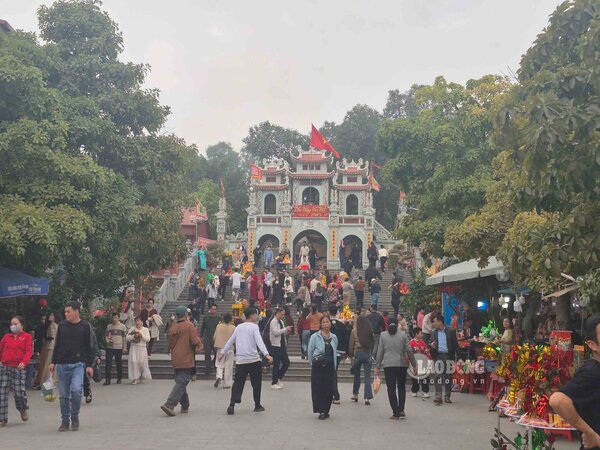
Yen Tu scenic spot (Uong Bi ward, Quang Ninh province) is considered the cradle of the Truc Lam Zen sect founded by Buddha Emperor Tran Nhan Tong. This is a major Buddhist center of Vietnam, associated with the monastic practice of the king after giving up the throne.
Every spring, tens of thousands of monks, nuns, Buddhists and pilgrims flock to the sacred mountain of Yen Tu. The journey to conquer the mountain peak over 1,000 m high is an experience that is both spiritual and a physical challenge. The final destination is Dong Pagoda - a bronze pagoda located on the mountain peak, where many people send their wishes for peace.
The space of the old forest, cloud cover and the system of ancient pagodas and towers such as Hoa Yen Pagoda, One-Roof Pagoda, Hue Quang Pagoda... create a harmonious picture between nature and belief, contributing to the special attraction of Yen Tu.
Right in the first two days of the Binh Ngo New Year, more than 12,000 domestic and foreign tourists came to the Yen Tu world cultural heritage site.


