Great pride
Tu Van village, belonging to Le Loi commune, former Thuong Tin district, now Chuong Duong commune, Hanoi, is known as a place specializing in producing national flags supplied throughout the country. These days, the atmosphere becomes more bustling than ever. The sound of sewing machines, the sound of fabric cutting, the sound of laughter mixed in the fragrance of the countryside, creating a characteristic atmosphere of the craft village every holiday season.
Chatting in the sound of rhythmic machinery at the tailoring workshop, Mr. Nguyen Van Phuc (49 years old) - one of the families with a tradition in making national flags - shared: "In the past, my parents did this job, since I was born, the familiar image of red flags with yellow stars has been imprinted in my mind. That is also the reason why I want to continue my parents to preserve this sacred profession.
Mr. Phuc's family has been in the national flag tailoring profession for 4 generations, continuing the family's business for more than 30 years, each year the workshop supplies millions of flags to the market. Mr. Phuc said that before, when there was no technology, he had to use human power, cutting fabric manually. The calluses on his hands over the years have not faded. Currently, he focuses on investing heavily in modern machinery and is programmed by computers, so the accuracy and productivity are higher.
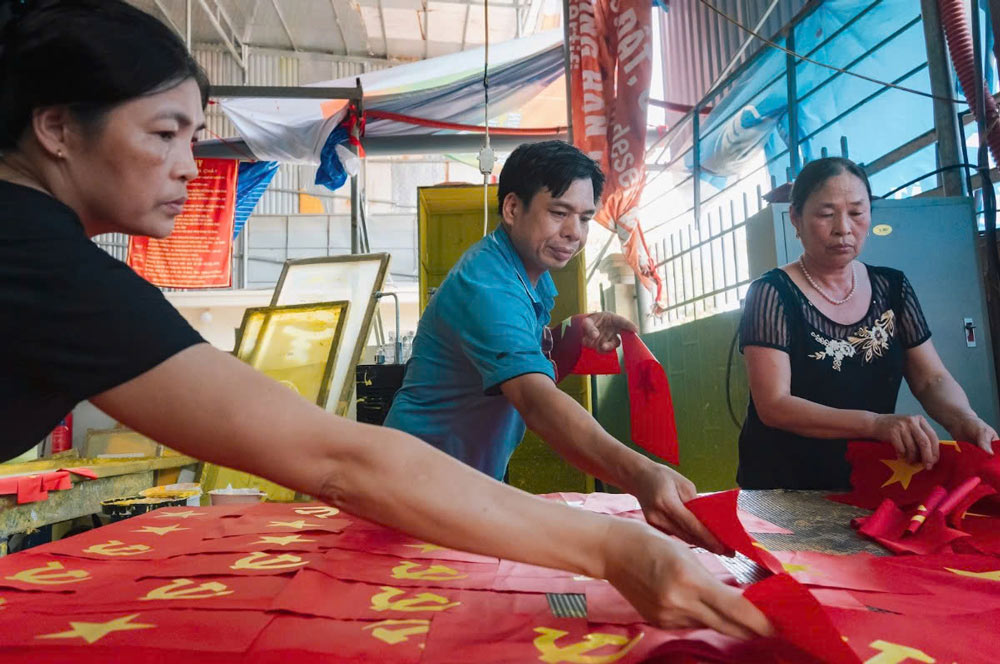
According to Mr. Phuc, the village currently produces a wide variety of flag products. Flag embroiderers, flag tailors serving the opening of the new school year, national flags hung on National Day September 2nd, banners, slogans... Previously, flag tailoring was mainly done by hand, taking a lot of time, requiring many people to do it, so some years they could not keep up with the goods. However, currently, the facility has used modern automatic production machinery, programmed on computers, so it brings accuracy and high productivity.
For each villager of Tu Van, sewing flags is a luck and honor that not everyone has because each flag made brings them pride because they have woven a part of the national soul. It is even more meaningful when the national flags fly all over the streets of the Capital, all over the roads of the country, from the uplands to the plains, from the border to the islands.
Passing on the craft to future generations
Ms. Vuong Thi Nhung's family (47 years old) is one of the few households that performs handmade flag sewing and embroidery. For her, all stages from choosing fabric, sewing thread, embroidery, logo making, badges on each flag are not allowed to be different.
After more than 20 years of being attached to this job, Ms. Nhung always tells herself to be very meticulous and precise in every needle on the yellow star because that is the blood and bones of her ancestors who fell. The flag right from the moment of cutting the fabric and printing the star needs to be very accurate to every millimeter. For all sizes, the center of the star is always in the middle of the red background.
The most difficult point when making the national flag is determining the position when placing the star. This stage requires the craftsman to measure very accurately and thoroughly before placing the star to be printed on the image of the red fabric. When the star is dried, the craftsman can switch to the embroidery stage. This is the most time-consuming stage to make the national flag. The embroidery frame must be firmly mounted, and the fabric tension must ensure sufficient duplication.
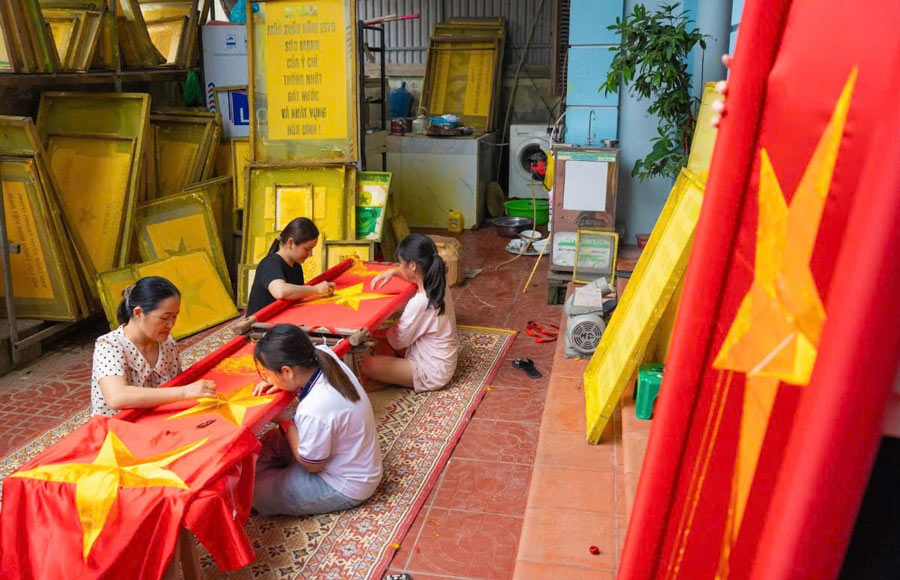
The flag carries the sacred soul of the nation, so sewing flags does not require high technology but must be very skillful and careful. The profession of sewing national flags has many difficulties compared to other sewing and embroidery professions and is more elaborate from the stage of choosing fabric, embroidery, printing, mixing colors... how to make the sewn flag not only accurate in terms of standards but also durable, beautiful, and sharp" - Ms. Nhung said.
The fabric for sewing the flag must be sa fabric bought from La Khe village. The embroidered thread must be of the right type taken from Trieu Khuc village. These are all high-quality materials to create a durable, beautiful, and delicate flag. On average, a embroidered flag takes about 2-3 days to complete, and for those who are not skilled in the craft, it can take up to a week. Each stitch is embroidered, so the flag must achieve very high accuracy.
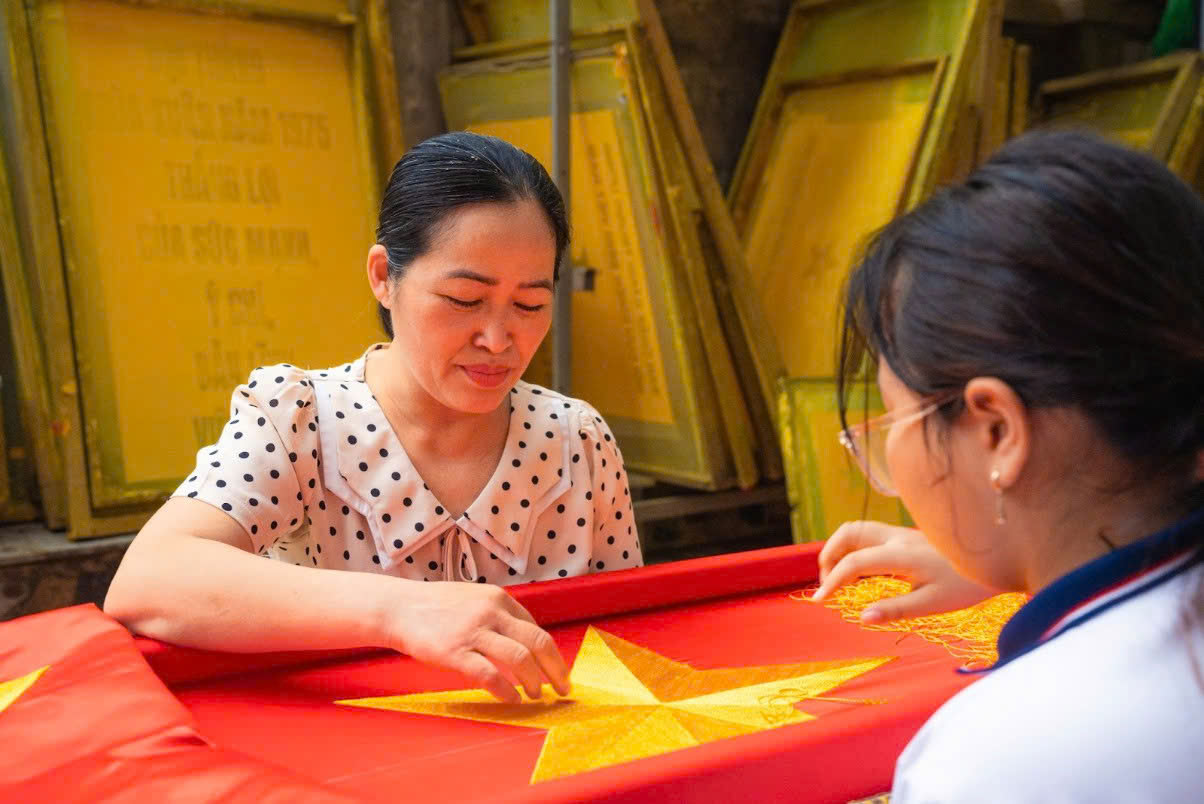
Skillfully stabbing needles up and down, Nguyen Thi Thu Ha (13 years old) said: "Every time there is a holiday or weekend, we go to help my grandmother sew flags. We embroider from morning to night every day, about 3 days to finish a product. Because it is a holiday, I also have a lot of free time and also want to practice the craft to continue the family tradition later.
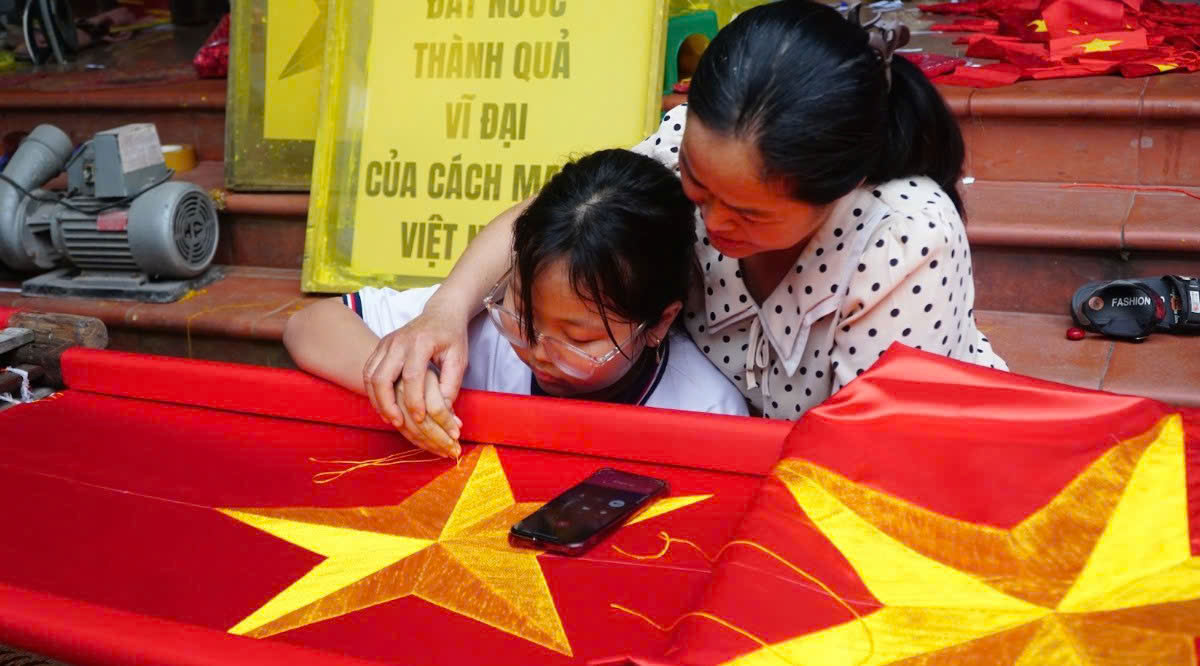
Behind the red fabrics and yellow stars are the hands of diligent artisans, who are not only sewing flags, but also preserving the soul of the country. They still rhythmically put each needle and thread as if they are embroidering in it both pride and flesh and blood of the nation.