
Ancient salt making region
In the early days of the new year, we followed Dr. Doan Ngoc Khoi, Deputy Director of the General Museum of Quang Ngai province, to Go Co village in Pho Thanh ward, a unique coastal village, a gathering place of the quintessence of three cultures: Sa Huynh, Cham Pa and Dai Viet.
Go Co village has only about 105 hectares, with more than 80 households. It is rare to find a place where the living space of ancient cultures is preserved as intact as here. More especially, this village has a rocky beach called salt flat, located in the middle of a deep green forest and vast ocean.
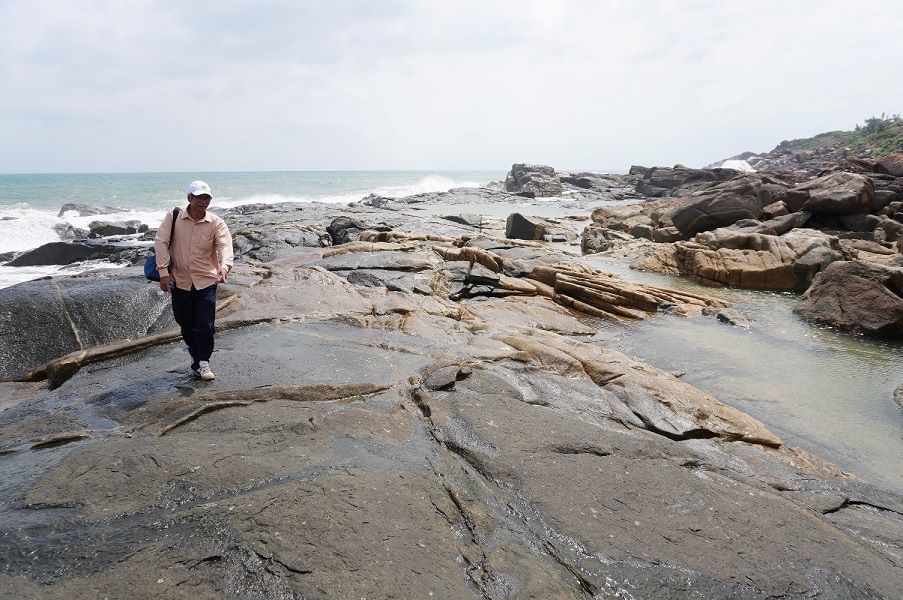
According to Dr. Khoi, in the map distributing Sa Huynh Cultural relics in Central Vietnam, important locations in Sa Huynh are all associated with the river mouth to the sea and salt fields. In the process of studying Sa Huynh culture, especially the residential areas and cemeteries of Sa Huynh residents, he paid special attention to salt.
In many historical documents, it can be seen that the products of coastal residents, typically salt, and mountainous areas with forestry products, are the main commodities. That is the continuation of the tradition of trade going back and forth from Sa Huynh to Champa, then Dai Viet.
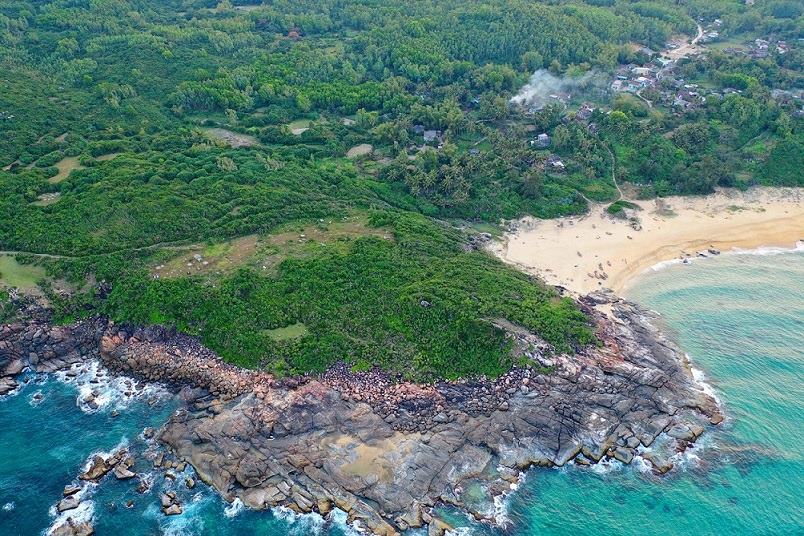
Previously, in excavations on Ly Son Island, he and his colleagues found traces of salt on Sa Huynh pottery. To clarify the unique salt making method of Sa Huynh residents from ancient times, Dr. Khoi realized that it is necessary to change the approach and conduct investigations in a folk direction.
In July 2024, he asked residents of Sa Huynh land about the salt flats. The people of Go Co village said that there is a salt flat located right next to the sea, only a few hundred meters from where they live, chosen by their ancestors as a salt making location from ancient times.
Maintaining rock salt making techniques from 2,000 years ago
According to Dr. Khoi, "trảng" in the local language is a flat area on rocks. The salt flat in Go Co village is located on an ancient basalt stone foundation, with an area of about 10ha and dating back about 2,000 years.
Sharing about the salt making technique passed down from generation to generation, Ms. Bui Thi Van, a resident of Go Co village, said that the stone salt making profession is still maintained by some people in the village. Because the salt is made on stone, it is very clean, tourists who come here are very surprised to see that the salt grains are pure white, without impurities, so they often buy them as gifts.
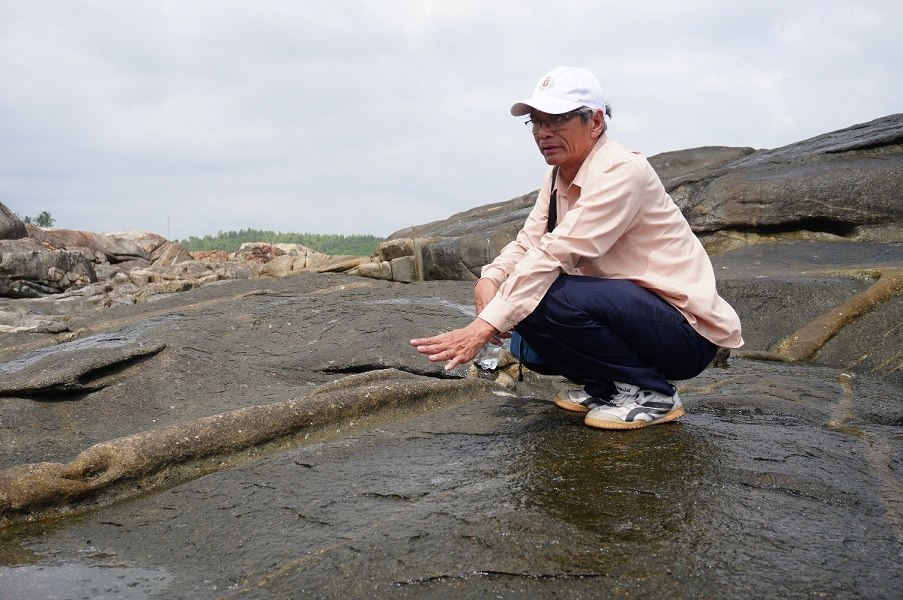
Dr. Khoi said that the technique of making salt on rocks of Sa Huynh residents has existed since prehistoric times. Salt makers take advantage of natural lakes on rocks, containing a fairly large amount of seawater. When seawater in the lake evaporates strongly at noon, Sa Huynh residents will take seawater from this lake, pour it into salt fields on flat rock surfaces or low-lying areas surrounded by banks to sunbathe.
After that, seawater evaporates, crystallizes into salt, and people will harvest it to take home for storage.
This is a very precious and rare ancient salt making site on stone in Vietnam. However, to preserve this area, it is necessary to have additional legal documents to include this area in the list of special national relic Sa Huynh Culture" - Dr. Khoi shared.
Also according to Mr. Khoi, it is necessary to plan and create a salt heritage park, which connects the ancient salt making area and the current salt making area. The connection between traditional and modern salt making will bring deeper awareness of the long-standing salt making process in Sa Huynh, in the space of the special national relic Sa Huynh and in the residential space of ancient Sa Huynh residents.
This will make a great contribution to researching and promoting Vietnamese cultural values to the world and attracting domestic and international tourists.


