
Preserving the soul of heritage gongs to serve tourists
In the bustling atmosphere of Tet, gongs - a unique cultural heritage of the mountains and forests - have the opportunity to resonate, becoming a "bridge" to bring tradition into modern life, while also bringing more livelihoods to local people.
In Mang Den commune, the early spring days are also the peak of operation of restaurants, hotels, areas and tourist attractions. To create their own mark, many businesses have chosen gong performances and xoang dances as cultural highlights, contributing to attracting and retaining tourists. From quite early, professional gong troupes in the area have received many performance invitations.
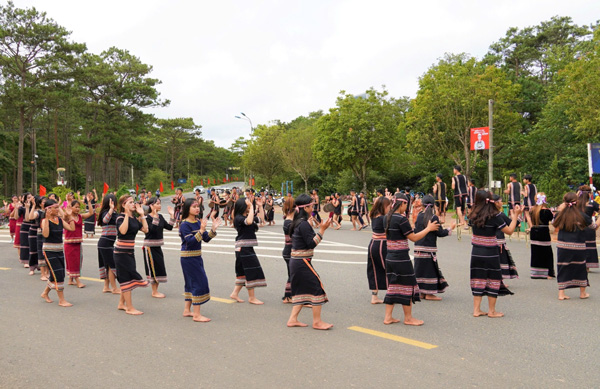
Mr. A Hai - Deputy Head of the Gong Team of Kon Vong Kia village (Mang Den commune), said: "Right from December of the solar calendar, the team has started to strengthen training to prepare for the peak Tet season. Thanks to the serious training process, up to now, the performances have been practiced proficiently, ready to serve tourists in the spring days.
According to Mr. A Hai, when performing for tourism during Tet, the performances are transformed to be more lively and closer to meet the diverse entertainment needs of tourists.
Also in Mang Den commune, Kon Chenh gong and chieng team created their own mark thanks to the harmonious combination of gongs and chiengs with traditional folk instruments. The sounds of the t'rung and klong pút instruments blended with the sound of gongs and drums, bringing a space of art that is both traditional and new at tourist destinations.
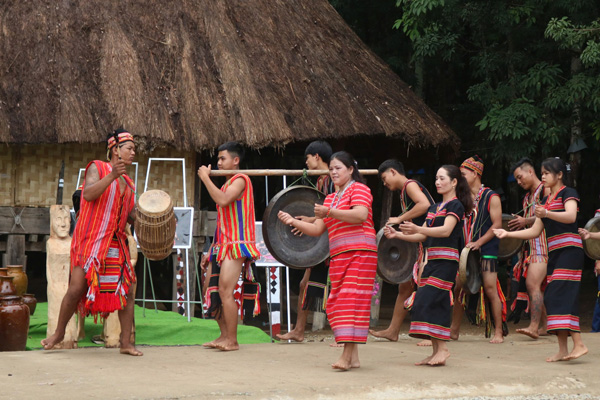
Artisan A Nuong, Head of the Gong Team of Kon Chenh village, shared that each time performing in front of tourists is a great happiness. Not only because the traditional music of our ancestors continues to be heard far, but also because through that, the members of the team have additional income, contributing to improving their lives.
Reality shows that many tourists when coming to Mang Den all want to immerse themselves in the gong space of the mountains and forests. Each performance is not just a tourist activity but also an opportunity for artisans to affirm the unique cultural values of their nation.
When life is ensured by heritage preservation activities, gongs and chiengs have the conditions to have a sustainable presence in the daily life of the community.
Diligently performing gongs to earn income
Not only in Mang Den, at Dak Rang Community Tourist Village (Duc Nong commune), the Tet atmosphere also becomes more bustling thanks to the sound of gongs and chiengs. Visitors here will immerse themselves in the traditional cultural space, connecting the Xoang rhythm with the Gie Trieng people in the joy of early spring.
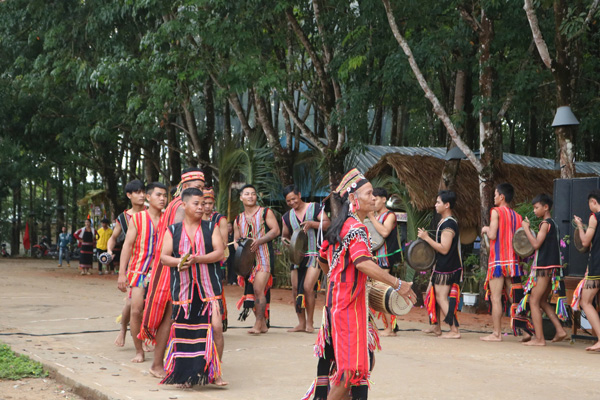
The gong and chieng team of Dak Rang village was established in 2010, currently has 25 members, of which about 20 people regularly participate in performances. Members have joined forces to revive the gong and chieng space not only in the village but also at restaurants and tourist areas in the area on every holiday and Tet.
Mr. A Vuon, a member of the Dak Rang gong and chieng team, said that in the past three years, thanks to participating in tourism performances, each member has had an additional income of 200,000 - 300,000 VND/day per person during the Tet season. This income is not large but contributes to helping people cover their lives, especially in the early days of the year.
Every Tet and spring, the members of the team are excited to practice, because for them, performing gongs and chiengs is not only a source of pride in preserving national cultural identity but also a direction to create sustainable livelihoods. In the days leading up to Tet, by the communal house, the sound of chiengs echoes loudly again, signaling a warm and cohesive spring.
Bringing gongs into community cultural and tourism activities is an effective direction, contributing to promoting heritage to the general public.
Mang Den Commune People's Committee said that, according to 2025 statistics, Mang Den continues to affirm its tourism attraction when welcoming more than 1.8 million visitors, out of a total of about 5 million visitors to Quang Ngai, making an important contribution to tourism revenue of the whole province reaching more than 3,700 billion VND.


