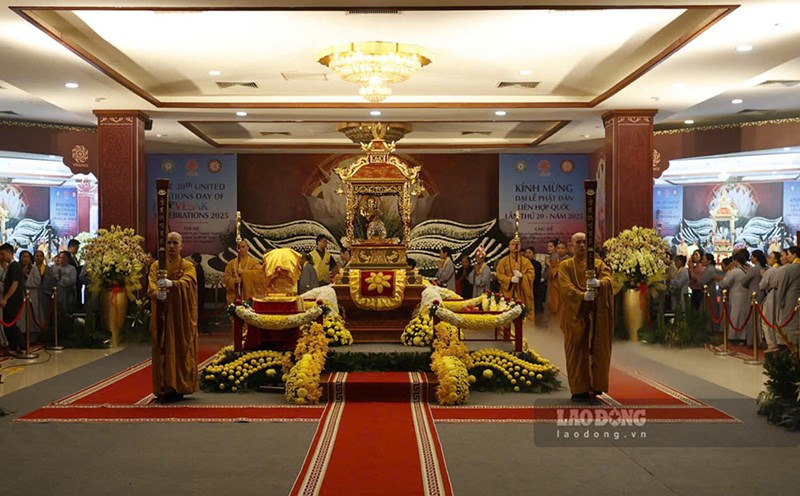
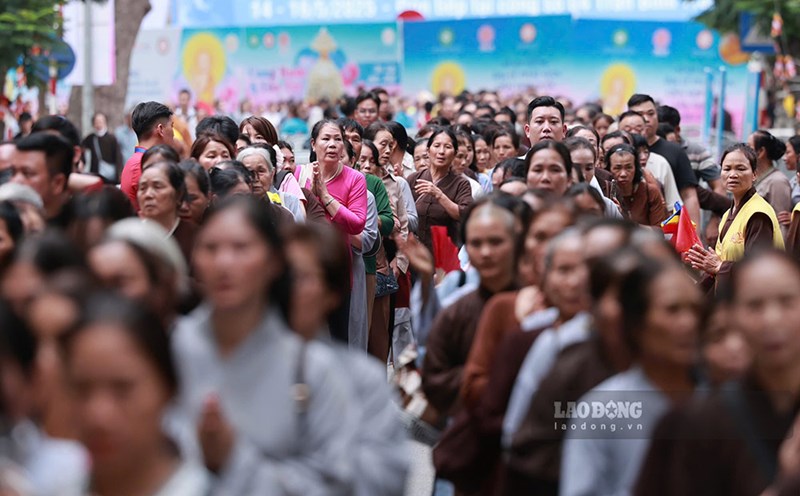
Quan Su Pagoda is one of the oldest pagodas in Hanoi. A large number of people and tourists often come here to worship at the end of the year or pray for peace, luck and fortune in the new year.
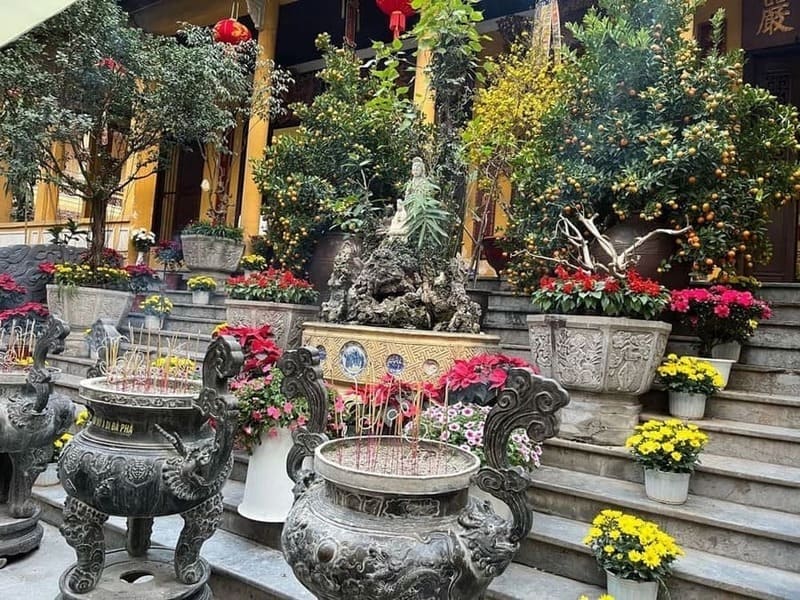
The ancient pagoda was built around the 15th century, during the Later Le Dynasty. Quan Su Pagoda, in addition to worshiping Buddha, also worships Zen master Nguyen Minh Khong, a famous Zen master of the Ly Dynasty.
In 1934, Quan Su Pagoda became the Headquarters of the Bac Ky Buddhist Sangha. To date, the pagoda is the headquarters of the Vietnam Buddhist Sangha. Here, Buddhist festivals such as Buddha's Birthday, Vu Lan... are held annually, attracting a large number of Buddhists to attend.
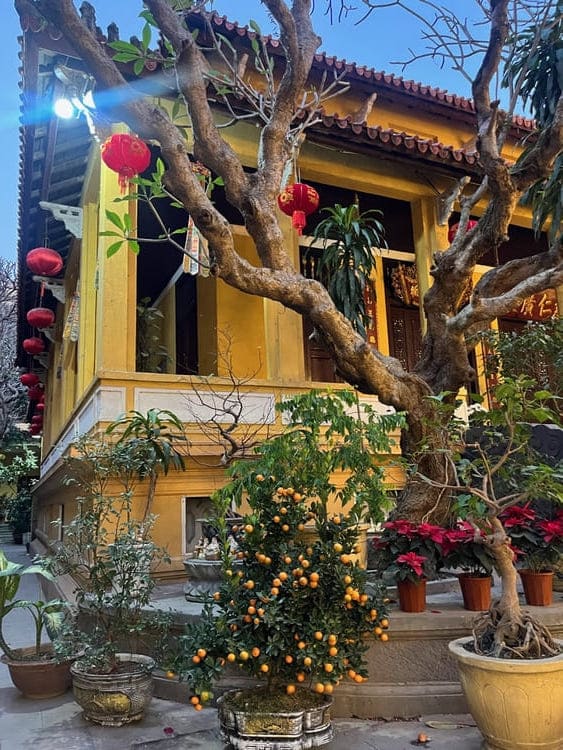
Every Tet and spring, Quan Su Pagoda welcomes thousands of visitors. The spiritual destination with many historical imprints and the peaceful scenery of the pagoda located in the center of Hanoi Capital makes everyone who visits this place, especially on New Year's Eve, feel peaceful after busy days of worry.
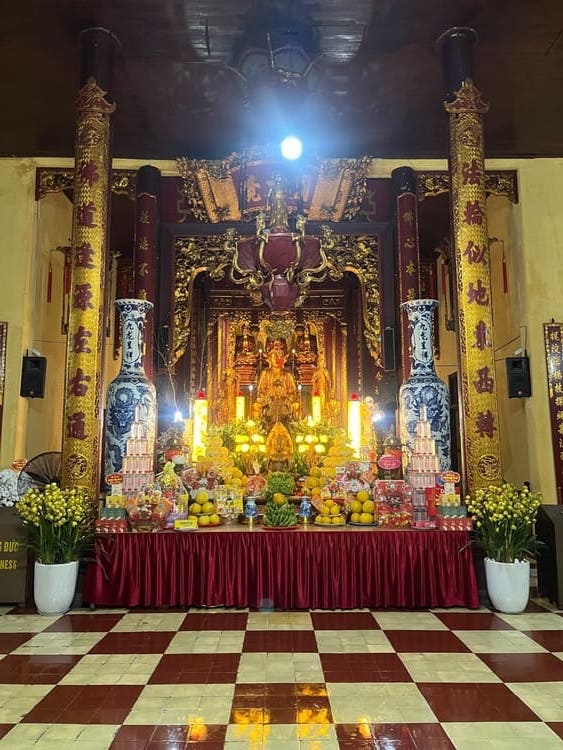
Mr. Hoang Minh (Hoan Kiem ward) said that for 15 years, every year he has come to the pagoda to offer thanks and pray for peace for his family before New Year's Eve.
I like to go to temples before New Year's Eve, when the pagoda is quiet, to both relax and pray while enjoying the quiet space" - Mr. Hoang Minh said.
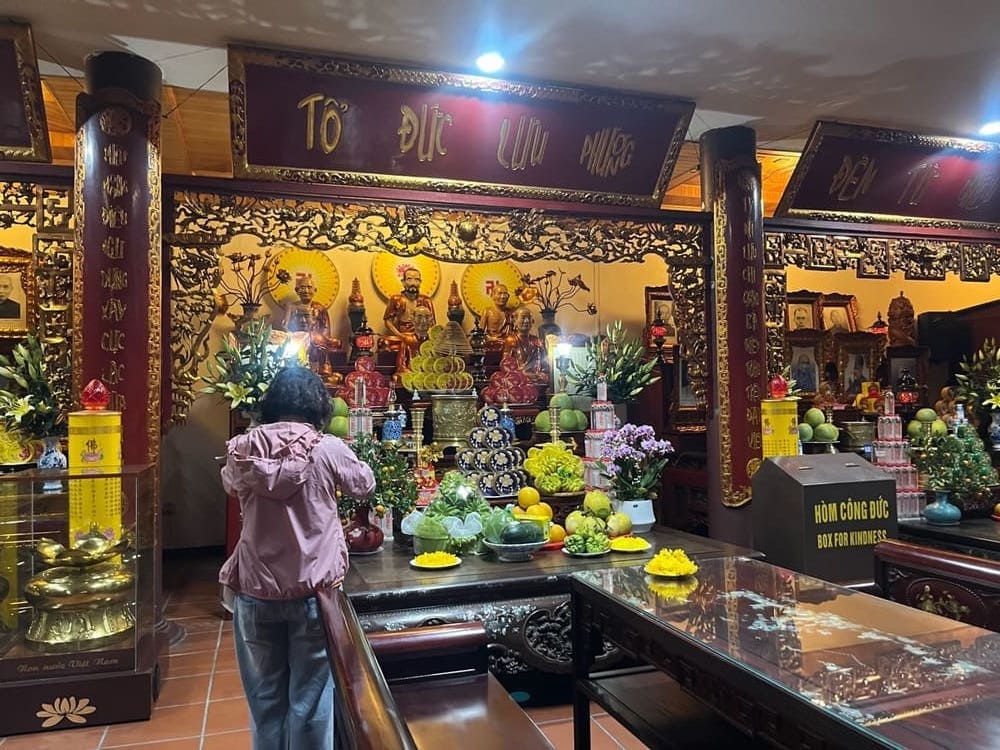
Ms. Vu Thi Luong (Hai Ba Trung ward) said that her house is near Quan Su Pagoda, so she takes advantage of going to worship on the last day of the year.
I don't like being crowded, so I keep the habit of going to the pagoda before New Year's Eve. I pray for peace and health for my family. I hope a new year is just enough to be happy," she shared.
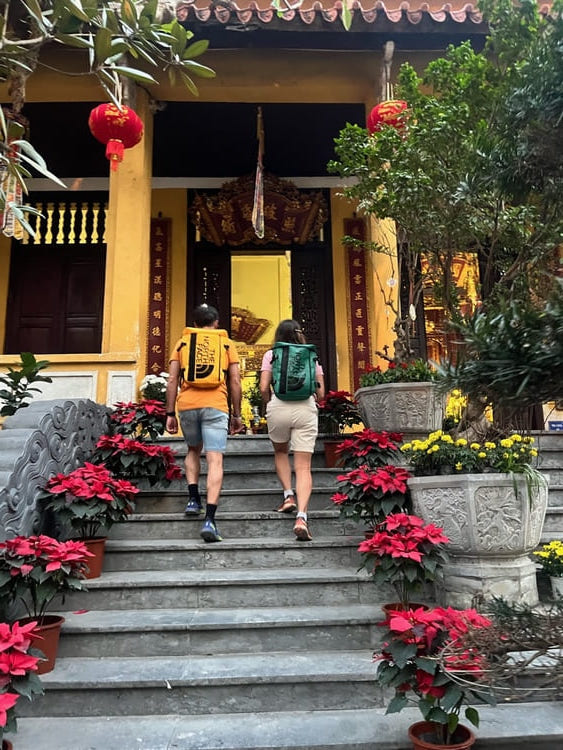
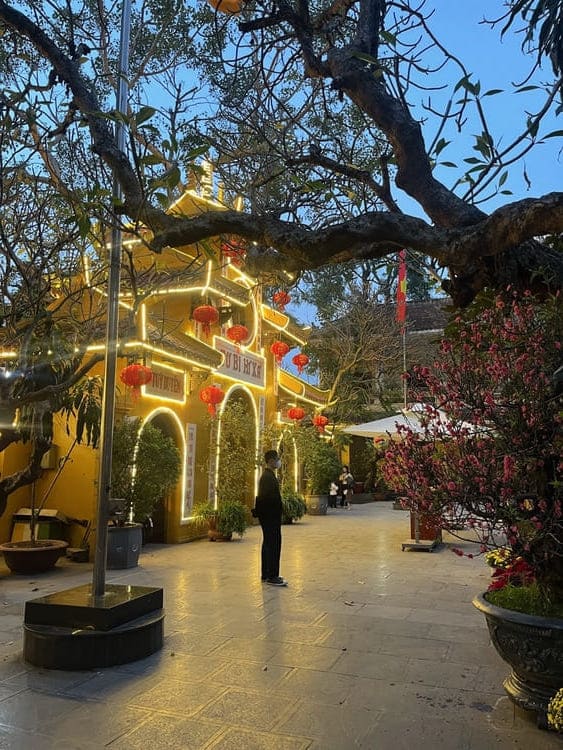
According to representatives of Quan Su Pagoda, all basic preparations have been completed and are ready to welcome people and tourists. Every Tet holiday, many visitors come to the pagoda to worship. People and tourists are advised to maintain the solemnity of the sacred place, and strictly comply with worship regulations to ensure order and safety during the spring festivals at the beginning of the year.