
On April 16, leaders of Cua Lo ward, Nghe An province said that at the beginning of the hot season, the number of people and students going to sea increases rapidly, posing many unsafe risks. Meanwhile, this is not yet a tourist peak season, so a part of people and tourists are still subjective and do not fully comply with the regulations when swimming in the sea.
According to local authorities, recent incidents show that the victims are mainly students and children. Many children are not equipped with swimming skills, situations handling skills when encountering offshore currents, and often go swimming without adult supervision.
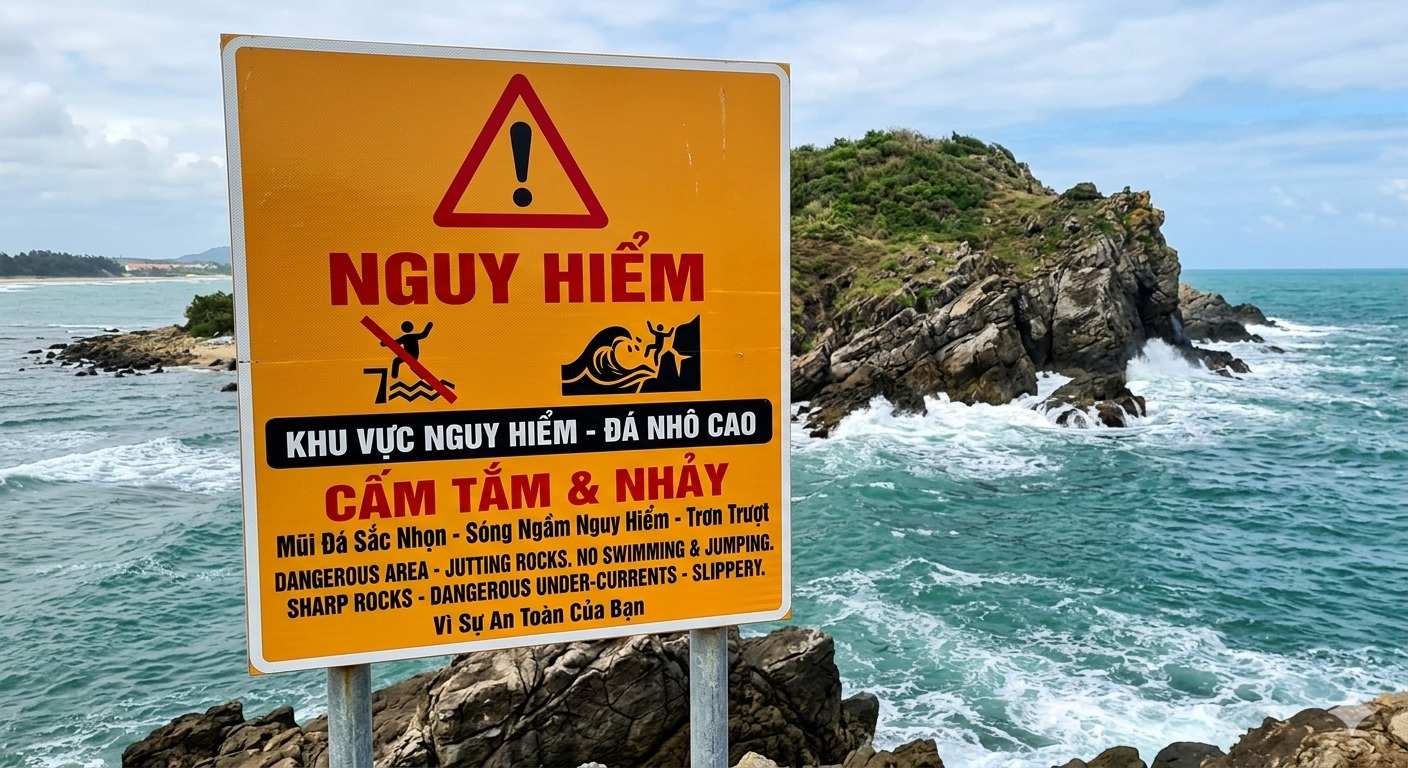
In addition, the natural conditions in some Cua Lo sea areas also pose risks. Big waves, strong winds, especially offshore currents, can sweep people away in a short time. Some cases of swimming outside safe areas, not complying with warnings, have led to unfortunate accidents.
To ensure safety for people and tourists, Cua Lo ward has synchronously implemented many solutions. Rescue forces are arranged to be on duty regularly at the beach, ready with canoes and rescue and emergency equipment to promptly respond when incidents occur.
Observation huts are maintained with people on duty continuously to detect dangerous situations early. At the same time, the locality has placed warning signs in potential risk areas such as places with underground rocks, low water, and whirlpools; and assigned forces to remind and prevent people and tourists from swimming in unsafe locations.
Leaders of Cua Lo ward said that local people understand the terrain characteristics, so they often avoid dangerous areas, but tourists need to pay special attention and follow instructions to ensure safety.
Local authorities recommend that people and tourists absolutely do not swim in dangerous areas without rescue forces; comply with warning signs and instructions from functional agencies.
In particular, do not let children swim alone, adults must accompany them; and at the same time raise awareness about the risk of offshore currents to proactively prevent and minimize possible drowning incidents.


