
Affirming global value
Phong Nha - Ke Bang National Park is officially recognized by UNESCO as the World Biosphere Reserve, marking an important milestone in nature conservation and sustainable development in Quang Tri province as well as Vietnam. This is the 12th biosphere reserve of Vietnam, contributing to enhancing international position, promoting natural and indigenous cultural values.
On June 8, Mr. Pham Hong Thai - Director of Phong Nha - Ke Bang National Park Management Board said that the new title will create new room for the locality to strengthen the promotion of nature conservation values to promote sustainable tourism development models, improve the lives of people in buffer zones and transition zones.
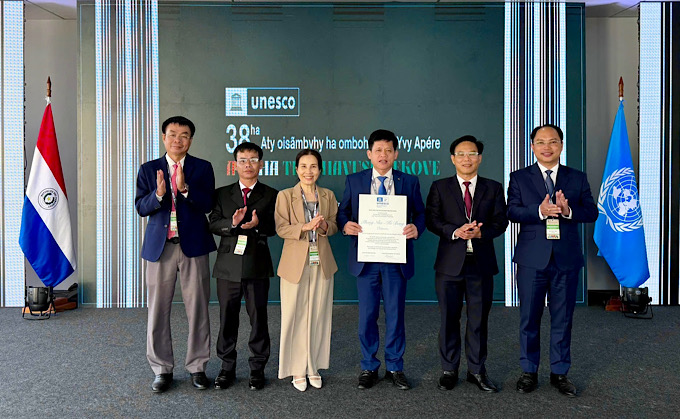
This is a direction to help people become direct beneficiaries of conservation work, instead of just beneficiaries, contributing to strengthening regional linkages and promoting East-West economic development of Quang Tri province in the coming time.
Regarding technical and training support, Mr. Thai informed that UNESCO does not directly provide funding, but training programs, learning experiences and professional cooperation will be considered according to proposals, through funding projects from other international organizations.
This helps improve the management and operation capacity of the Biosphere Reserve, while connecting with international networks to implement effective conservation programs.
The recognition of Phong Nha - Ke Bang also creates opportunities for sustainable tourism development, attracting domestic and foreign tourists, promoting the value of natural landscapes, ecosystems and local culture. At the same time, the title helps raise community awareness, responsibility for resource management, biodiversity protection and preservation of precious heritage values.
Vice Chairman of Quang Tri Provincial People's Committee Le Van Bao said that Phong Nha - Ke Bang being recognized by UNESCO is not only a source of pride, but also a great responsibility for the government and people in management, conservation and sustainable development.
We are committed to seriously implementing UNESCO's recommendations, ensuring the maintenance of standards, building this place into a typical model of harmonious development between humans and nature.
Promoting ecotourism
Phong Nha - Ke Bang has a total area of 515,830 ha, covering 15 communes, including the core zone, buffer zone and transition zone. This area owns a typical tropical primary forest ecosystem on limestone (karst) mountains in Southeast Asia, with thousands of animal and plant species, many of which are rare and endemic species that need to be prioritized for conservation. A unique cave system with more than 500 caves has been discovered, bringing global value in terms of geology, geomorphology and natural landscape.
Previously, Phong Nha - Ke Bang was recognized by UNESCO as a World Natural Heritage Site twice in 2003 and 2015, and in 2025 it became the first inter-border World Heritage Site in Southeast Asia with Hin Nam No National Park (Laos).

With being recognized as a Biosphere Reserve, Phong Nha - Ke Bang currently holds three international titles: World Natural Heritage, Inter-border Heritage and 12th World Biosphere Reserve of Vietnam.
After being recognized, the Management Board of Phong Nha - Ke Bang National Park will continue monitoring measures, scientific research, biodiversity protection and karst ecosystem; maintain management of core zone, buffer zone, transition zone; and coordinate with local communities in conservation and development of ecotourism.
The title also opens up opportunities for international cooperation, learning experiences from other biosphere reserves, exchanging scientific data and improving management capacity.
Phong Nha - Ke Bang has become an international bright spot, and also a typical model for the harmony between nature conservation, green economic development and sustainable tourism in Vietnam.
Registering in the World Biosphere Reserve network helps localities improve management capacity, protect biodiversity, develop livelihoods and promote tourism internationally.


