
Responding to fluctuations
The Middle East conflict has created chain reactions to the global aviation industry. Many areas of airspace are restricted from operation, forcing airlines to adjust routes, even cancel flights or reduce operating frequencies.
At the same time, international airfares are constantly escalating. On some international routes between Asia and Europe, airfares have increased sharply, sometimes reaching tens of millions of VND, even exceeding the threshold of 100 million VND per direction.
Not only international routes, the domestic market also recorded ticket prices maintained at a high level, even before entering the peak tourist season. The situation of flight consolidation, flight schedule adjustment, refund - cancellation also occurred at many airlines to cope with cost fluctuations and operating conditions.
In that context, travel businesses are forced to proactively adapt. Sharing with Lao Dong, Mr. Bui Thanh Tu - Marketing Director of BestPrice Travel Company said that since the Middle East war broke out, the inbound market (international visitors to Vietnam) has suffered certain impacts because tourists cannot move according to the original plan.
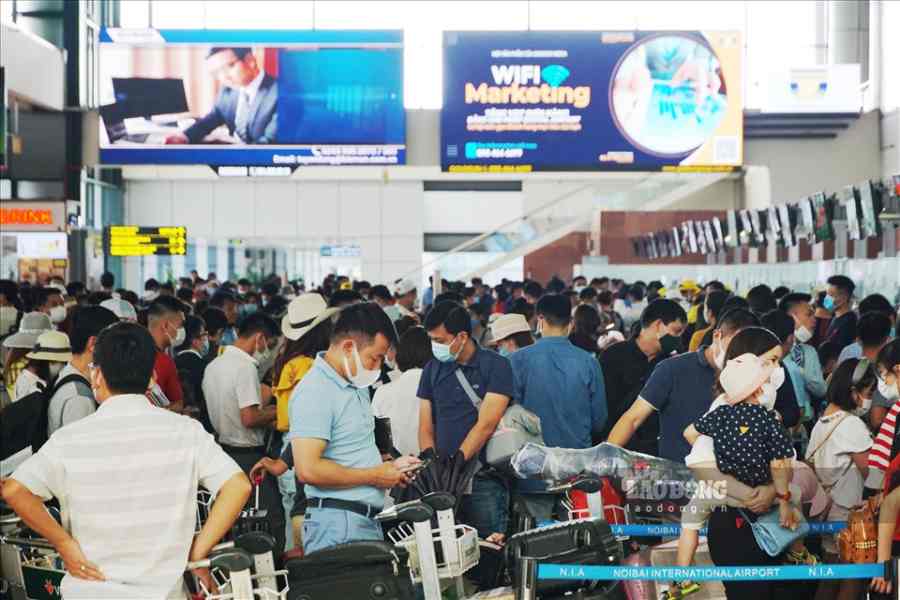
We propose two solutions: refund or persuade customers to postpone the departure date. In which, the priority is to persuade customers to switch to further times and in fact about 70% of customers have agreed to postpone the schedule to the end of this year or the beginning of next year," Mr. Tu said.
For the outbound market (Vietnamese tourists going abroad), the Middle East is originally a destination for groups of customers with high payment capacity, but this business accounts for less than 10% of the total number of customers. However, the current fluctuations still directly affect some groups scheduled to depart in April, forcing businesses to adjust plans to ensure the rights of customers.
According to Mr. Bui Thanh Tu, increased travel costs, especially high airfares in the period from November last year to April this year, have clearly impacted revenue. On some domestic routes, flight consolidation or cancellation causes businesses to refund customers, although this rate is still under control.
Seek opportunities from near markets
Rising airfares and global political instability also affect the travel demand and choices of international tourists.
Mr. Nguyen Cong Hoan, General Director of Flamigo Redtours, said that the current tourism market is not only affected by seasonal factors but also by global fluctuations.
The complicated war situation will greatly affect international tourism demand, not only for Vietnamese tourists going abroad but also for international tourists coming to Vietnam," Mr. Hoan said.
According to him, factors such as political instability and the risk of widespread conflict make tourists tend to limit long journeys, especially intercontinental flights.
In addition, many international routes are currently dependent on transit points such as the Middle East. When airlines operating in this area are affected, the entire flight system to further areas is also affected in a chain reaction, making tourists hesitant.
Notably, high airfares have directly pushed up travel costs, affecting the general needs of the market, especially for long-day journeys.

However, in challenges, opportunities still exist. Mr. Hoan believes that Vietnam can take advantage of the trend of shifting to near destinations: "If distant markets such as Europe and America face difficulties, then near markets such as Northeast Asia and ASEAN will consider Vietnam as a more convenient, reasonably costly and safe destination.
Reality over the past time shows that Northeast Asian markets such as Japan, South Korea, Taiwan (China), China or Southeast Asian countries such as Thailand, Malaysia, Philippines are bringing a stable source of tourists to Vietnam tourism.
In addition, Vietnam still maintains a competitive advantage thanks to reasonable ground service costs.
“Hotel, food, transportation... costs of Vietnam are not inferior to countries in the region but are cheaper, so when the price level increases, destinations with reasonable costs will have a competitive advantage,” Mr. Hoan emphasized.
Businesses recommend that tourists plan and book services early to avoid price increases close to the date. The tourism industry will continue to flexibly adapt costs, while ensuring customer experience.


