From selling agricultural products to selling experiences
Recently, a farmer in Mi Son (Tu Xuyen province, China) caused a stir on social networks when he turned his entire sugarcane field into... a playground for " stealing sugarcane".
Instead of harvesting and selling sugarcane in the traditional way, he opens the farm at night. Customers paid 9.9 yuan (about 40,000 VND) to "steal" sugarcane. If caught, the "theft" will have to pay an additional 14.9 yuan (about 60,000 VND).
The game has a simple rule: steal sugarcane but don't let yourself get caught. In particular, the garden owner also released the trained dog to be a "nPC character" (a character who is not a player in a video game), increasing the feeling of excitement, but the safety level is still under control.
Unique ideas quickly attract many participants, especially in the evening. Each night, garden owners sell 500-600 sugarcane trees, about 10 times more than the traditional sale method of only 50 trees.
This unique model has spread to many other sugarcane growing regions of China, with some places consuming up to 1,000 sugarcane trees/day. Farm owners benefit because they sell a lot of goods. Meanwhile, players are mainly office workers, considering this a way to relieve stress, move and regain the feeling of childhood.
Many customers even joked: "If you work hard, you will find it sweeter to eat".
Diversifying types of agricultural tourism experiences in China
In fact, in China, many agricultural tourism models have been developed that allow visitors to return to their childhood, or immerse themselves in the lives of local people to enhance their experience.
In some provinces such as Zhejiang, Jiangsu, Guangxi, Sichuan, and Yunnan, there are models for customers to dig sweet potatoes at home in the fields. After harvesting, visitors will contribute leaves or wrap paper to put in the soil kiln/burnt soil hole. The on-site rural dining experience is loved by many people.
Or in the northern provinces such as Hebei, Lieu Ninh, Heilong Giang, in the late autumn - early winter, people organize activities to experience picking mustard greens and harvesting red mustard, attracting many locals and tourists to participate. The chopped radishes will be brought home or processed on the spot into a typical dish. Some places also organize buckwheat picking competitions as a cultural activity that attracts tourists.
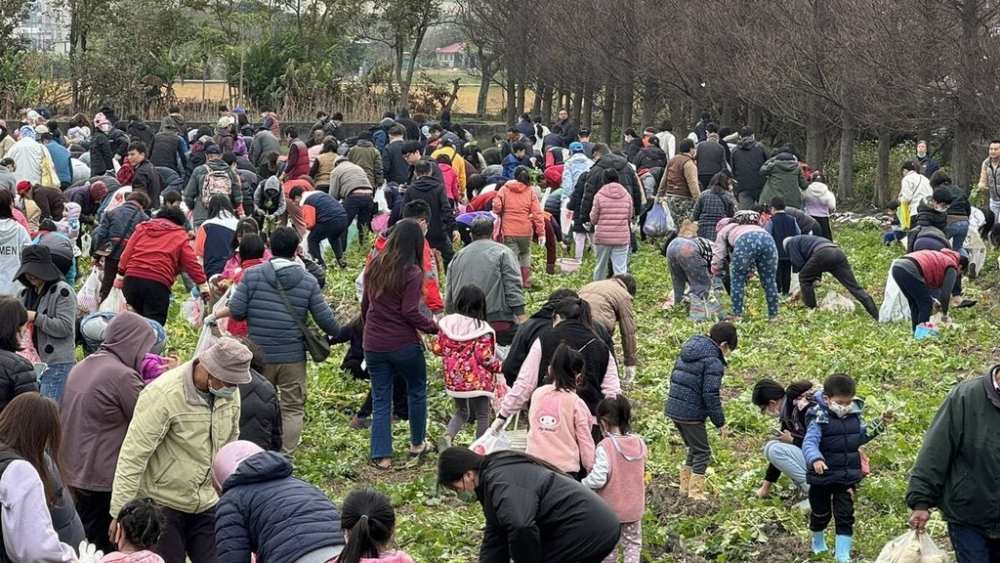
In 2021, the program "Reed picking tour" attracted more than 400 parents and children to participate in Taiwan (China). In less than 20 minutes, the 300 square meterbed field was harvested, bringing an extremely bustling atmosphere. Children are eager to experience the first time picking the radish, while parents take the opportunity to pick and prepare it into dried radish.
Due to the sudden increase in the number of registrants, the organizers had to prepare an additional field of radishes to serve tourists. Since then, the experience tour of growing radish farms has become popular every season and attracted many people.
Experience models originating from simple ideas show that agriculture can completely become an attractive tourism product if there is a creative element, associated with the emotions of tourists. From "stealing sugarcane", baking potatoes, to picking radishes, things that keep participants with true emotions and connecting experiences.
The trend of "selling agricultural products through experience" is therefore increasingly flourishing in China, opening up a new development direction for agricultural tourism that Vietnam can learn from in the future.