
Entering a new stage of development, the Ho Chi Minh City tourism industry identifies products as an important factor to retain tourists and improve the competitiveness of destinations. Instead of developing sprawling, travel businesses and management agencies are aiming to deeply exploit existing potentials, expand experiential spaces and better meet the increasingly diverse needs of tourists.
Talking to Lao Dong Newspaper, a representative of VinaGroup Travel Company said that in the direction of developing tourism products in Ho Chi Minh City in the coming time, the business focuses on 3 main pillars including culinary tourism, health care tourism and experiential tourism. These are product groups suitable for new consumption trends, when tourists not only visit but also want to explore the city in a unique, in-depth and distinctive way.
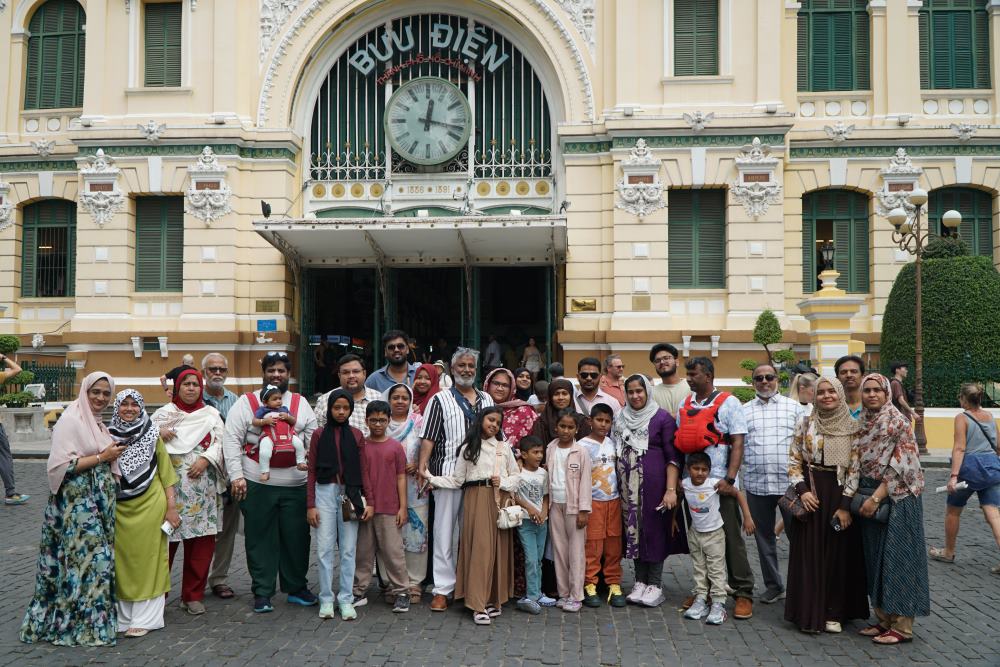
On that platform, this business has designed journeys that combine many needs in the same product, helping tourists both experience urban life and enjoy cultural, culinary and health care services. This approach is expected to increase the length of stay as well as the spending level of tourists in Ho Chi Minh City.
In parallel with traditional products, businesses continue to innovate and develop unique types such as river tourism and helicopter tourism.
In which, helicopter tourism is considered a new highlight, exploiting the connecting route from the center of Ho Chi Minh City to Vung Tau, combining local resort and experience services. This type is assessed to have the potential to attract both international and domestic tourists, especially groups with high spending potential.
Representatives of Vietluxtour Company said that entering 2026, the business identifies cultural tourism as continuing to be one of the strategic pillars of the domestic and inbound markets (bringing international visitors to Vietnam).
Businesses focus on developing "culture with stories" products, increasing experience and personalization, and at the same time, promoting connections with international markets. Inner-city cultural tours are also considered the foundation for developing MICE packages combining cultural experiences, suitable for high-value tourism trends.
According to the Ho Chi Minh City Department of Tourism, in 2026, the city will continue to implement the Tourism Development Project to 2030, with a focus on improving the quality and diversification of products, focusing on typical products of large cities.
The development of products associated with new spaces, new infrastructure and regional linkages is considered an important direction to create sustainable growth momentum for city tourism. With this orientation, Ho Chi Minh City's tourism industry expects to realize the goal of welcoming about 11 million international visitors, 50 million domestic visitors in 2026, with total tourism revenue estimated at about 330,000 billion VND.


