
According to Xinhua news agency, Chinese social networks are booming with a new tourism trend called "textbook check-in", shifting from pure sightseeing to trips to learn deeply about geological science and nature.
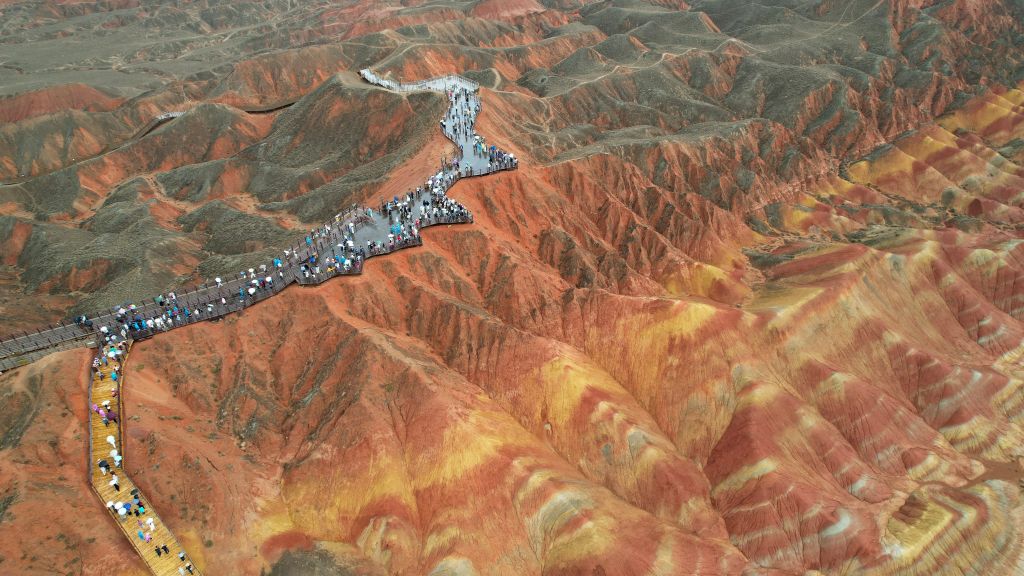
Many nature exploration tourist destinations have attracted a large number of visitors. That Thai Dan Ha Geological Park in Zhang Yi city, Gansu province has become a prominent destination for young tourists and students.
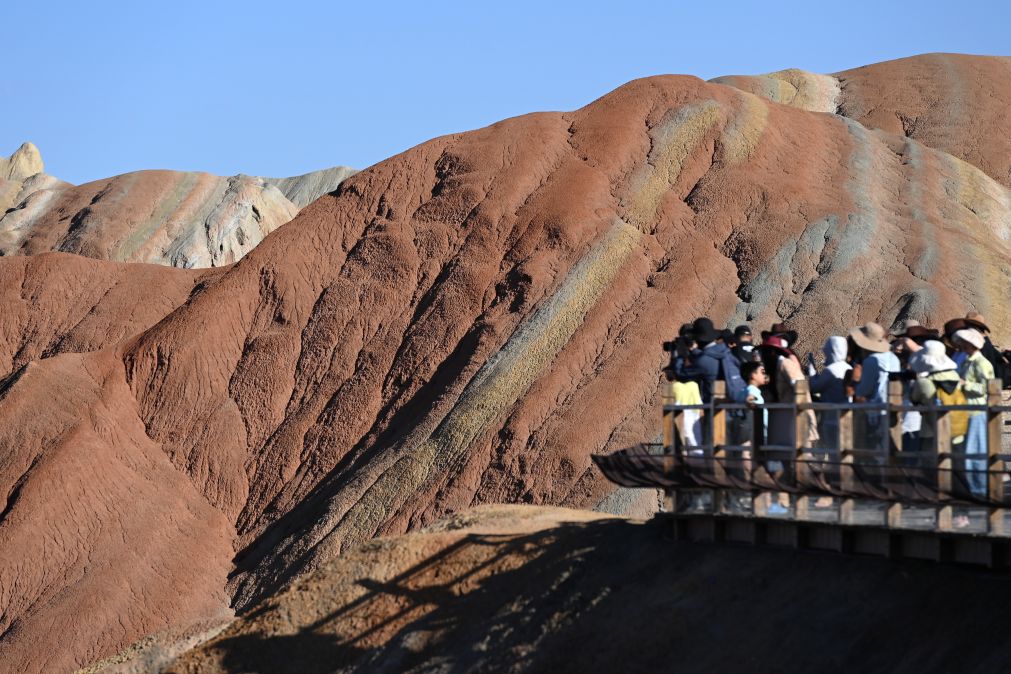
Many young people who came to check-in held textbooks in their hands, adjusting the actual geomorphic photo on the book cover to accurately match the colorful hills in front of their eyes to take commemorative photos of special significance.
In order to meet new tastes, destinations have proactively renewed the service ecosystem, focusing on increasing the depth of experience for tourists.
In That Thai Dan Ha, the management board opens in-depth tours to take visitors to the core area to directly observe the angles of the rock layers and the layered structure of the terrain. At Binh Son Lake (Truong Dich) canyon, the natural landscape is integrated into role-playing games, allowing participants to wear ancient costumes and decode puzzles along the cliff trail.
Meanwhile, Thuy Mac Dan Ha tourist area (Lan Chau city) operates a 3.5km long wooden bridge along the mountainside combined with an exhibition house of stone samples and ancient fossils, forming a "indoor exhibition associated with field survey" model.
Product innovation has created a great boost for the number of visitors and practical research. In 2025, That Thai Dan Ha tourist area welcomed more than 3.42 million visitors, while Thuy Mac Dan Ha tourist area surpassed the milestone of 1 million visitors.
Notably, the experiential learning tourism model recorded clear growth when Truong Dich World Geopark welcomed 216 research teams with 170,000 students participating in experiencing using geological hammers and identifying iron and manganese minerals to create color for soil and rocks.
Associate Professor Trinh Hoang Nghi from the University of Lanzhou's Academy of Natural Resources and Environment said that compared to traditional sightseeing tourism, role-playing exploration activities such as field geological research or geographical exploration walking have changed the way knowledge is conveyed, helping tourists have a richer experience and understand more about the hundreds of millions of years of Earth's history.
The shift in tourism trends is spreading throughout many localities in China. With 51 world geoparks, China is making the most of this advantage to develop indigenous tourism.


