
Early labor migration - a risky choice for children
According to the Department of Parents of Children - Ministry of Health, early labor migration is one of the factors that increase the risk of children becoming child laborers, especially when children leave their families to work in urban areas, industrial parks or small production facilities.
In many cases, children work far away through acquaintances, unofficial brokers, lacking information about working conditions, salaries and benefits, making them vulnerable to exploitation of labor.
At this time, if parents have an orientation for their children, it will help them a lot in the long run. Career guidance is an important step to help children avoid having to work early in a passive way.
Experts recommend that parents need to help their children: Identify their abilities, interests and physical condition; Understand that not every profession is suitable for children; Avoid the mentality of "going to work early to reduce the burden on the family" at all costs.
This correct orientation will help children have more options outside of the workforce early, especially vocational training forms suitable for their age.
When children are forced to work, parents need to carefully check: The legal age of the child according to regulations; The nature of the work is on the list of prohibited jobs for children; The working time affects the child's studies or not.
These are the recommendations given in the document What do you know about child labor, issued by the Department of Mental Health (Ministry of Health) in coordination with the International Labor Organization (ILO).
Parents should also note that letting children do heavy, toxic jobs or work overtime is a violation of the law, even with the consent of the family.
One of the most important steps is to clearly verify where your child will work.
Parents need to find out information about employers; Avoid sending their children through unclear brokerage channels; Prioritize places with transparent working conditions.
"Send" children to acquaintances but cannot control working conditions has many potential risks that parents often underestimate.
More importantly, parents should equip their children with self-protection skills before going away. Before children leave home, parents need to instruct children to recognize signs of exploitation and abuse; not to do dangerous work even though they are forced; always stay in touch with their families; know how to reach adults, authorities, and child protection officers when at risk.
These skills help children have the ability to protect themselves in unfamiliar environments.
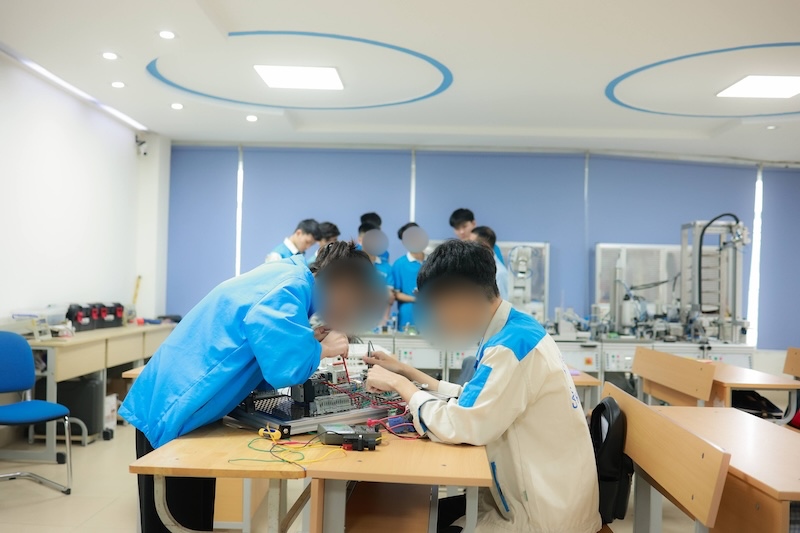
Parents should not " relax" when their children work far away
Many families believe that when their children work far away, their parents' responsibility is reduced.
In fact, parents still play a supervisory and protective role, through: Regular communication; Ask about working hours and living conditions; Timely intervention when there are signs of abnormality. Parents' continuous care is an important "shield" to help children avoid falling into prolonged child labor.
Coordinating with schools and local authorities is one of the important recommendations given by experts. In case children are at risk of dropping out of school to work, parents should discuss with teachers and schools; reached out to child protection officers at the commune/ward level; Learn about policies to support learning and family livelihoods.
Learn about where your child works and what is done by your child; Look up relatives and acquaintances living in the place where your child works; Record the phone number of the police and local authorities to contact in case of emergency; instruct your child on safe skills when away from home.
This coordination helps the family have an alternative to letting their children go to work early.
Experts from the Department of Parents and Children - Ministry of Health recommend: When children are forced to work far away, careful preparation and the continuous support of parents are decisive factors to prevent children from falling into child labor.
The right career direction, safe migration and persistent care of the family are the most practical ways to protect children in difficult circumstances.


