
No longer a type of art only for luxurious auditoriums, symphonic music today is being approached in a more approachable way, becoming a bridge between cultures and making Vietnam a destination for more and more international artists.
Removing "misunderstandings" about symphony music
For many people, symphonic music is still associated with the image of tens of minutes of works, solemn theaters and a somewhat distant listening space. However, reality is gradually changing.
Olivier Ochanine - Music Director and Main Conductor of the Sun Symphony Orchestra (SSO), believes that one of the reasons why the public finds symphony difficult to access stems from modern life itself. According to him, most popular music today only lasts a few minutes, while symphonic works can last up to half an hour or more. Besides, the explosion of social networks and countless distractions make it increasingly difficult for people to maintain concentration for long periods of time. However, Olivier believes that many prejudices about symphony music stem from misunderstandings rather than music itself.
“We don't require audiences to learn music to enjoy a concert, just like no one needs to learn to make movies to enjoy movies,” he shared. According to the conductor, the responsibility of an artist is not only to perform, but also to find ways to introduce music in a more open and friendly way so that the public feels welcome. That is also why more and more orchestras around the world are promoting community activities, educational performances and interacting with audiences. For Olivier, programs for students or performances combined with dialogue are experiences that show that music can reach even people who have never been exposed to symphony before.
One of the projects that impressed him the most was the program for the architectural community and architecture students. Instead of just performing, the orchestra introduced the similarities between architecture and music, thereby helping the audience realize that music is not a foreign world but has a close relationship with many other fields of life, from mathematics, physics to psychology.
Vietnam becomes a rendezvous for many international artists
If Olivier represents the perspective of the person who brings music to the public, then Victoria Fillipova, a violinist working in Hanoi, is proof of the journey of international artists choosing Vietnam as a stopover in their careers.
Victoria came to Hanoi after participating in a selection for the Sun Symphony Orchestra. What keeps her is not only her career opportunity but also the cultural environment she finds in this city. According to the female artist, although each country has a different cultural context, audiences everywhere have a common need: to feel and connect through music. From her performance experience in Vietnam, Victoria realized that music will be easier to reach the public when it tells a story. Instead of just focusing on technique or sound structure, she is increasingly focusing on conveying meaning and emotion through each work. “At the present time, I don't just want to create music from simple notes or sentences. What I care more about is telling a story and conveying the meaning behind the work. Because audiences are often more likely to feel a story than abstract sounds. When music has meaning and listeners truly feel it, they will easily connect with it," she shared.
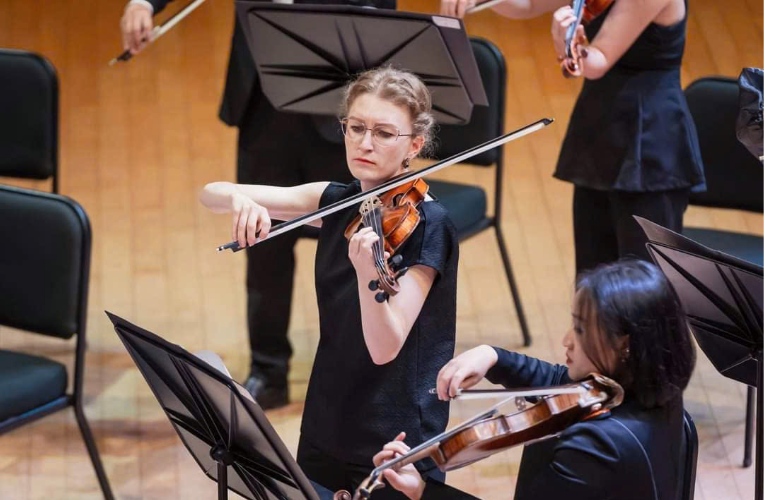
According to Victoria, the biggest challenge of classical music today lies not in the quality of art but in the ability to maintain public attention in a world full of immediate stimuli. However, she still believes that people always have a need to seek deeper emotions, and music is one of the paths leading to that experience.
When symphony music becomes a cultural bridge
These movements are also being clearly felt by young Vietnamese audiences. Nguyen Duc Huy, a student at the Diplomatic Academy and a violin player, said that the emotional depth of classical music has made him attached to this genre. For Huy, music is not only for entertainment but also a way to tell stories and connect with cultural values. However, the journey to classical music is not easy. Huy believes that many young people still consider this a difficult and distant genre of music. Besides, the access environment is still limited when popular music products today mainly belong to popular music genres with faster and easier to accept tempo.
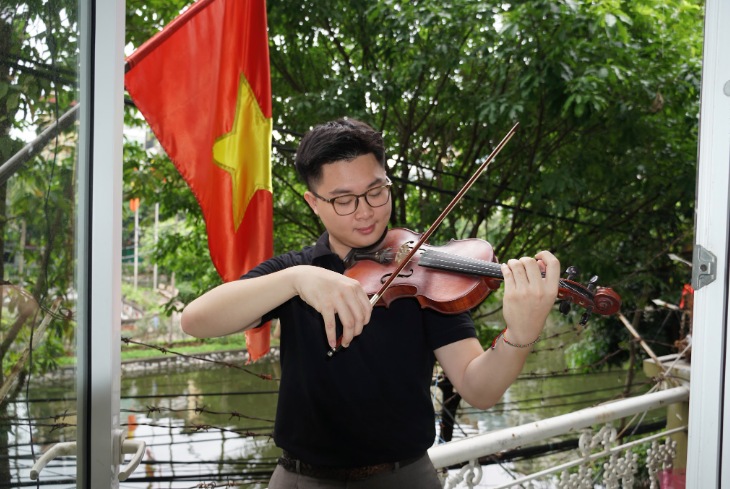
It is noteworthy that the process of learning violin helps Huy find the intersection between Western music and Vietnamese identity. When trying to perform familiar melodies such as "Beo dat may troi" on violin, he feels that classical music becomes much closer. That experience reflects a trend taking place in Vietnamese art life: instead of fully accepting imported cultural values, the public and artists are actively creating new combinations between international and local elements. This is also what many scholars call "cultural diplomacy from the people", the exchange process takes place through everyday interactions, where art plays a role as a common language. In the context of globalization, cultural and artistic activities are increasingly seen as an important tool to enhance understanding between countries, build the image of the country and promote connection between people.
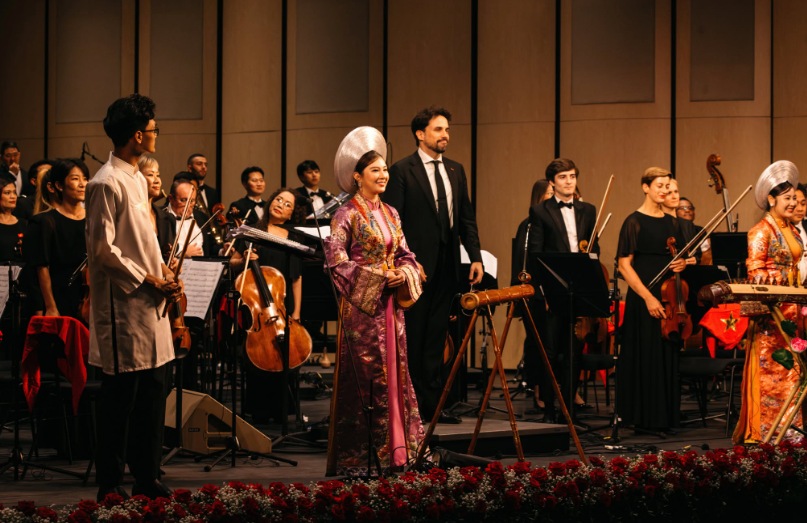
From that perspective, the presence of international artists in Vietnam is not simply a professional story. Each performance, each music class or each conversation with the audience is part of the cultural exchange process taking place every day. Olivier Ochanine sees musicians as "cultural ambassadors". According to him, a symphony orchestra of 80 to 100 artists from many different countries is a miniature model of a diverse but still harmonious society. They speak different languages, carry different cultural foundations but share an emotional experience on stage.
In an increasingly polarized world due to differences in language, culture and perspectives, music may not solve all problems. But as is happening in Hanoi, it is still silently playing an important role: creating meetings, vibrations, understanding and connections that transcend all boundaries. And perhaps, from those symphonies echoing in the heart of the city, another image of Vietnam is also being formed. This is not only a place to receive world culture, but also a destination for cultures to meet, dialogue and speak out in common.


