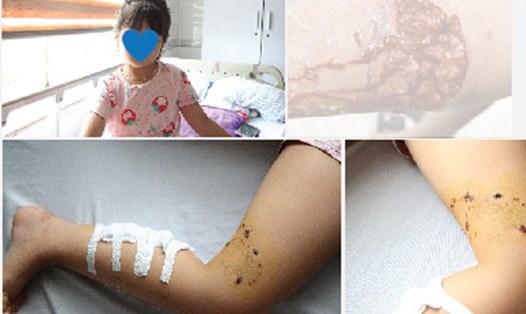
The patient was L.V.H (born in 2011, Thai ethnic group, Son La), admitted to the hospital with thigh inflammation, muscle atrophy, pneumonia, pleuralural overflow and almost unable to walk.
According to the family, while living at home with his grandparents because his parents were working far away, H was bitten by the family's pig in the right knee. The wound was not washed or treated medically. 7 days later, the patient began to have a high fever, the bitten area was swollen and red, and limited movement. When taken to the district hospital, the condition quickly became worse and the patient was diagnosed with septic shock, forcing him to be transferred to the National Children's Hospital.
Here, the examination results showed that the patient was infected with Staphylococcus aureus bacteria, sugar from the pig's bite. The bacteria have damaged the two thighs, right thigh inflammation, muscle atrophy, pneumonia and pleuralural effusion. After 20 days of treatment, although the fever had decreased, the patient still had pain in the sides of the hip joint and could not walk, so he was transferred to the Central Hospital for Tropical Diseases.
At the Central Hospital for Tropical Diseases, the patient was diagnosed with thrombocytopenic purpura with osteoarthritis, aplasma and pneumonia - melonemia. After 11 days of treatment with specific antibiotics combined with rehabilitation, the patient had no fever, no emphysema of the lung and could walk again. However, bone damage still needs long-term monitoring and has not yet required surgical intervention.
Doctor Bui Hien (Pediatric Department, Central Hospital for Tropical Diseases) said: If we continue to meet the treatment regimen well, the child can be discharged from the hospital in about 68 weeks.
According to Dr. Hien, yellow blood cell bacteria are highly toxic and resistant to many antibiotics. If not diagnosed and treated promptly, the patient is likely to suffer from serious complications such as: Tissue inflammation, muscle atrophy, sepsis, multiple organ damage, and risk of death.
Staphylococcus aureus bacteria are already resident on the skin and mucous membranes, but when there are open wounds, poor hygiene or reduced resistance, they can easily invade and cause disease.
Experts recommend that people: Maintain personal hygiene, wash their hands regularly with soap or antibacterial solution. When there is a scratched wound or bitten by an animal, you need to: Wash it immediately with water and soap, disinfect it, cover it with a anti-bacterial bandage/guard, go to a medical facility when there are signs of swelling - heat - redness - pain, pus, fever. Absolutely do not be subjective in self-treating at home because infections can spread, causing dangerous complications and treatment is prolonged and expensive.