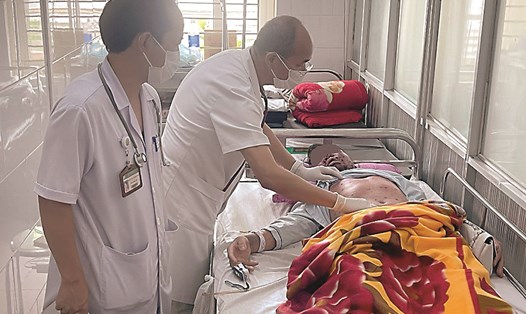
Live-and-death battles in the intensive care unit
At the Intensive Care Center, National Hospital for Tropical Diseases, many patients are fighting for their lives every day. Typically, the case of Mr. S.V. T, 39 years old, in Lang Son, was admitted to the hospital in a state of septic shock and abdominal infection after surgery for intestinal obstruction on a background of severe chickenpox.
About 10 days before admission, the patient developed severe abdominal pain, constipation and underwent surgery at the lower level. However, immediately after surgery, the characteristic blisters of chickenpox broke out from the abdomen and spread throughout the body. The infection became increasingly severe, abdominal distension, and digestive fluids leaked through drainage, making the prognosis worse.
When transferred to the central level, the patient's inflammatory indicators skyrocketed, and the immune system seriously deteriorated. Doctors determined that this was a particularly complex case when the infectious disease broke out simultaneously with surgical complications and sepsis, forcing multi-specialized combination treatment to maintain life.
Another case is Mr. L.V. T, 20 years old in Lao Cai, who was hospitalized late when the virus had attacked deep into the internal organs, causing respiratory failure and acute liver failure on the background of kidney failure syndrome. The treatment process encountered many difficulties, and the prognosis was cautious.
Vacant immune "shield
Doctor Nguyen Hong Ky, Center for Intensive Care, said that the common point of most severe cases is that they have never been vaccinated against chickenpox. The lack of an immune "shield" makes the Varicella-Zoster virus easily attack, especially in people with weak resistance or using immunosuppressants.
Compared to children, chickenpox in adults usually progresses more severely with symptoms of high fever, systemic pain and high risk of complications such as progressive acute pneumonia (ARDS), encephalitis or sepsis.
Not only that, subjectivity in home care also contributes to making the disease worse. Many people still abstain from bathing, extreme wind abstinence, arbitrarily apply leaves or use drugs containing corticosteroids without prescription. These mistakes unintentionally create conditions for bacteria to invade through broken blisters, leading to blood infection and multiple organ failure.
Experts warn that people should not underestimate initial signs such as fever, fatigue or blisters on the skin. When suspicious symptoms appear, they need to go to a medical facility for diagnosis and timely treatment, avoiding arbitrarily applying unverified folk methods.
Besides keeping the body clean and dry to limit secondary infections, vaccination is still the most effective and proactive measure to prevent the disease.