
From May 13-24, Hai Chau Ward People's Committee (Da Nang City) organized rabies vaccination for dogs and cats in the area in 2026 to control rabies and limit its spread to humans.

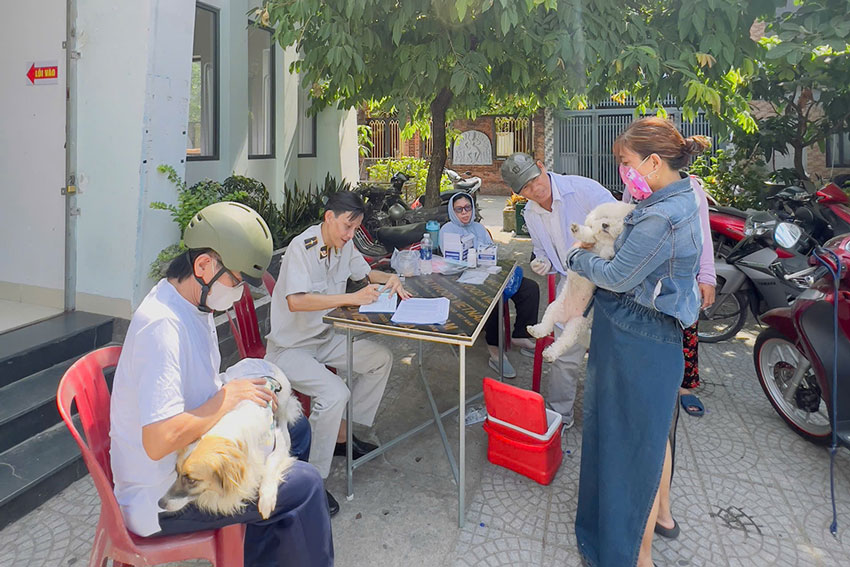
According to the plan, the locality sets a target for the vaccination rate to reach at least 70% of the total dog and cat herd subject to vaccination throughout the ward.
Vaccination subjects are all dogs and cats raised from 12 weeks of age or older. After the first dose, pets must be given booster shots periodically once a year as prescribed.
In addition, the Ward People's Committee also requested residential groups to review and statistically count the number of dogs and cats raised in each household, mobilize people to take pets for full vaccination and sign commitments not to let dogs roam freely. When taking dogs to public places, they must have chains, muzzles and ensure environmental hygiene.
Talking to Lao Dong Newspaper, veterinarian Nguyen Ngoc Truong Son - Director of Truong Son Veterinary Hospital (Hai Chau ward, Da Nang city) said that rabies is a dangerous infectious disease caused by a virus, attacking the central nervous system and can be transmitted from animals to humans through saliva when bitten or lick open wounds.
Rabies can appear at any time of the year. However, in summer, hot weather makes dogs and cats easily agitated, increase exposure to the outside environment, and travel more, so the risk of biting each other or biting people also increases," said Dr. Son.

According to Dr. Son, one of the reasons why the risk of rabies still exists is that many pet owners are still subjective in vaccinating their pets. Many cases believe that dogs and cats raised indoors are safe, do not need vaccination or only get vaccinated when they are young but forget to get booster shots every year.
Even dogs and cats raised indoors still have the risk of being exposed to the source of the disease through humans, other animals or when escaping. Therefore, full vaccination is still the most mandatory and effective protection measure," said Dr. Son.
Dr. Son emphasized that rabies has a mortality rate of nearly 100% when the disease has developed, not only causing danger to pets but also directly threatening human lives. If dogs and cats are not vaccinated, the risk of spreading the disease to the community will increase.
When suspected of having rabies, pets must be strictly monitored. This not only affects community health but also causes damage to the owner," said Dr. Son.
In case of being bitten by a dog or cat, people need to quickly wash the wound under running water with soap for at least 15 minutes, then disinfect and go to a medical facility early to be advised on rabies vaccination in time. At the same time, it is necessary to monitor the condition of the bitten animal.
In addition to vaccination, pet owners are also advised not to let dogs and cats roam freely, wear muzzles when taking dogs to public places, maintain living environment hygiene and limit contact with strange animals.
Dr. Son recommends that people need to raise awareness in caring for and managing pets, proactively get vaccinated periodically and take pets to veterinary check-ups regularly to protect the health of their families and the community.
