
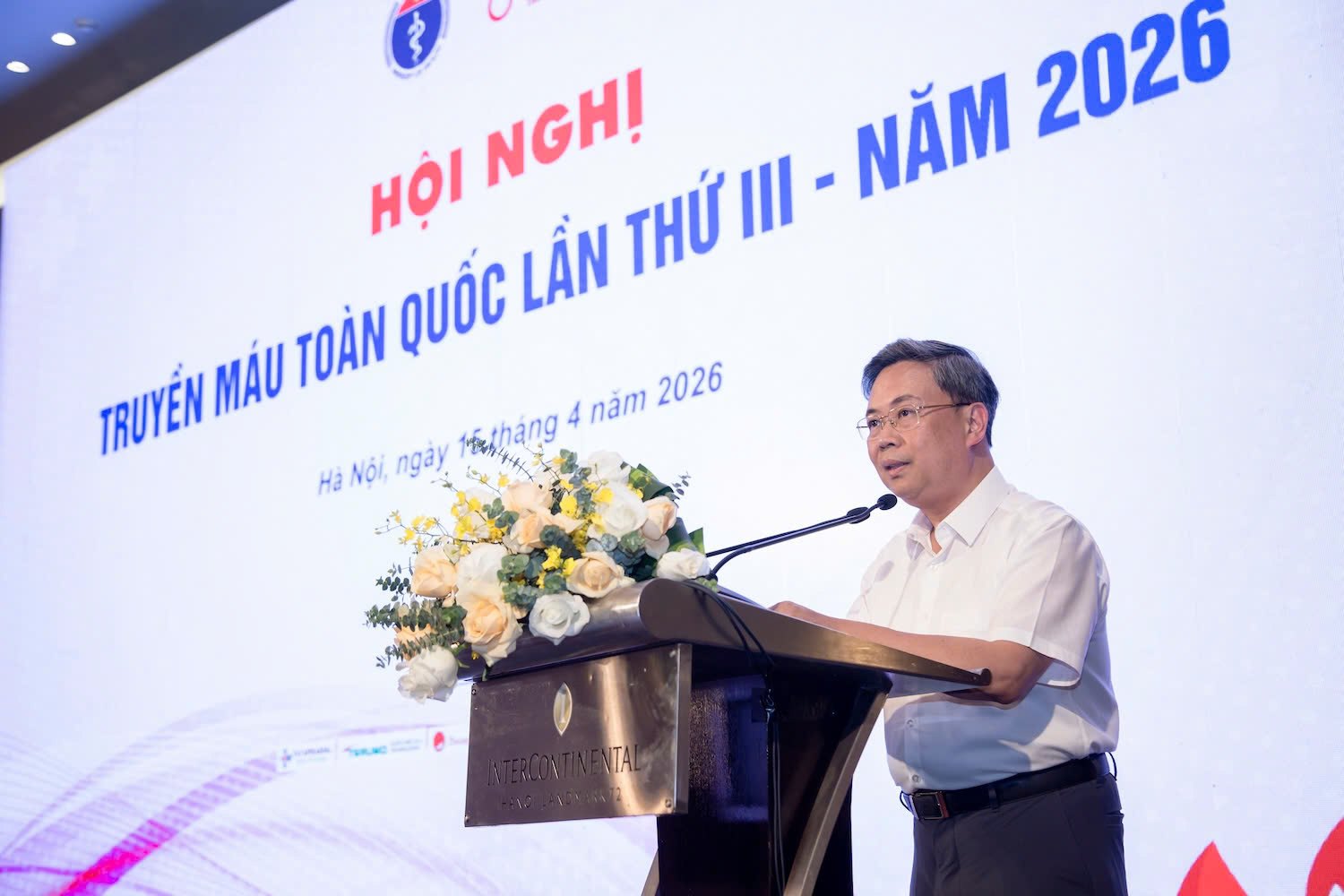
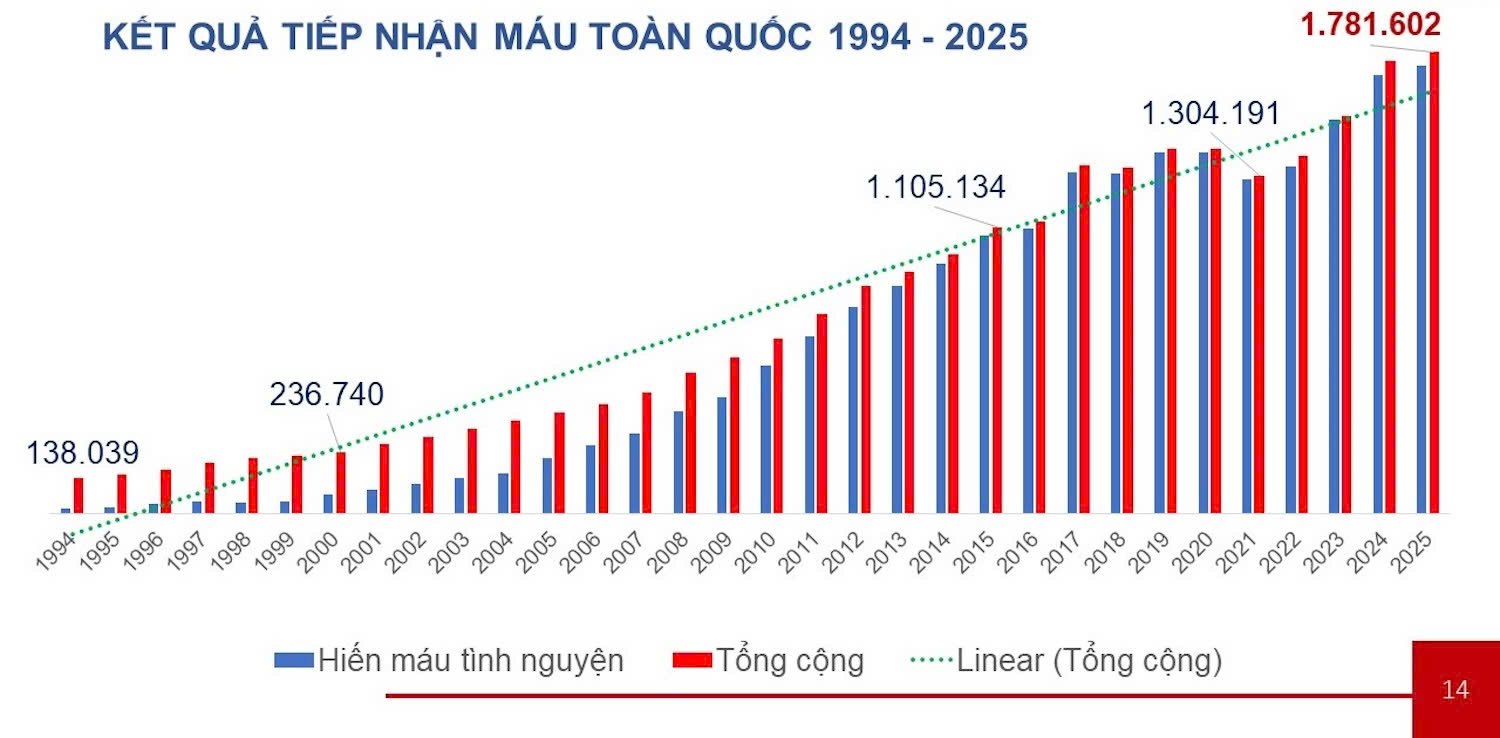
At the 3rd National Blood Transfusion Conference in 2026 and updating medical knowledge about blood transfusion, on April 15, Assoc. Prof. Dr. Nguyen Ha Thanh, Director of the National Institute of Hematology and Blood Transfusion, said: In 2025, the national blood transfusion system received 1,781,602 units of blood, including 1,654,564 units of total blood and 1,270,38 units of separated platelets. The blood donation rate with volumes of 350 ml or more reached 66.4%, while the voluntary blood donation rate reached 97%. These figures show the sustainable development of the voluntary blood donation movement and the effectiveness in mobilizing and organizing blood reception in the past time.
Blood screening tests continue to be carried out seriously in accordance with regulations, thereby detecting and eliminating dangerous blood units, contributing to ensuring blood transfusion safety.
In addition to routine screening tests, many facilities also screen for abnormal antibodies, classify red blood cell antigens such as E and Mia, and select negative CMV blood units for high-risk groups. The combination of routine and supplementary tests helps increase transfusion safety, reduce accidents and improve treatment effectiveness.
Also according to Assoc. Prof. Dr. Nguyen Ha Thanh, from the received blood source, the entire system has processed and supplied 3,188,419 blood products to about 800 medical examination and treatment facilities nationwide. Among them, red blood cell block accounts for the largest proportion (48.3%). Many special products such as granulocyte block, irradiated blood, white blood cell filtration, CMV screening... are also increasingly widely used, effectively supporting in-depth treatments such as stem cell transplantation, organ transplantation and immunodeficiency patients.
Dr. Tran Ngoc Que, Director of the National Blood Center, National Institute of Hematology and Blood Transfusion, said that national blood transfusion work is still maintained stably, gradually adapting to the requirements of innovation in management and operation and well meeting the increasing demand for medical examination and treatment.
Blood transfusion facilities have strengthened coordination with departments, branches, and unions; diversified blood donation mobilization forms; promoted the application of information technology in managing blood donors, blood storage and gradually connected with electronic identification systems. Currently, more than 80% of blood transfusion facilities nationwide have deployed specialized software to serve blood reception, testing and processing.
Technology application is making an important contribution to maintaining a stable blood supply and improving the quality of blood transfusions.
Assoc. Prof. Dr. Nguyen Ha Thanh emphasized that Vietnam is currently one of the countries with a strong development of voluntary blood donation movement in ASEAN, with a blood transfusion system increasingly approaching international standards. In addition to expanding the force of voluntary blood donors, the blood transfusion industry is currently focusing more on improving blood quality to ensure uniformity, safety and treatment effectiveness. Blood transfusion facilities also strengthen coordination with departments and branches, diversify blood donation mobilization and promote the application of information technology in blood donor management, blood storage and data connection.


