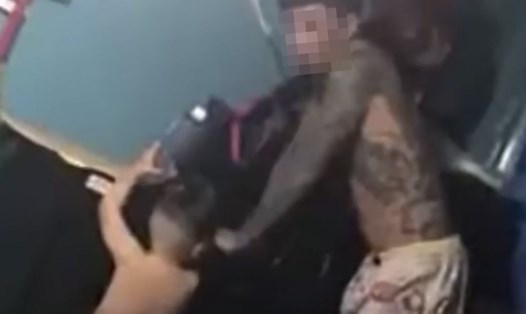
The case of a 17-year-old teenager dying just less than 24 hours after being taken to Hai Ha Social Work Center has shocked public opinion in recent days.
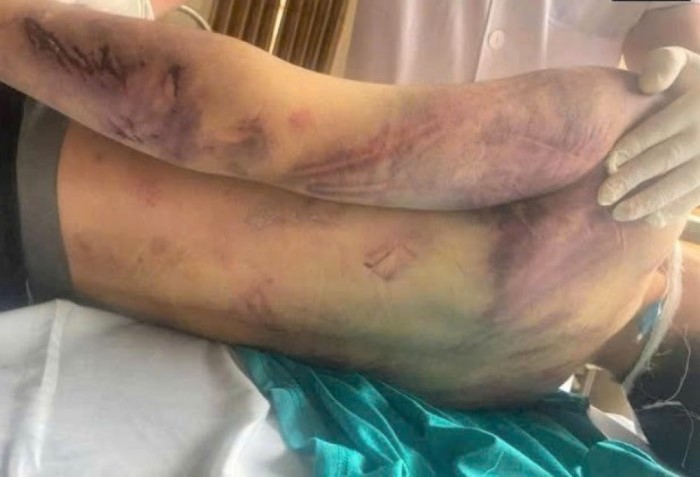
According to the initial report of An Sinh Ward People's Committee, Pham Hai Nam, 17 years old, in Ha Lam ward, enrolled at Hai Ha Social Work Center on December 22. The next morning, Nam had a conflict with some roommates and was beaten and injured. In the afternoon of the same day, Nam's health deteriorated and he died at home, with many bruises on his body. Regarding the incident, 8 people who are center staff and center students were temporarily detained by Quang Ninh Provincial Police for investigation.
However, amidst the unanswered questions about the cause of death, another burning issue is present: How is the right to protection of children in social protection facilities - which are considered the safest "common home" for vulnerable lives being implemented? Is the gap in supervision and professional ethics at the Center guaranteed? Why does an incident leading to death happen silently or without timely intervention in a centralized management space?
According to the provisions of the 2016 Children's Law and the International Convention on the Rights of the Child, there is a right to life and the right to protection from all forms of violence, abuse or neglect. When a child is placed in a social protection facility, whether voluntarily or compulsorily, the State and that facility naturally become "temporary guardians", with the highest responsibility for the safety of the child.
The social work profession is a specific profession, requiring not only skills but also ethics and compassion. When management officials lack closeness, or worse, use inappropriate disciplinary measures, they have seriously violated children's rights. All forms of violence or coercion in sponsorship facilities, whether under the guise of "education" or "putting them into the framework", are all contrary to the humanistic spirit of the social security sector.
Moreover, a strong social protection system must be based on trust. When families send their children to the center, or when the government sends wandering children to reformatories, it is also when both families, authorities and society expect the children to be changed in a more positive direction. Therefore, serious "incidents" that occur need to be clarified for individuals and organizations, provided with clear and timely information, otherwise trust in the social work center chain will be shattered.
No matter what, the death of a 17-year-old teenager at the Social Work Center is a painful note in the social security picture. It reminds us of how fragile the right to protection of children is without dedication and responsibility. That, the right to protection of children is not only on paper, not stopping at slogans, systemic changes are needed.
Therefore, it is necessary to consider the occurrence of death or injury in the sponsorship facility as an aggravating circumstance in the criminal responsibility of managers and heads. Transparency in the investigation process is not only to find the perpetrators, but also to clean up the apparatus, eliminate "worms that spoil the pot" in the social work industry. Silence or cover-up only makes loopholes bigger and the next child may again be a victim of indifference.
No sponsorship facility can consider itself "humane" if the lives of children and vulnerable people are not prioritized. It is time for us to look directly at the shortcomings of the current sponsorship system to fix them, so that no more children have to spend their final hours in loneliness and fear right where they should be protected.
Justice for Pham Hai Nam is not just a sentence, but must be a drastic change to protect thousands of other children living in care facilities across the country.