
Sometimes, just a shout, a street vendor, or an invitation to eat rice is enough to make millions of people around the world curious and love Vietnam.
A music video recently spread on international social networks, attracting tens of millions of views. What surprised many people was that the main "voice" was not a professional artist but a fruit vendor walking on Nha Trang beach.
The South African musician - The Kiffness remixed a video of a woman selling fruit singing and announcing the names of fruits in English into a song called "Mango, Pineapple, Banana, Watermelon" (Temporary translation: Mango, pineapple, banana, watermelon).
The origin of this sound comes from an impromptu moment. When the British tourist - Louis (nickname Local Lou) says goodbye, the fruit seller suddenly responds with the famous line in Lionel Richie's song "Hello": "Hello, is it me you're looking for?". Then, she continues to hum the names of fruits in English as a song.
The character in the video is Ms. Nguyen Thi Mai, who has been selling fruit on the beach of Nha Trang for more than 30 years. The English sentences were not learned systematically but accumulated by her during many years of communicating with international tourists.
Answering a reporter from Lao Dong Newspaper, Louis said that he first met Ms. Mai in the summer of 2025. After the video was posted, the online community expressed interest in the humor and naturalness of Vietnamese fruit sellers. When returning to Nha Trang at the beginning of this year, he continued to meet Ms. Mai again and recorded a new video, causing the story to spread throughout social networks.
Not only in Nha Trang, a similar story once delighted the online community in Hoi An (Da Nang).
A Slovenian travel blogger on a trip to explore Vietnam stopped by a sidewalk banh beo stall on Hoang Van Thu street. In the video she posted, the shop owner, while making banh beo, chatted with customers in quite fluent English, explaining the ingredients, how to eat, and the flavor of traditional banh beo.
Ms. Nguyen Thi Hong Thao, owner of a banh beo stall with more than 40 years of age, is known by locals as Banh Beo Ba Bay. The stall is just a small stall with a few sets of plastic tables and chairs placed on the sidewalk, but it has long become a familiar address for both local people and tourists.
In the video, when the guest asked about the dish, Ms. Thao happily explained in English that banh beo is made from rice flour, with dried shrimp, fried onions on top, and when eating, sprinkled with sweet and sour fish sauce. The natural and friendly way of speaking surprised many viewers. For her, it was simply a few words introducing local dishes, but for many tourists, sidewalk food accompanied by a friendly conversation became a memorable memory on the journey to explore Vietnam.
Not only in famous tourist destinations, the hospitality of Vietnamese people is also clearly shown in simple rural areas. Recently, a video spread on social networks recording a meeting between Mr. Nguyen Thanh Son (from Dong Thap, former Tien Giang province) - and a foreign tourist cycling past his house.
In the video, when he saw the guest going alone, Mr. Thanh Son actively started a conversation in Vietnamese: "Where are you going? Going alone? Going with whom? Where are the kids?". The guest appeared quite confused, constantly saying that he did not understand Vietnamese.
Even so, Mr. Son still enthusiastically invited: "Come to my house for lunch, the house is right here". After a few minutes of exchange with gestures and smiles, the guest finally agreed to enter the house.
The simple meal then became a memorable experience for tourists. In addition to eating rice, Mr. Son also took guests to experience many familiar activities of the Mekong Delta such as feeding pangasius, trying to go to the Monkey Bridge, drinking coconut water, eating fruit and listening to music from the old radio in the house.
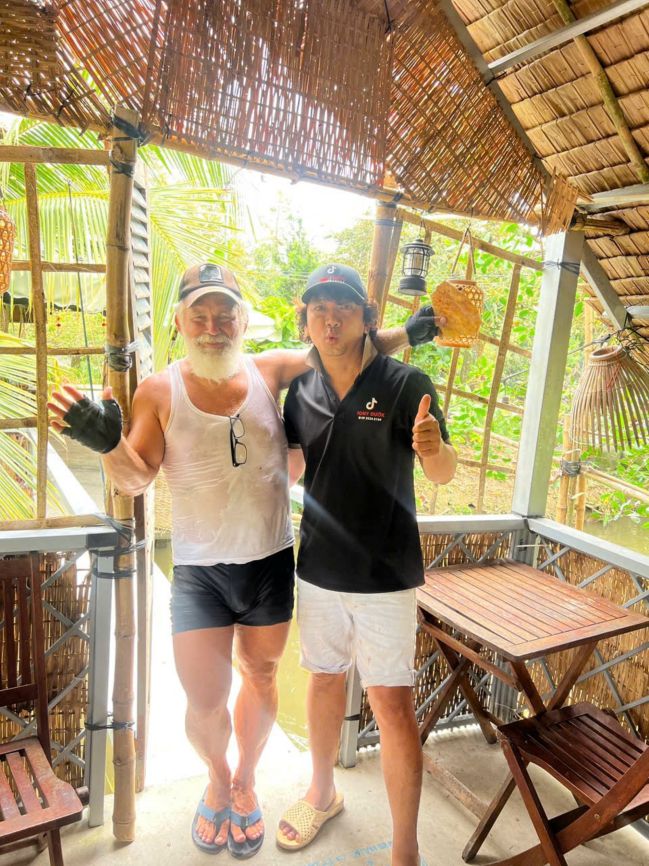
The video, after being posted, quickly attracted millions of views. Many people believe that this meeting clearly shows the simplicity and hospitality of the people of the Mekong Delta, although different in language, but just a smile and a sincere invitation are enough to connect strangers.
Mr. Son said that he only posted the video on social networks as a souvenir, not thinking that he would receive so much attention. The compliments about the hospitality of the Mekong Delta people made him very happy and surprised.
Seeing people comment all positive things, saying Vietnamese people are cute, I read it and am very happy. If my little story contributes to helping international friends understand more about the people of the Mekong Delta, then I find it even more meaningful," he shared.
According to Mr. Son, sometimes just simple actions such as inviting guests into the house to drink water, eat fruit or chat friendly are enough to make tourists feel the closeness of Vietnamese people. "I don't think about anything big, I just see guests passing by and invite them to play. But if that helps them remember Vietnam as a friendly place, I am very happy," Mr. Son said.
Three stories in three different lands all have one thing in common: The video is completely natural, not staged or promoted intentionally. That sincerity has created a strong spread on social networks.
In the digital tourism era, tourists not only look for beautiful scenes but also want to experience local people and culture. A pleasant conversation with a seller, a sidewalk meal or an invitation to a drinking house sometimes leaves a deeper impression than any advertising campaign.
Vietnamese "tourism ambassadors" are sometimes not celebrities or official representatives, but ordinary workers - people who simply live, work and welcome tourists with their inherent friendliness.


