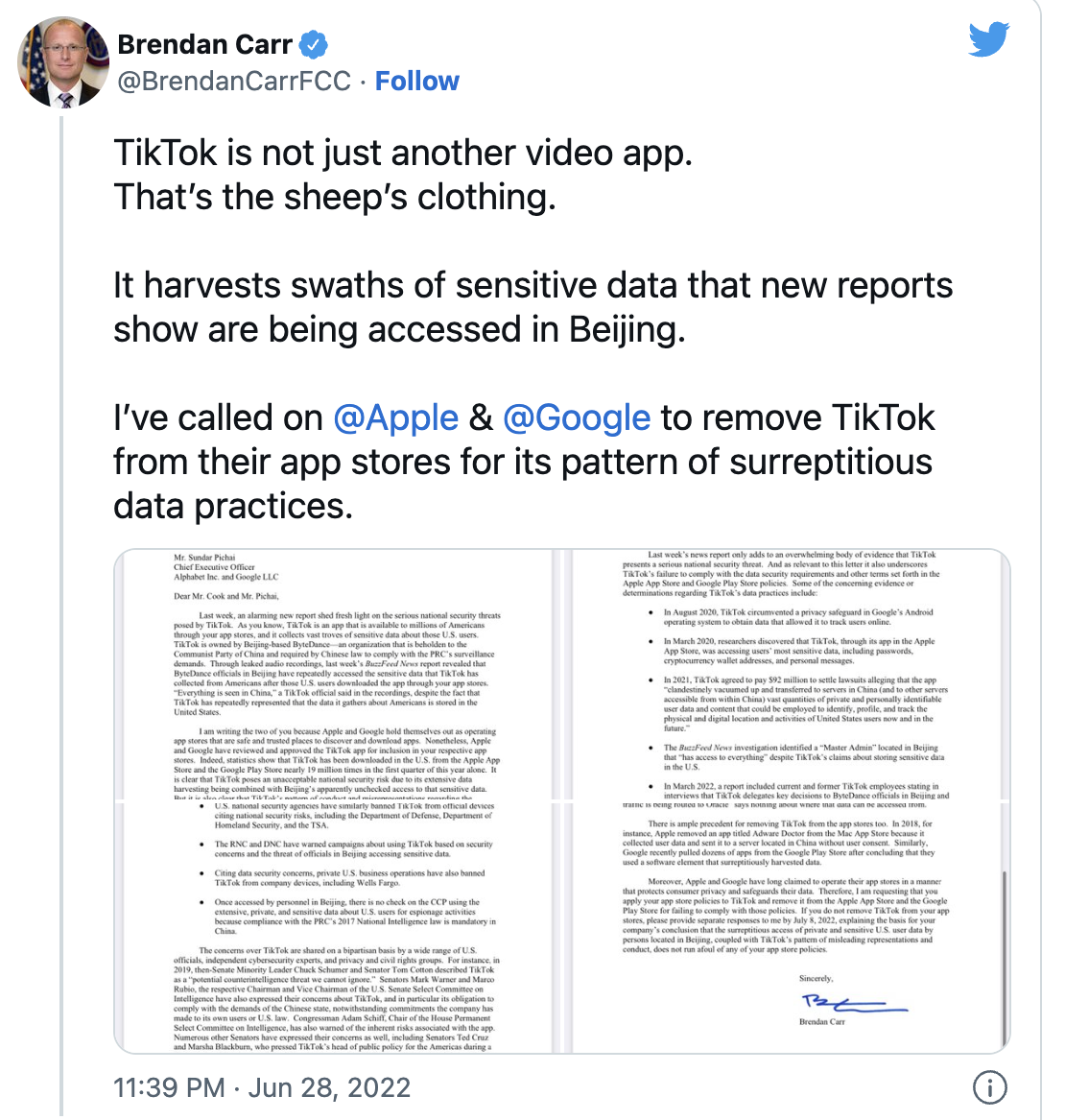
Chỉ mười ngày sau khi TikTok viết trong một bài đăng trên blog về cách nền tảng này tìm cách bảo vệ dữ liệu cá nhân của người dùng tại Mỹ, Ủy viên FCC Brendan Carr đã viết một email cho Tim Cook - Giám đốc điều hành Apple và Sundar Pichai - Tổng Giám đốc của Google yêu cầu hai công ty cấm các video ngắn được chia sẻ trên nền tảng TikTok từ các cửa hàng ứng dụng tương ứng của họ.
TikTok thuộc sở hữu của ByteDance, công ty có trụ sở tại Trung Quốc và Mỹ lo ngại ByteDance sẽ cung cấp dữ liệu người dùng của Mỹ cho chính phủ Trung Quốc, bất cứ lúc nào mà chính phủ yêu cầu.
Theo Carr, các báo cáo mới cho thấy dữ liệu nhạy cảm đang được truy cập ở Bắc Kinh. Ông ấy thậm chí còn gọi TikTok là “con sói đội lốt cừu”.
Ngoài ra, theo một báo cáo từ BuzzFeed News được xuất bản gần đây, ủy viên cấp cao của Đảng Cộng hòa tuyên bố âm thanh bị rò rỉ từ 80 cuộc họp nội bộ của TikTok chỉ ra rằng các nhân viên của ByteDance (công ty mẹ của TikTok) có trụ sở tại Trung Quốc đã truy cập thông tin cá nhân của người Mỹ.
Vào tháng 9.2021, một thành viên của bộ phận “Trust and Safety” của TikTok đã nói rằng "mọi thứ đều được nhìn thấy ở Trung Quốc".
Thật kỳ lạ, vài giờ sau khi báo cáo BuzzFeed News này được xuất bản, TikTok đã thông báo rằng tất cả lưu lượng người dùng Mỹ hiện đã được chuyển sang Cơ sở hạ tầng đám mây Oracle và chỉ được truy cập ở Mỹ.
Tuy nhiên, có vẻ như Carr chắc chắn không bị mê hoặc bởi nỗ lực của nền tảng truyền thông xã hội có trụ sở tại Trung Quốc nhằm giải quyết những lo ngại về dữ liệu.
Trong lá thư của mình, ông ấy cũng liệt kê các báo cáo khác cho thấy "bằng chứng liên quan đến các quyết định liên quan đến thực tiễn dữ liệu của TikTok".
Trong số đó, có những báo cáo nơi các nhà nghiên cứu phát hiện ra rằng TikTok có thể vượt qua các biện pháp bảo vệ của Android và iOS để truy cập vào dữ liệu nhạy cảm của người dùng.
Ông nhấn mạnh trong bức thư gửi Cook và Pichai rằng TikTok là một "rủi ro an ninh quốc gia không thể chấp nhận được", và việc thu thập dữ liệu rộng rãi với sự tham gia của Bắc Kinh trong việc kiểm tra dữ liệu nhạy cảm là điều mà Ủy viên rất không hài lòng.
Ông ấy liệt kê những dữ liệu được cho là Tiktok đang thu thập: lịch sử tìm kiếm và duyệt web, kiểu gõ phím, số nhận dạng sinh trắc học, tin nhắn nháp và siêu dữ liệu, văn bản, hình ảnh và video được lưu trữ trên khay nhớ tạm của thiết bị.
Trong lá thư của mình, ông cho hai gã khổng lồ công nghệ này thời gian đến ngày 8.7.2022 để đưa ra lời giải thích tại sao TikTok vẫn còn trong cửa hàng của họ (trong trường hợp họ không gỡ bỏ nó).