
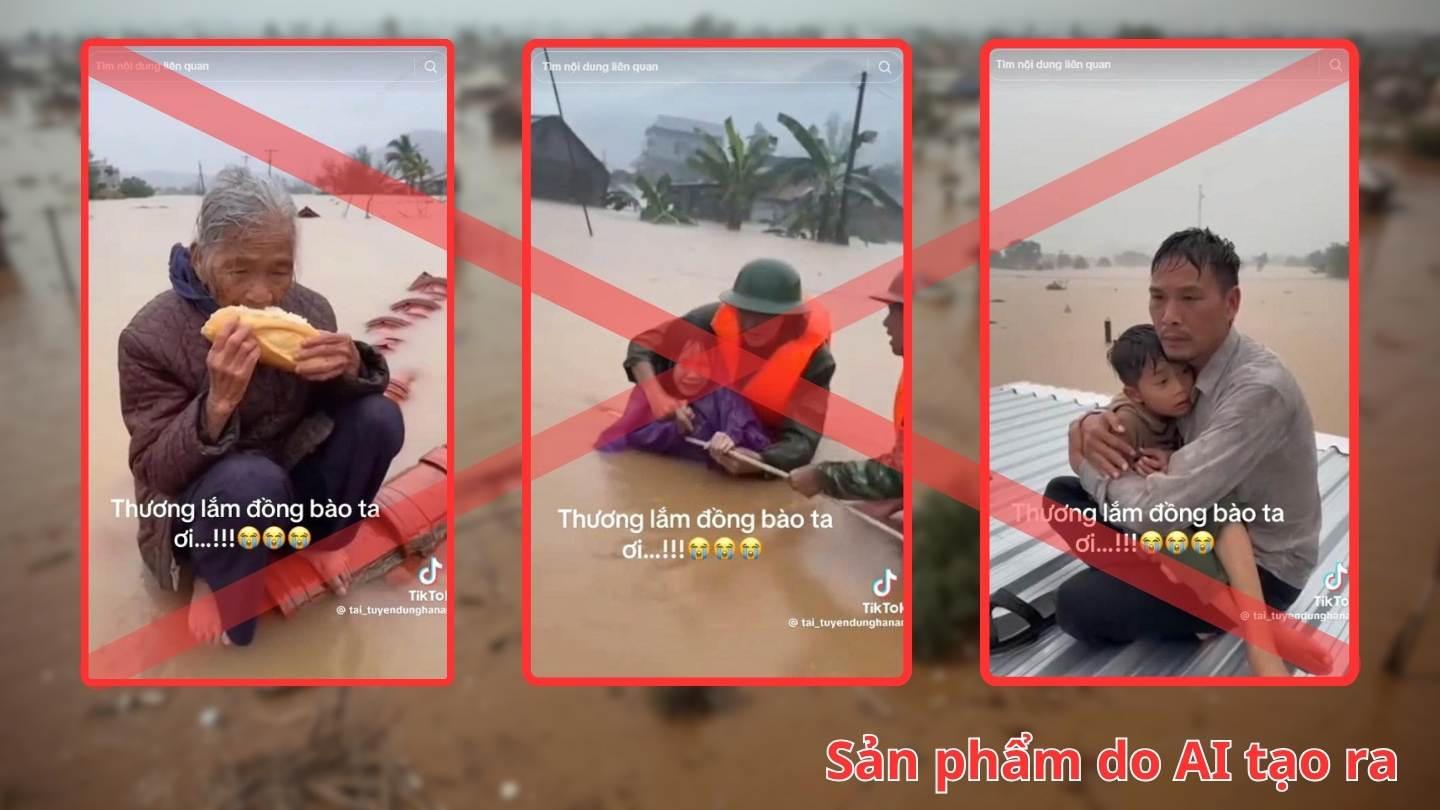
The rapid development of social networks, AI and digital platforms is causing fake news, distorted content or online fraud to appear more and more in cyberspace. In that context, the responsibilities of organizations, businesses providing digital services and entities participating in the network environment are also raised more clearly.
Recently, the situation of deepfaking, impersonating images, voices with AI or content manipulating information has appeared more and more on social networks. Many groups, live streaming platforms or Internet services are also being exploited to spread illegal content, fake news or harmful information.
Talking to Lao Dong, network security expert Ngo Minh Hieu (Hieu PC) said that cyberspace is no longer a private story of individual users but is directly related to the responsibility of many entities participating in the digital ecosystem.
According to Mr. Hieu, platforms, system operators, Internet service providers or community administrators all play a certain role in controlling and handling violating content. When new technologies such as AI develop rapidly, the speed of spreading false information is also much higher than before.
In that context, the Government has issued Decree No. 174/2026/ND-CP stipulating penalties for administrative violations in the fields of post, telecommunications, radio frequency, electronic transactions and information technology.
One of the notable points of the Decree is to expand and clarify the groups of subjects being penalized in cyberspace.
According to regulations, the subjects of sanctions include organizations, business households, Vietnamese individuals and foreign organizations and individuals committing administrative violations within the scope of regulation of the Decree.
Many groups of organizations operating in the field of digital technology and Internet are also subject to application such as telecommunications enterprises, Internet service providers, online electronic games, information content providers on mobile telecommunications networks or information system operators.
The Decree also applies to Internet agents, public Internet access points, domain name registrars, senior domain name management organizations in Vietnam, organizations providing electronic signature authentication services and businesses trading in civil cryptography products and services.
Expanding the scope of application is expected to contribute to enhancing the responsibility of entities participating in the digital environment, while increasing management efficiency and ensuring greater safety for cyberspace.
According to Mr. Hieu PC, besides management agencies and service providers, users also need to raise awareness of verifying information, limit sharing unverified content and proactively protect personal accounts when participating in the digital environment.
Decree No. 174/2026/ND-CP includes 8 chapters, 117 articles and will take effect from July 1, 2026.


