
According to the Xtieng people's belief, everything has a soul, from forest trees, streams to heaven and earth, houses. The polytheistic belief from ancient times has formed a rich worship concept such as: Worshiping the rice god, heaven god, earth god, forest god... and has become the foundation for folk festivals, of which the most typical is the spring blessings and peace prayer ceremony.
Every year, the festival is usually held around February - March of the solar calendar, before or immediately after the Lunar New Year, by the village elder and reputable people in the village to discuss and agree.
Depending on the conditions of each place, offerings are carefully prepared with can wine, pig head, bamboo rice, grilled meat, sticky rice with leaves, snakehead fish, and many typical products. In particular, on the Neu tree, the central symbol of the festival, a dried gourd is hung, sending wishes for a peaceful and gentle life for each family.
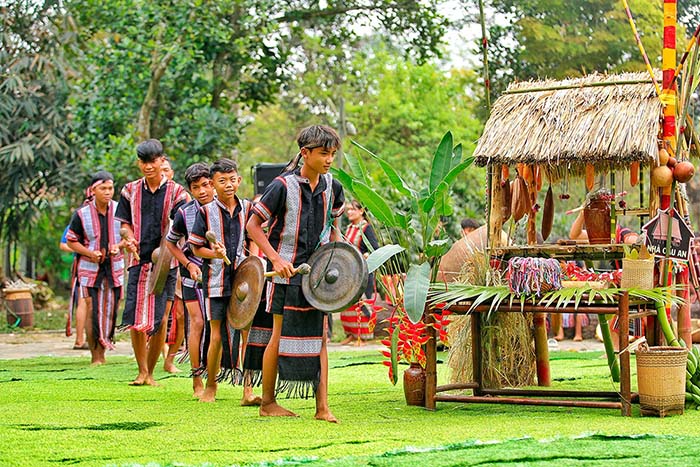
From early morning on the day of the ceremony, the village elders proceed to erect a large Neu tree in the middle of the yard and a small Neu tree placed in a basket of rice, opening the series of rituals.
Before the main ceremony, the people perform the worshiping ritual at the rice warehouse, praying for a bumper crop, full of warehouses and holds of rice. The rituals are held in many spaces such as long houses, huts, rice warehouses and festival yards, ensuring traditional customs.
In the bustling atmosphere of gongs and drums echoing in the mountains and forests, the main ritual was solemnly held. The chief priest and village elders, on behalf of the community, offered offerings, praying for favorable weather, good harvests, healthy people, and a prosperous life. The simple prayers contained a deep belief in the protection of the gods.
Before that, people in the village (buon) were busy preparing for the festival. From old to young, men and women all wore traditional costumes, silver jewelry, gathering in the festival space in joy.
After the solemn ceremony part is the exciting festival part with folk games, cultural exchanges and culinary experiences, attracting a large number of people and tourists.
Maintaining and recreating the ritual of praying for blessings and peace not only contributes to preserving the intangible cultural heritage of the Xtieng people, but also opens up opportunities for tourists to access and explore the rich spiritual life of the community. Through this, traditional values continue to be spread and nurtured in the current of contemporary culture.


