
In the middle of the rocky plateau at the forefront of the Fatherland, people in Ma Le village, Lung Cu commune, Tuyen Quang province are together planting flowers, embellishing village roads, preserving ancient houses and preserving traditional culture to build a green, clean, and beautiful community tourism village.
In the early morning mist of the North, people in the village brought hoes, shovels, seedlings and small bags of soil to participate in the launching ceremony of the "Flower Road". Without a large stage or ostentatious slogans, the image of people voluntarily contributing labor and property to beautify their homeland created a vibrant atmosphere amidst the harsh cat ear rocky mountains.
Ma Le is the residence of the Giay ethnic people, still preserving many ancient houses hundreds of years old along with traditional cultural features such as Giay folk songs, forest god worshiping ceremonies, going down to the fields or upland rice farming.
In recent years, along with the development of community tourism on the rocky plateau, Ma Le people realize that to retain tourists, villages must be clean and beautiful, spacious but still retain their own identity.
Mr. Nguyen Van Toai, Secretary of the Ma Le village Party Cell, said: "What is precious is that people are all united. Some people contribute trees, some contribute working days, some households voluntarily support money to buy flower seeds. Everyone hopes that the village will become more and more spacious but still retain the unique features of the Giay people.
Not only building a flower road, before that, Ma Le people also contributed hundreds of millions of VND to expand and repair village roads. Clean and beautiful concrete roads now weave through stone fences and ancient roofs, creating a new face for border villages.
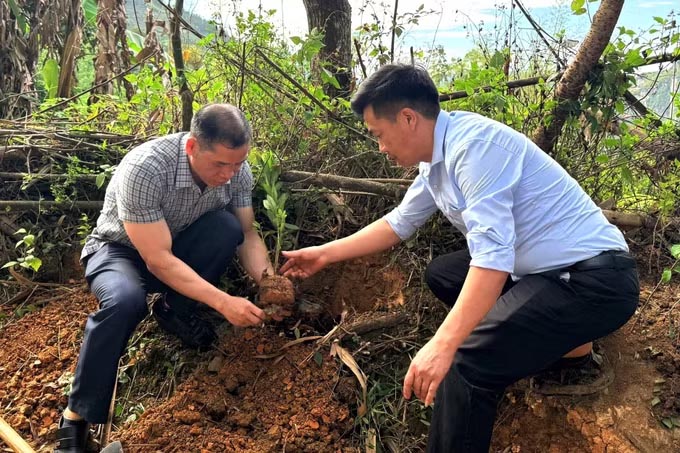
According to Mr. Duong Ngoc Duc, Secretary of the Party Committee, Chairman of the People's Council of Lung Cu commune, Ma Le is becoming a bright spot in building model villages associated with preserving traditional culture and developing community tourism.
The most important thing is that people have truly become the subjects of the new rural construction process. It is the spirit of solidarity and awareness of preserving cultural identity that is creating a unique vitality for Ma Le," Mr. Duc emphasized.
In the early summer sun of the highlands, many Giay women in traditional costumes still smiled and planted clusters of flowers along the road. Young people divided up to level the land, clear the grass, and rebuild old stone fences. Young children followed adults to water newly planted flower trees.
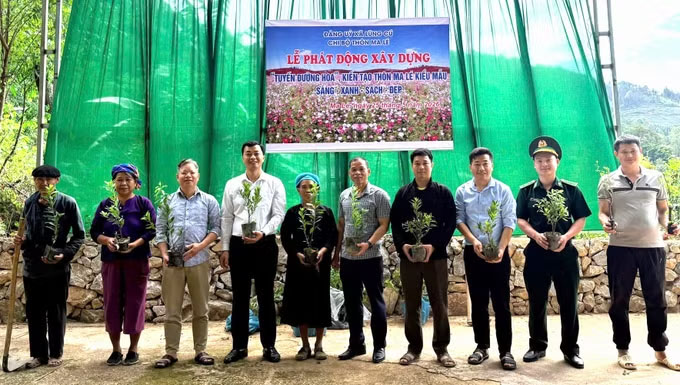
Ms. Lo Thi My, a villager, shared: "In the past, roads were difficult to travel, few people came to the village. Now people are working together to beautify the village, more tourists come, and life is also better. We want to preserve the identity of the Giay people so that our children and grandchildren will be proud in the future.
Not chasing after large projects, Ma Le is changing from ordinary things such as cleaner roads, more beautiful flower stalls or more carefully preserved ancient houses.
In the heartland of the Fatherland, flower roads are contributing to brightening up highland villages, opening up sustainable development directions, where culture becomes a asset and people are the subjects of change.


