
Amidst the mountains and villages of the Muong people, the sound of gongs has long been a familiar sound associated with community life.
Each gong beat that resonates not only carries the sound of traditional culture but also sends the beliefs, aspirations and feelings of the people towards their homeland and roots.
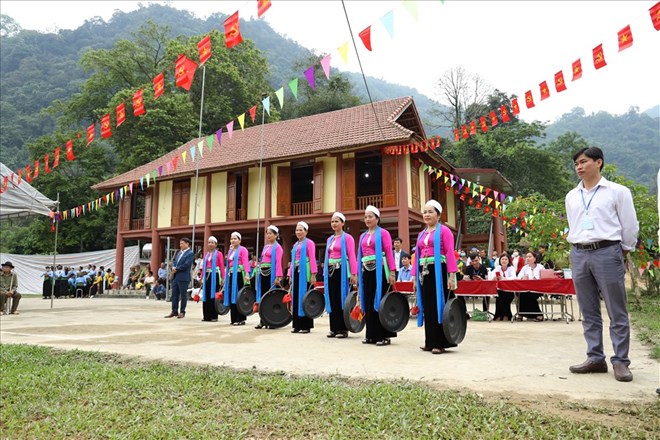
The Muong gong and chieng cultural space was formed from the long-term labor, creativity and cultural accumulation of mountainous residents. According to folk beliefs, the sounds echoing from rocky mountains, caves, and stalactites in the great forest are the inspiration for the Muong people to create the first gongs.
From harmony with nature, the sound of gongs has become a sound that carries the breath of the mountains and forests, reflecting the rich spiritual life and love for the homeland of the people.
Through many generations, gongs have gradually become a common property of the community and are passed down as an indispensable part of the national cultural life.
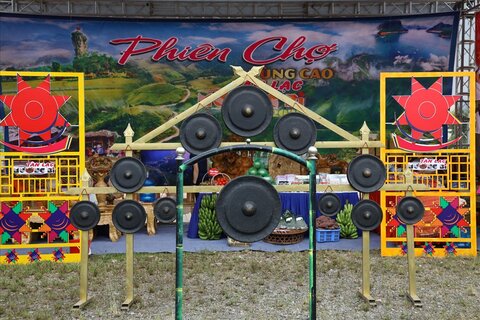
A complete set of Muong gongs usually consists of 12 pieces, divided into groups of gongs dam, gong bong and gong te. Made from copper alloys of different sizes, each gong creates unique sounds, harmonizing into unique melodies only found in Muong culture.
The sound of the gong appears in many festivals and important events such as the housewarming ceremony, wedding ceremony, Khai Ha festival, Xuong Dong festival or other community rituals.
For the Muong people, the gong is not simply a musical instrument but also a means of connecting people with the spiritual world. The sound of the gong is present in most important milestones of human life, from birth to returning to ancestors.
This special value has helped the Muong gong art to be included in the National Intangible Cultural Heritage List in 2016 by the Ministry of Culture, Sports and Tourism.
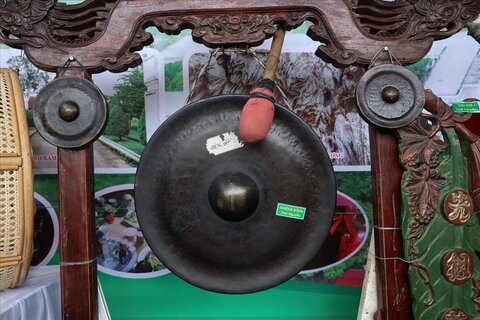
According to artisans, at the beginning of the new year, people often beat gongs to pray for bumper crops, livestock development, family peace and a prosperous life. After the New Year's Eve moment, the first gongs sound like sending wishes for a favorable year.
In particular, the Xac Bua gong set consists of 12 pieces symbolizing the 12 months of the year, carrying the meaning of praying for favorable weather, national prosperity and people's peace, and dispelling bad luck.
The sound of the gong also follows the Xac Bua wards to each village at the beginning of each Spring to bless and bring joy to every home. In wedding ceremonies, the sound of the gong is a wish for a couple a hundred years of happiness; in festivals, it is a call for community to gather together; and in funerals, the sound of the gong becomes a solemn farewell for the deceased.
No matter what the circumstances, the sound of the gong still carries in itself a sacred meaning, contributing to connecting the community and nurturing the spiritual life of the Muong people.
Not only preserving the breath of the past, the sound of the Muong gong is also continuing to accompany today's life. The respect and conservation efforts of the community are the foundation for this precious heritage to continue to be promoted, spread and last over time.


