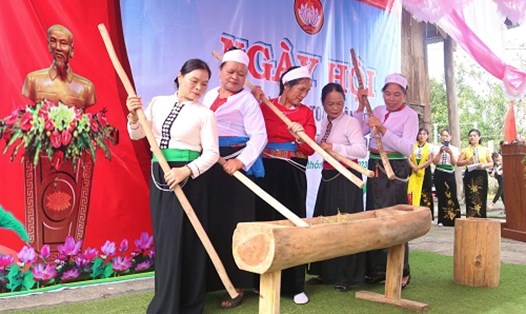
Among the ancient Muong villages in the Bi, Vang, Thang, Dong regions of Phu Tho province, the sound of shuttles moving by the loom still regularly echoes in the stilt houses. For the Muong people, weaving skirts is not simply making costumes but also a way to preserve their roots through each thread, each layer of patterns.
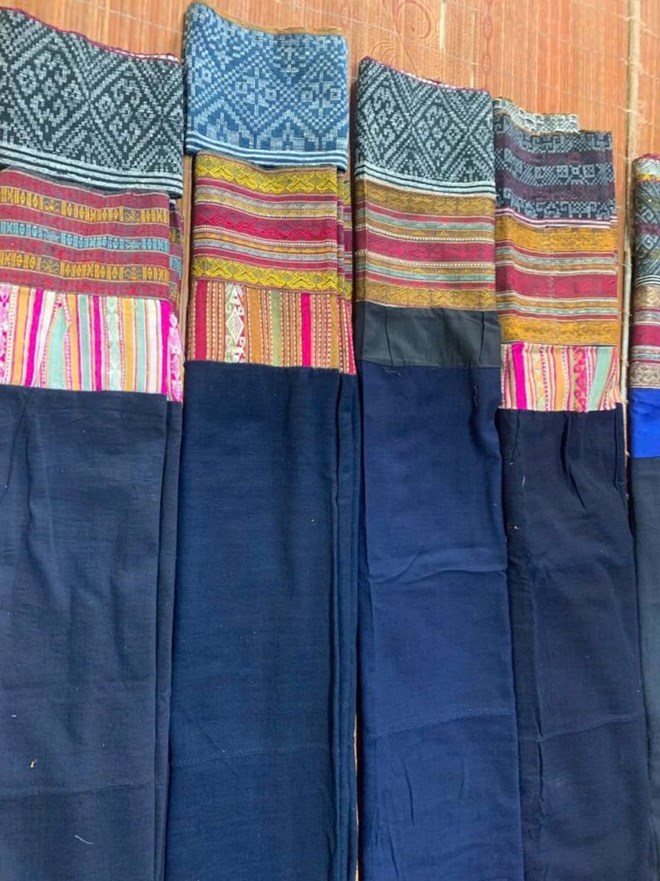
Folk culture researcher Tu Chi commented that the Muong people do not put their aesthetic views on stone or wood, but weave everything on women's skirt hems. Therefore, each skirt hem is like a vivid picture reflecting the spiritual life of the community.
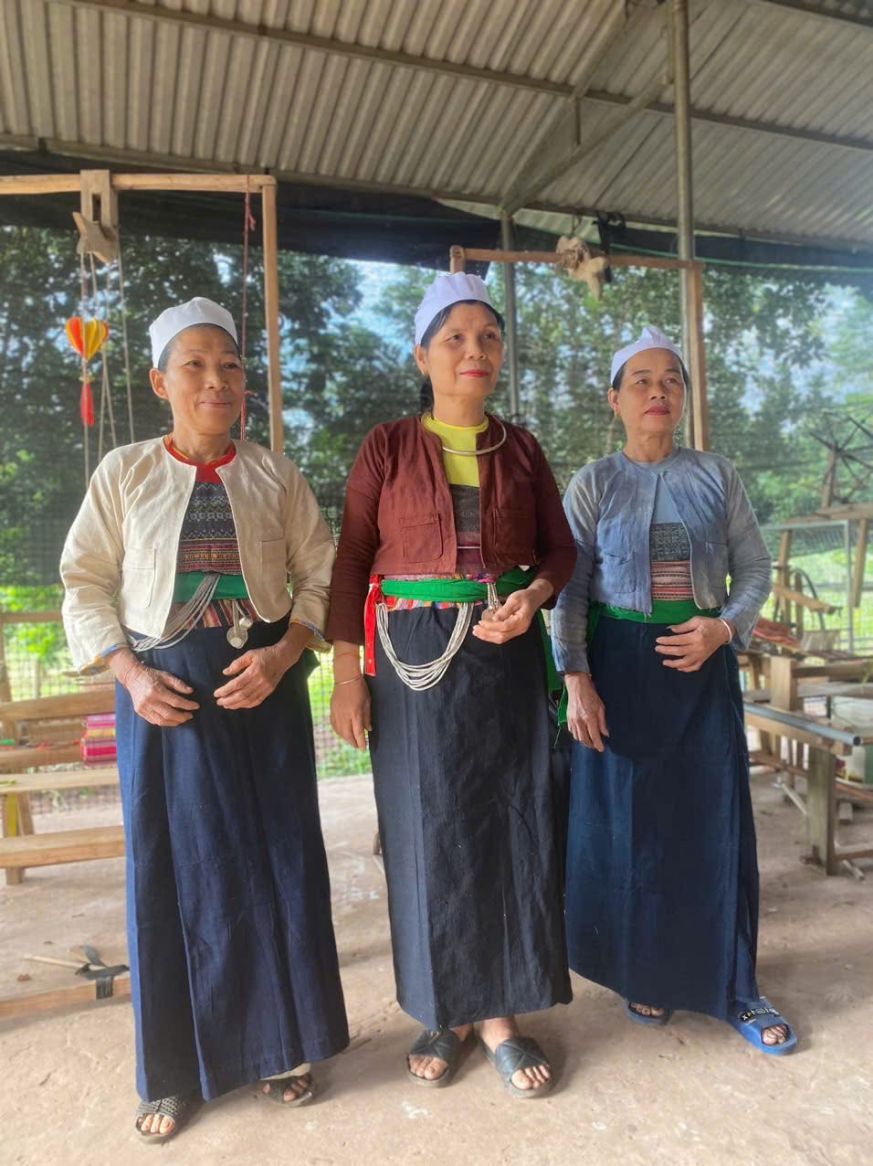
According to Mr. Bui Van Nam - Specialist of the Heritage Management Department, Department of Culture, Sports and Tourism of Phu Tho province, the pattern on the skirt hem is a "verbal chronicle", containing worldviews and aspirations for a peaceful and prosperous life of the Muong people. In it, images of mountains and forests, animals, plants and even wishes for harvests and couples appear.
The traditional waistband of the Muong people consists of 3 main parts: Roasted top, roasted bottom and high. If roasted top is usually geometric motifs such as crosses, crosses or stars, then roasted bottom is more elaborate with images of dragons, birds, deer, lilies or clouds. Each motif carries a layer of its own meaning, expressing the aesthetic thinking and beliefs of the ancients.
Ms. Bui Thi Mia - Deputy Director of the Traditional Brocade Weaving Cooperative of Tan Lac commune, Phu Tho province said that weavers not only need dexterity but also must put emotions and memories into each pattern. Some weaving patterns require dozens of bamboo sticks to pick yarn, just one detail is wrong and the entire pattern loses its inherent spirit.
Not only carrying artistic value, the skirt hem also reflects the marks of ancient Muong society. The Lang - Dao class uses elaborate dragon and phoenix, peacock patterns, while ordinary people mainly use simple geometric patterns.
Today, in the face of modern life, the profession of weaving skirt hems is facing the risk of fading as industrial clothing becomes increasingly popular. However, in many localities in Phu Tho, vocational training classes are still maintained right in stilt houses. Elderly women continue to pass on weaving techniques to young people as a way to preserve national identity.
The recognition of the art of creating patterns on the waistlines of Muong skirts as a National Intangible Cultural Heritage is not only a recognition of long-standing cultural values but also opens up more hope for the traditional weaving profession to continue to exist in today's life.