
Che dam is a rustic but unique drink of the Thai people in western Nghe An. Not only is it curious because of its name, this drink is also attractive because of its elaborate processing and unique flavor, making many tourists remember it forever after the first taste, according to VNA.
Along National Highways 7, 48, 48C, in the cultural sub-regions of the Thai people, chè đâm has become a familiar specialty. The raw materials are leaves and branches of multi-year-old green tea growing naturally in the forest and on hills. People pick them, grind them in wooden mortars, stone mortars or bamboo tubes until they reach a smooth, sticky texture, then filter out the juice, add boiling water to create a refreshing drink.
For beginners, "chè đâm" can be a bit greasy and bitter. But for the Thai people, the more they drink, the more "addicted" they become. According to Ms. Vu Thi Chau - owner of a sweet soup shop by Thung May lake, "chè đâm" in Thai is also called "chè tắm", originating from the habit of local residents of picking forest leaves and pounding them to drink. When the tea tree appeared, people gradually replaced the ingredients and formed a familiar drink in daily life.
To have a delicious bowl of sweet soup, the picker must choose a sweet soup branch with thick leaves, no red tips, growing in a sunny place. Leaves are washed gently, pounded when still wet to maintain quality. During the plasting process lasting about 10 minutes, the person who makes it adds boiled water to cool and ice to maintain color and flavor.
Bamboo tea must use ancient tea, not fertilized with chemical fertilizer. Tea leaves are harvested during the day, not overnight. When drinking, people often eat them with peanut candy, sipping to feel the initial bitter taste and the sweet aftertaste.
In Quy Hop commune, along National Highway 48C, there are many chè đâm stalls. Each place has its own secrets, creating different flavors. Mr. Nguyen Van Yen, owner of a water stall by Thung May lake, said that when there are customers, he directly grinds tea with a pestle weighing more than 3kg to get the broth. The broth must be boiled and cooled rainwater, if using well water or tap water, the tea easily changes color and loses its green color.
Standard tea is jade green in color, can be drunk hot or cold. The common mixing formula is 3 parts boiling water, 2 parts stewed tea. The product is also bottled in 500ml bottles, priced at about 10,000 VND. Each day, one household sells 40-50 bottles, even more during the summer peak season. In Quy Hop commune alone, there are hundreds of households doing this job, concentrated around Thung May lake.
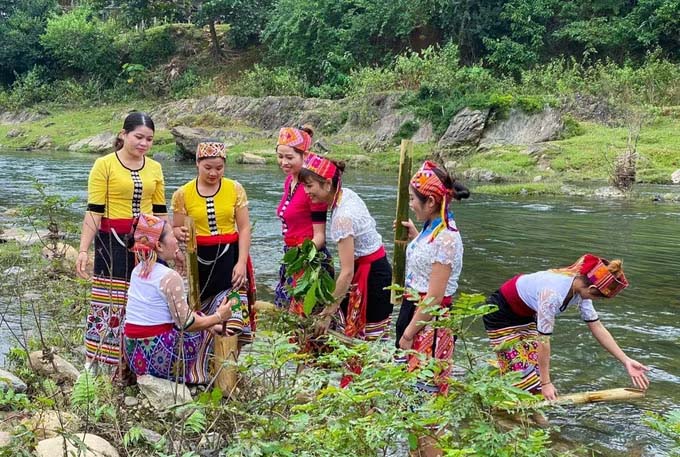
From highland villages such as Muong Chong, Binh Chuan, Nga My, Yen Hoa, Nhon Mai, My Ly to the Ban Ve Hydropower lake area, "chè đâm" appears commonly in the life of the Thai people. People often go into the forest to pick raw materials in groups of 2-4 people, only taking enough for 1-2 days to ensure quality.
Today, chè đâm is no longer limited to villages but is brought to many provinces and cities as a hometown gift. As a result, the unique culinary culture of the Thai people in western Nghe An continues to spread widely.


