Preserving the soul of Thai ethnic culture through the Pieu scarf

|

In the Northwest mountains and forests, the Pieu scarf not only beautifies but also preserves the memories, family traditions and souls of Thai women through generations.

In Son La, the image of Thai women in "com" dresses and scarves has become familiar in daily life and festivals. The scarf is not only an accessory but also a place to send identity, roots and pride of the community.

Traditional Pieu scarves are woven from cotton yarn, dyed indigo, about 140 - 150cm long. The highlight lies at the two ends of the scarf with the "Cut Pieu" part - small fabric rolls arranged in odd numbers such as 1, 3, 5, symbolizing proliferation and luck. Each scarf therefore carries its own meaning, associated with the user and each specific circumstance.
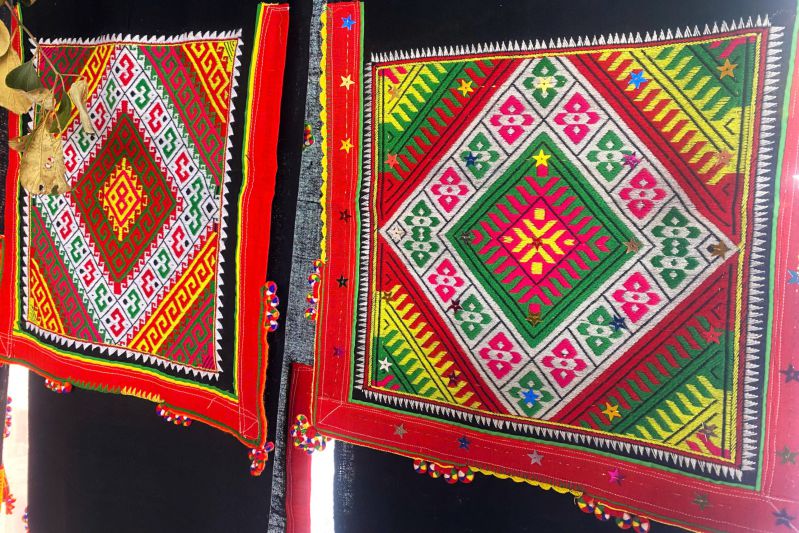
Khăn Piêu thêu thủ công của phụ nữ dân tộc Thái ở Sơn La. Ảnh: Trường Sơn
Handicrafted Piêu scarf of Thai ethnic women in Son La. Photo: Truong Son

Patterns on Pieu scarves are likened to a unique "language". Water waves, sawtooths, fish bones or ban flowers... reflect the close relationship between people and nature and Muong village life. Each embroidery line is not only for decoration but also sends wishes for peace, happiness and cohesion.

A special feature in the Piêu scarf making technique is the reverse embroidery method: The craftsman operates on the left side but the pattern appears completely on the right side. No drawings are needed, all details are based on memory and the sophistication of the hands. To complete a scarf, Thai women can take weeks, so embroidery of Piêu scarves has long been considered a measure of the skill and diligence of Thai girls.
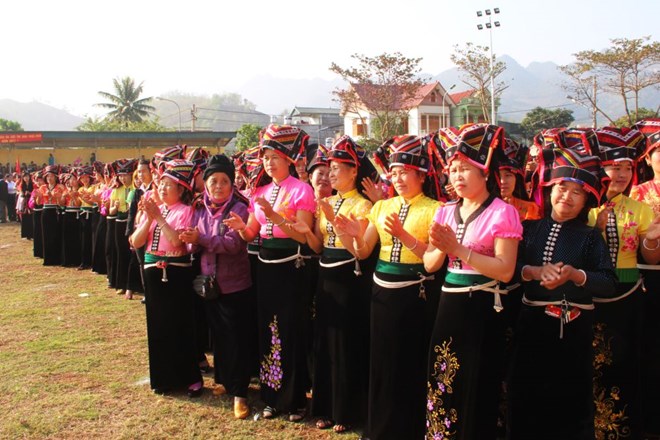
Phụ nữ dân tộc Thái, xã Yên Châu trong trang phục truyền thống và khăn Piêu. Ảnh: Trường Sơn
Thai ethnic women, Yen Chau commune in traditional costumes and Pieu scarves. Photo: Truong Son

From a young age, girls have been taught every needle and thread by their mothers and grandmothers by the fire. That space not only imparts the craft but also nurtures patience, gentleness and traditional lifestyle.

In modern life, the Piêu scarf embroidery profession is gradually fading as many young people choose ready-made products. To preserve this value, cultural preservation clubs in the locality have been established, opening classes to teach to the younger generation. The participation of later generations shows that tradition is still being continued.

In today's flow, the Pieu scarf is still quietly but persistently present in the life of the Thai people. Not only is it a strip of embroidered fabric, it is also a string connecting the past with the present, preserving the cultural soul of the Northwest mountains and forests.

TIN LIÊN QUAN

Mother-in-law's foot washing ritual for daughter-in-law in the two-part wedding of the Thai ethnic group

|

The double wedding ceremony is a unique custom of the Thai ethnic group. In which, the ritual of mother-in-law washing the daughter-in-law's feet has many meanings.

Lao Cai organizes Thai Xoe dance contest, honoring heritage on April 30

|

Lao Cai - The "Sparkling Xoe Round" 2026 contest takes place from April 28-30, in Nghia Lo ward, to honor the Thai Xoe heritage and attract tourists during the holidays.

Muong Lay: White Thai stilt house capital in the heart of the Northwest

|

Muong Lay ward (Dien Bien) is recognized as the place with the highest density of white Thai stilt houses in Vietnam, opening up opportunities for community tourism development.

Mother-in-law's foot washing ritual for daughter-in-law in the two-part wedding of the Thai ethnic group

Thùy Dương |

The double wedding ceremony is a unique custom of the Thai ethnic group. In which, the ritual of mother-in-law washing the daughter-in-law's feet has many meanings.

Lao Cai organizes Thai Xoe dance contest, honoring heritage on April 30

Thu Hiền |

Lao Cai - The "Sparkling Xoe Round" 2026 contest takes place from April 28-30, in Nghia Lo ward, to honor the Thai Xoe heritage and attract tourists during the holidays.

Muong Lay: White Thai stilt house capital in the heart of the Northwest

QUỲNH MAI |

Muong Lay ward (Dien Bien) is recognized as the place with the highest density of white Thai stilt houses in Vietnam, opening up opportunities for community tourism development.