
Within the framework of the fourth Tam My Fair in 2026 on the morning of July 21, the People's Committee of Tam My commune, Da Nang city organized the inauguration and handover of many civil works, contributing to improving living conditions for poor households, ethnic minorities and policy families.
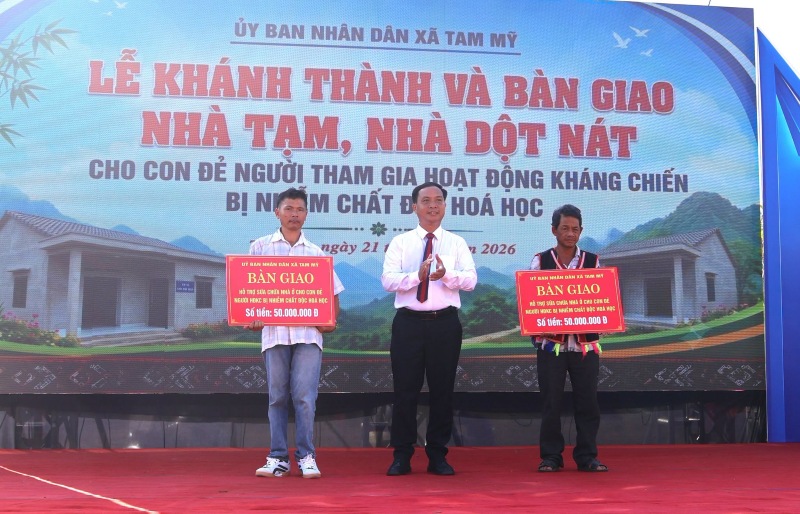
The highlight is the handover of two houses that have just been repaired to the families of Mr. Pham Van Thang and Mr. Chau Van Ha, both children of resistance war activists infected with chemical toxins, worth 50 million VND/house.
The projects are completed ahead of schedule, helping families have a safer and more stable place to live.
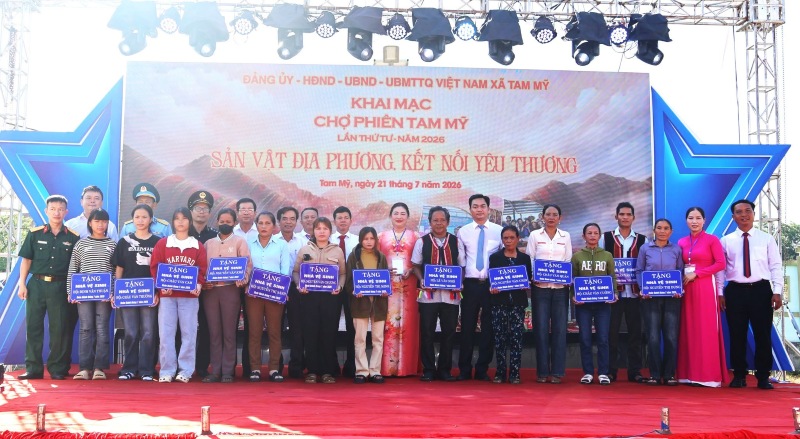
On this occasion, leaders of Tam My commune also presented support gifts, showing concern for people with meritorious services and relatives of policy families.
The locality also inaugurated and handed over a solid toilet construction program for poor and near-poor households who are Cor people.
The program was launched from the third Tam My Market, mobilizing more than 550 million VND along with many working days and materials from businesses, organizations and philanthropists.
From this resource, Tam My commune has supported the construction of 20 new toilets, repaired and completed one project, with a total cost of more than 600 million VND. The investment in sanitation works contributes to improving the living environment, ensuring health and improving the quality of life for people in ethnic minority areas.
Continuing to accompany the locality, Phuong Nam Steel Co., Ltd. donated 50 million VND for Tam My to build more toilets for poor and near-poor Cor households.
On this occasion, the Da Nang City Party Committee's Internal Affairs Committee - a sister unit with Tam My commune - also donated 5 sets of computers worth 100 million VND. This equipment is allocated to improve working conditions, serve digital transformation and improve operational efficiency in villages.
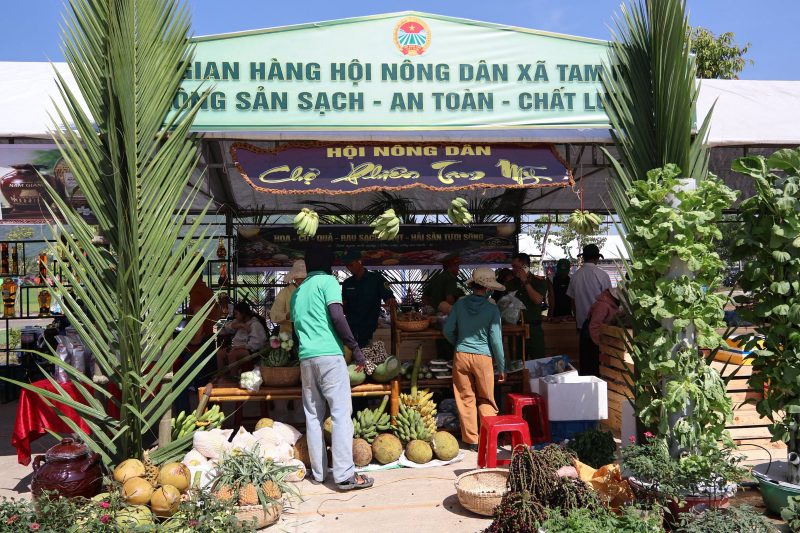
In addition to social security activities, this year's Tam My Market gathers dozens of booths with more than 100 OCOP products, local agricultural products, specialties and startup products. Through this, the locality both connects product consumption and mobilizes more resources to care for people's lives.


