
In recent years, the policy of assigning agencies, units, departments, boards, and branches to help particularly difficult communes in Dien Bien province has become a bright spot, bringing efficiency in poverty reduction work.
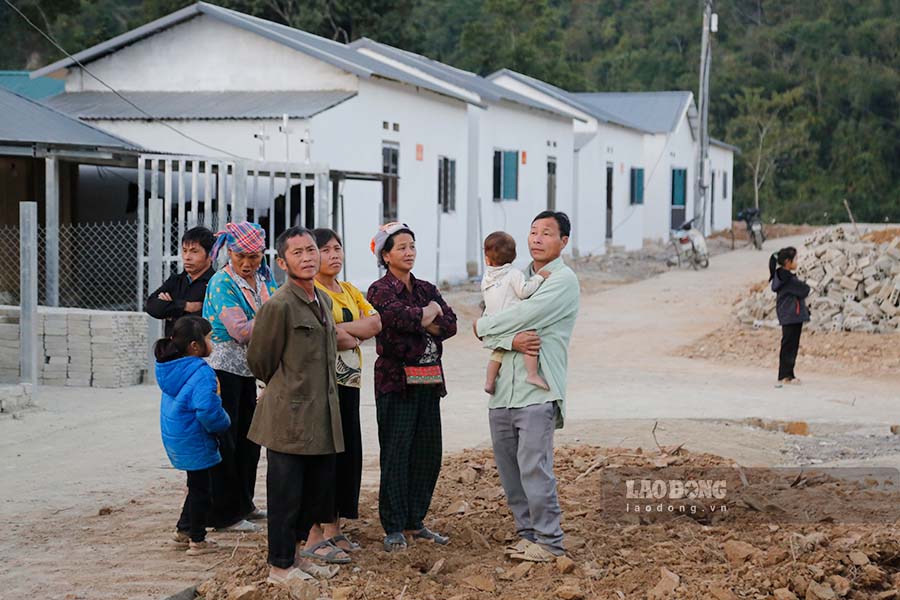
Muong Pon border commune is the residence of ethnic groups Thai, Mong, Kho Mu. Implementing the province's policy, the Office of the National Assembly Delegation and the Provincial People's Council have deployed the construction of houses for poor households, provided breeds, seedlings and built civil works.
From 2021 to now alone, the Office has mobilized nearly 7 billion VND to support social security in Muong Pon.
In Sang Nhe and Tua Chua communes, Dien Bien Power Company has awarded thousands of gifts, warm clothes, blankets and books to students and policy families for many years.
In particular, the youth project "Lighting up rural roads" in Sang Nhe commune with a 600m long lighting line (costing more than 60 million VND) or the replacement and repair of electricity for 20 poor households has directly ignited faith for villagers in the highlands.
According to statistics, in the period 2021-2025 (as of before July 1, 2025), agencies and units throughout the province organized 244 working trips to 95 particularly difficult communes. Total mobilized resources reached nearly 70 billion VND.
From this resource, a series of school sites, cultural houses, semi-boarding kitchens and "Great Unity" houses, "Homes at the border" houses have been built by the forces.
In the period 2026-2030, Dien Bien province determined that, instead of maintaining the method of widespread, incidental and urgent support with materials, the province drastically shifted to the model: Legal advice, livelihood orientation, long-term companionship and arousing the will of self-reliance, not waiting and relying on people.
According to Mr. Le Van Luong - Chairman of Dien Bien Provincial People's Committee, one of the principles emphasized by the province in this period is that coordination and assistance must be implemented according to the principles of consulting, supporting and coordinating.
Assigned agencies and units do not replace functions and tasks under the responsibility of local Party committees and authorities.
Conversely, the People's Committees of the communes being helped must also proactively clearly identify key tasks, not consider helping particularly difficult communes simply as supporting and helping materially.
Helping units will play the role of "advisors", participating in in-depth comments on the development of socio-economic development plans of each commune to effectively implement the National Target Programs for the period 2026-2030.
The focus is on coordinating the construction of high-quality agro-forestry production models in the direction of sustainable development, strengthening the organization of training to transfer new scientific and technological advances into production and selecting strong agricultural products to focus on building and developing into typical OCOP products of the locality.
Instead of widespread support, material resources will prioritize investment goals to develop production and create sustainable livelihoods.
For the local labor force, units help with career guidance, coordinate and connect with organizations and businesses to support employment for local workers.
To make the grassroots political system strong, units will participate in coordinating the implementation of training and fostering plans for commune officials, civil servants, and public employees, in accordance with the requirements of operating the 2-level local government model.


