
On the morning of April 15, at Nam Toc satellite point (belonging to Hoa Lan Kindergarten, Nghia Lo ward, Lao Cai province), an extracurricular cultural experience session was organized enthusiastically, attracting the participation of 110 students and local artisans.
The familiar classroom space of the day became more lively when the children directly interacted with artisans from Nam Toc village.
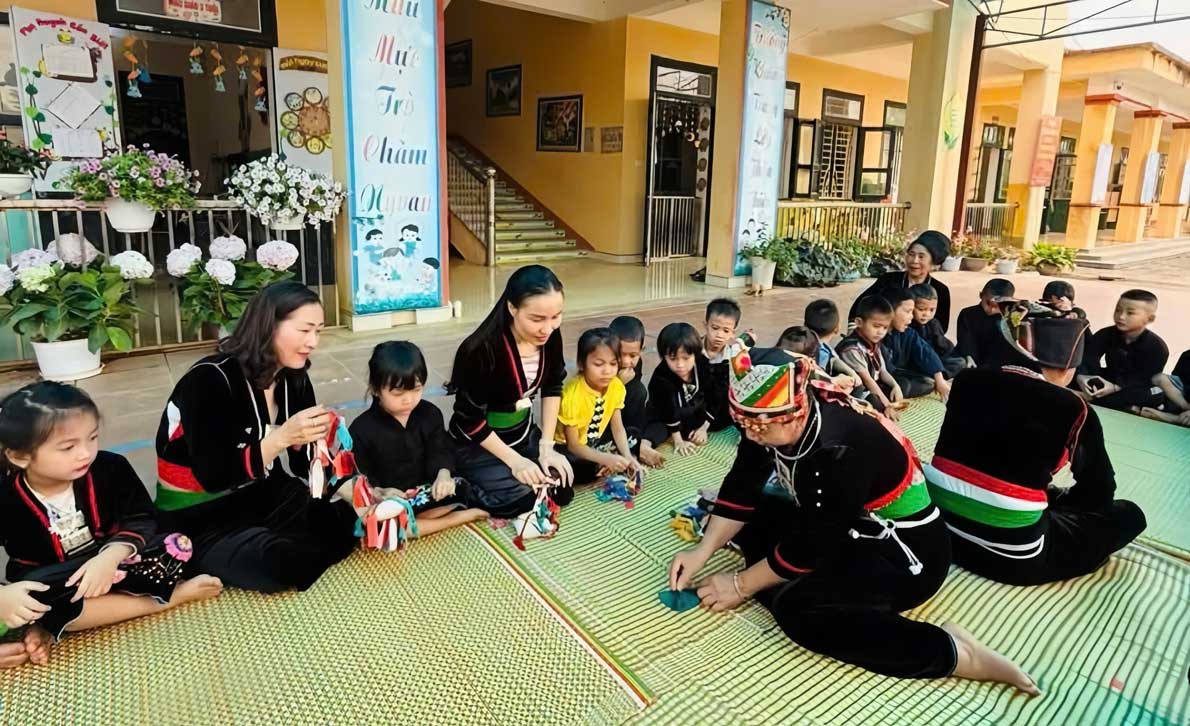
Through close and emotional stories, the children initially get acquainted with the traditional beauty of the Kho Mu people - one of the ethnic minorities with a rich and unique culture in the Northwest region.
The highlight of the activity is the practical experience part, where children can "learn while playing, play while learning".
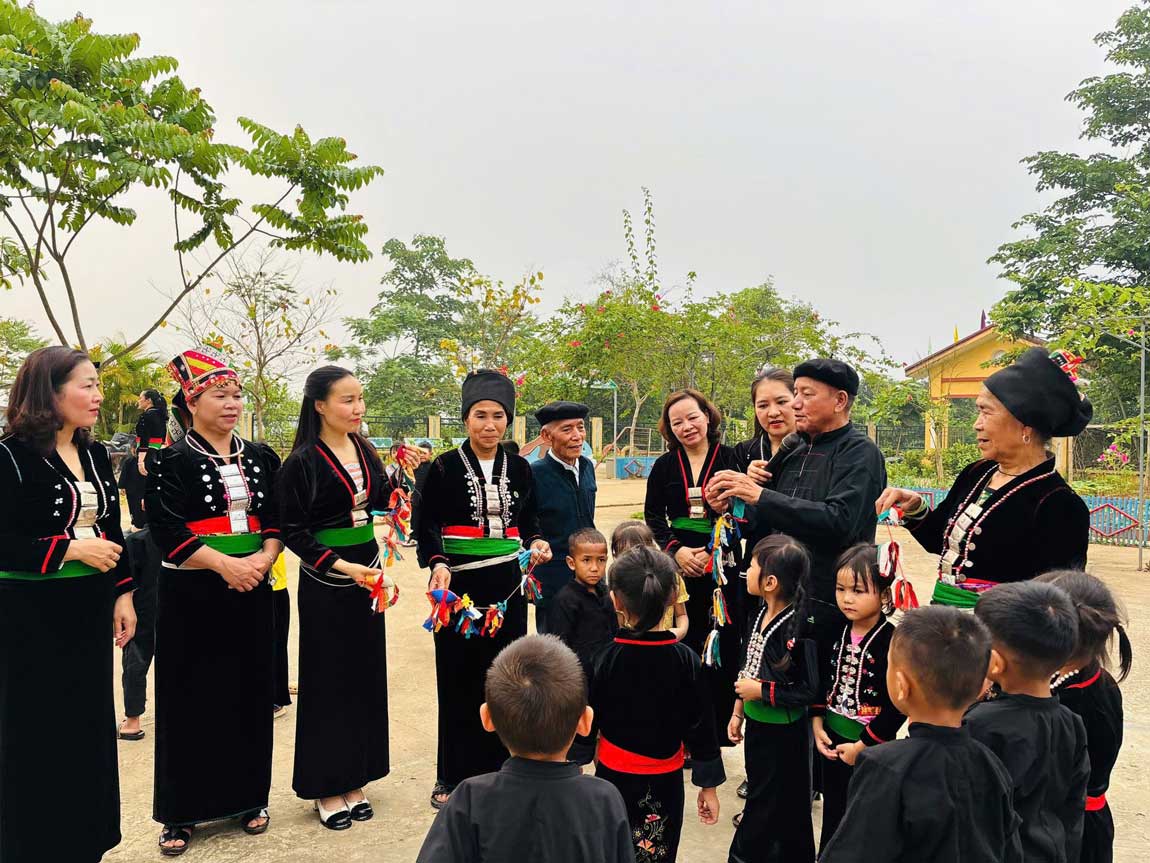
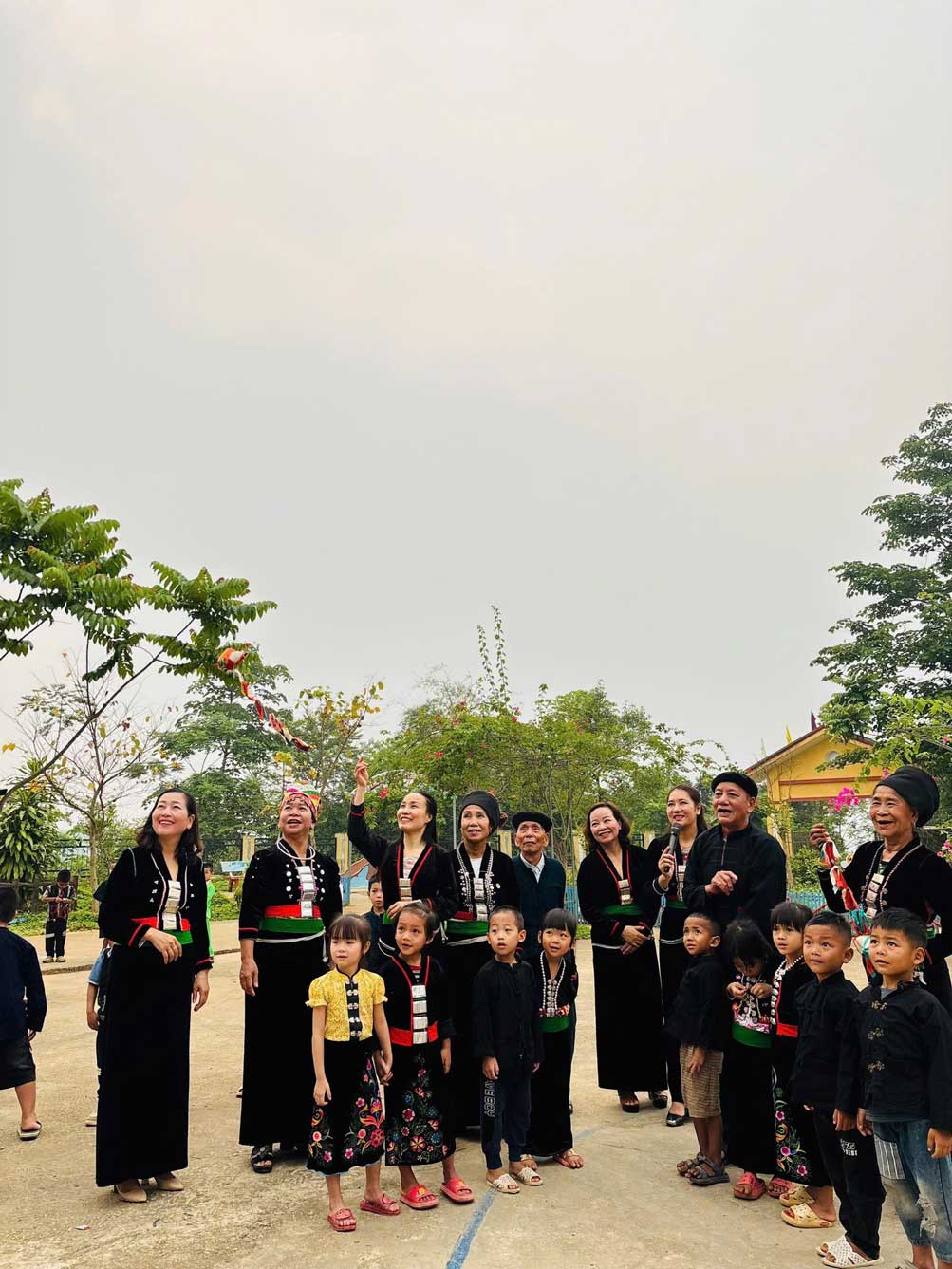
Under the enthusiastic guidance of artisans, children get acquainted with traditional dances, practice tapping rhythms according to folk sounds and participate in the "ném còn" game - an activity imbued with community cultural meaning.
Not only stopping at participating, children also learn about the structure and meaning of the con fruit and con vine in the spiritual life of the Kho Mu people.
Through visual and lively activities, children not only absorb knowledge naturally but also form interest and curiosity to explore national culture. Many children appear bolder when participating in performances and exchanges, thereby training communication skills and confidence right from preschool age.
Representatives of the school said that bringing traditional cultural elements into extracurricular activities is a practical direction to help children better understand their roots, thereby forming love for their homeland and awareness of preserving national identity. This is also one of the experiential education contents that the school has focused on in the past time.
The school also acknowledged and thanked Artisan Vi Van Sang and members of Nam Toc Village Artisan Club for actively coordinating and contributing to spreading Kho Mu cultural values to the younger generation.
The companionship of artisans not only enriches educational content but also creates a sustainable bridge between tradition and modernity in the school environment.


