
The plan sets a goal to gradually change perceptions and behaviors in marriage, improve awareness of compliance with the law on marriage and family, contributing to improving population quality, human resources and ensuring security and order in the locality.
Accordingly, Lao Cai province strives to reduce the rate of early marriage and women giving birth to children under 18 years old by an average of 20%/year or more compared to the previous period. Every year, 100% of commune-level officials and village officials in ethnic minority areas are trained in propaganda and mobilization skills on population, family planning and early marriage prevention and control.
The province also requires 100% of communes, villages, households, clans, shamans, sorcerers, matchmakers to sign commitments to strictly implement legal regulations on marriage and family.
Secondary and high school students in ethnic minority areas will be propagated knowledge about the harmful effects of early marriage, childbirth at a young age and reproductive health care for adolescents.
By 2030, basically households in ethnic minority and mountainous areas will have full access to information and legal policies on marriage and family.
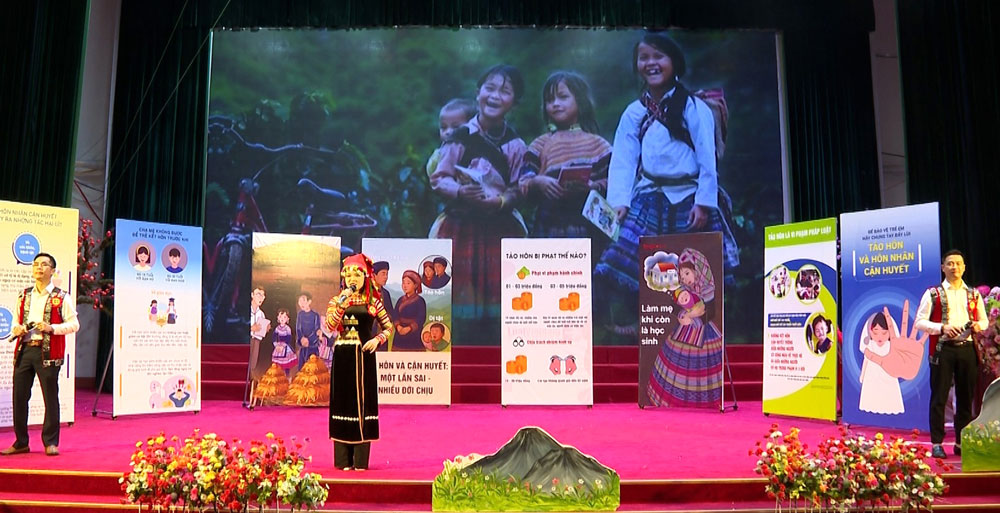
Lao Cai Provincial People's Committee requests localities to include early marriage prevention and control targets in annual socio-economic development plans, linking the responsibility of heads with implementation results. At the same time, establish Steering Committees at all levels, strengthen inspection, supervision and consider responsibilities for localities for many violations.
In propaganda work, the province emphasizes innovating content and forms of communication towards being close to the people, in accordance with customs and habits of each ethnic group; promoting the application of digital transformation, social networks and digital platforms to improve propaganda effectiveness.
The locality also launched the emulation movement "communes, villages, hamlets without child marriage, no women under 18 years old having children", and at the same time replicated effective models and ways of doing things at the grassroots level.
The Education sector strengthens sex education, life skills, and reproductive health care for adolescents; promotes career counseling to limit students dropping out of school early. The Health sector focuses on pre-marital health counseling, supporting teenagers and cases of pregnancy before the age of 18 to limit health risks.
Along with that, mobilizing resources from the national target program to invest in infrastructure, sustainable poverty reduction, creating livelihoods for people in mountainous areas, contributing to gradually eliminating backward customs and building a civilized lifestyle.


