
Quang Ninh is implementing the arrangement of villages, hamlets, and neighborhoods throughout the province. According to the overall plan, the province is implementing the arrangement of 1,452 existing villages, hamlets, and neighborhoods into 624 new villages, hamlets, and neighborhoods, reducing 828 units.
After arrangement, 100% of villages, hamlets, and neighborhoods meet the standards according to regulations.
If in urban areas, the arrangement mainly aims to handle small-scale neighborhoods that are not suitable for household number criteria, then in mountainous areas, border areas, and ethnic minority areas, there are specific requirements.
Each village is not only a residential unit, but also a cultural space, a place to preserve customs, habits and community memories formed through many generations.
Luc Hon commune is one of the areas that clearly shows this characteristic. According to the village and commune arrangement project, it has a natural area of 107.14km2, a population of 9,904 people with 2,258 households; of which 98% of the population are ethnic minorities.
The whole commune currently has 29 villages, expected to be rearranged to 11 villages, a reduction of 18 villages.
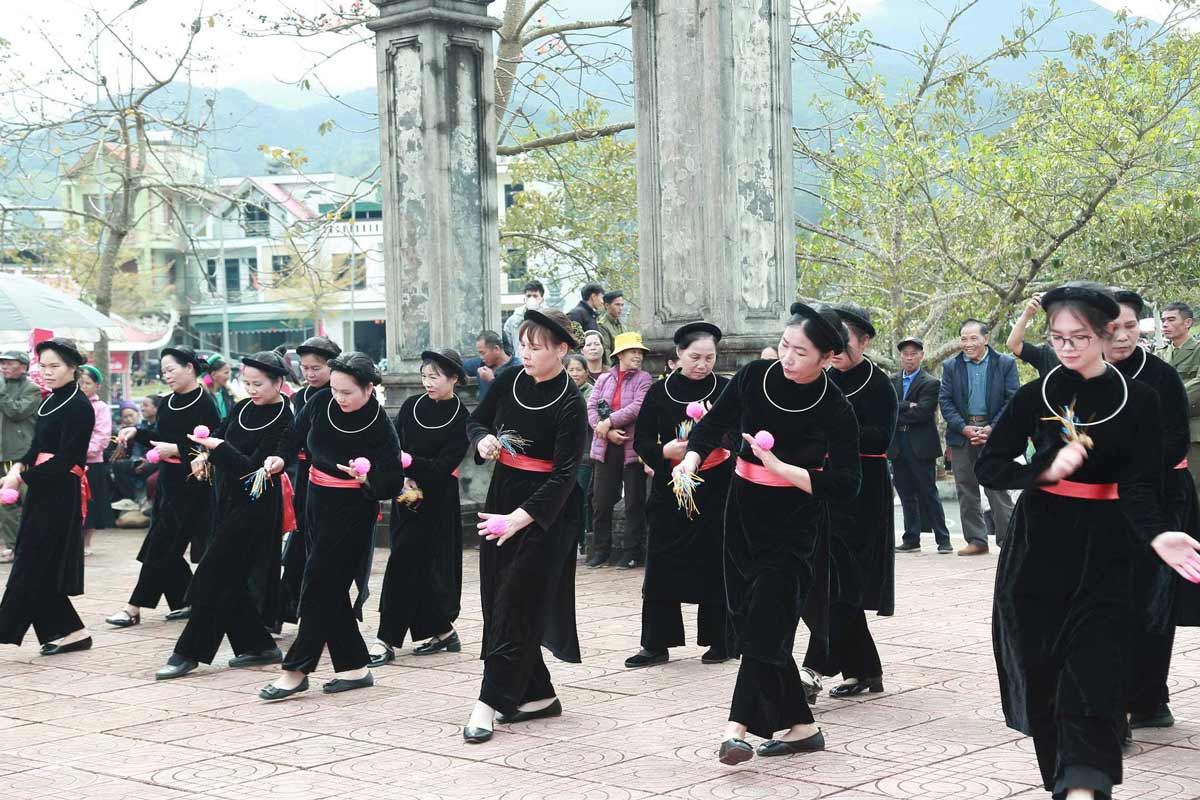
After building the project, the Party Committee and government of Luc Hon commune organized a propaganda conference to collect people's opinions; established 11 propaganda groups to villages and hamlets to directly inform officials, party members and people.
New villages are formed on the basis of merging existing villages, ensuring population size, number of households and suitability for local characteristics.
According to the plan, Ban Cau village will merge with Luc Na village, taking the name Luc Na village. This is a mountainous area, where residents live scattered by household groups; ethnic minorities account for a high proportion.
Ms. Ly Thi Hoang - Former Head of Ban Cau village - said that taking the name Luc Na village after the merger is also associated with the cultural element of the locality. Luc Na communal house is a provincial-level historical and cultural relic, a festival space, a familiar cultural destination for people in the region.
After the merger, this is also an opportunity for the locality to promote traditional cultural values and gradually develop community tourism. The important thing is that people agree, and the new village will operate more effectively," Ms. Hoang shared.
According to Mr. Vi Tien Vuong - Chairman of Luc Hon Commune People's Committee, along with the requirement to streamline the apparatus, the commune focuses on maintaining the stability of the residential community after the arrangement. Cultural, artistic, sports, education promotion, and cultural life building activities in residential areas will continue to be maintained in the new village and hamlet space.
Mr. Vuong said that the process of arranging villages and hamlets is being implemented cautiously by the commune, based on propaganda, mobilization and collecting people's opinions. Through propaganda, the majority of officials, party members and people in the area expressed their agreement and support for the project.
From Luc Hon commune's approach, it can be seen that arranging villages and hamlets in ethnic minority areas is not only reducing focal points, but also maintaining the stability of the community, preserving culture and creating conditions for localities to focus resources on development from the grassroots level.


