
Dau Pagoda is considered the oldest pagoda in Vietnam located in Tri Qua ward (Bac Ninh). The pagoda was once the ancient Buddhist center of the Luy Lau region.
According to historical records, the pagoda is also known as Dien Ung Tu or Phap Van Tu, built in 187 and completed in 226, considered the first Buddhist center in Vietnam.
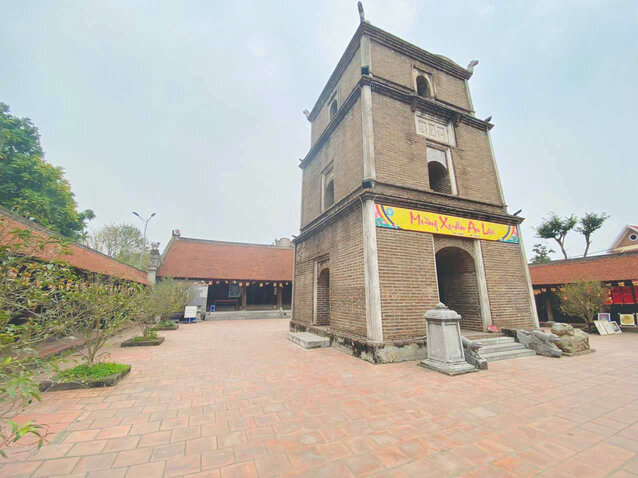
The pagoda is associated with the introduction and development of Buddhism in Vietnam. In particular, this place is the cradle of the cult of the Four Dharmas - 4 goddesses formed from the intersection between Indian Buddhism and indigenous folk beliefs.
Through many historical changes, the pagoda still retains the characteristic domestic and foreign architectural layout with continuous rows of houses surrounding Tien Duong, Thien Huong and Thuong Dien. Standing out in the middle of the yard is Hoa Phong tower, about 15m high, creating a majestic highlight for the entire space.
The tower was built of handmade fired bricks from the Le Trung Hung period, currently preserving bronze bells and gongs cast in 1793 and 1817. The four corners of the tower place the altar of the Four Heavenly Kings, the gods guarding the four directions, contributing to enhancing the sacredness.
Inside the pagoda, visitors can worship the statue of Ba Dau (Phap Van Goddess) about 2m high - one of the Four Dharmas including Phap Van, Phap Vu, Phap Loi and Phap Dien, corresponding to natural phenomena such as clouds, rain, thunder, lightning.
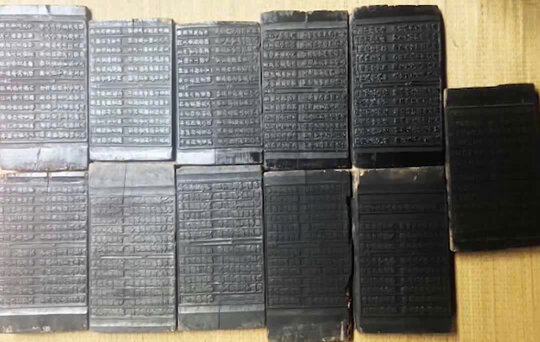
Not only prominent in architecture and belief, the pagoda also preserves the National Treasure Woodblock of Dau Pagoda. The woodblock set includes 107 unique carved boards, including 92 two-sided carved boards and 15 one-sided carved boards, totaling 199 sides.
The content records legends, Buddhist scriptures and ancient rain praying rituals, carrying special historical and cultural values.
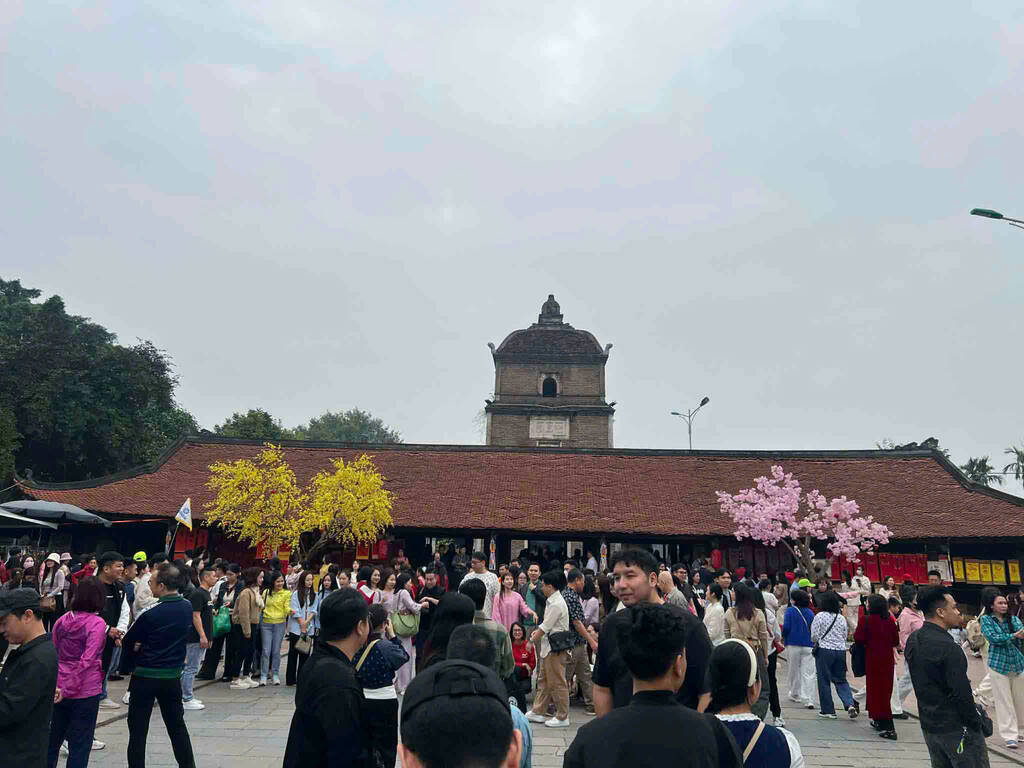
According to local people, the pagoda welcomes the most tourists on the 8th day of the 4th lunar month every year. This is the occasion of the ancient and large-scale Buddhist festival of the Kinh Bac region, to commemorate Mother Goddess Man Nuong and honor Phap Van.


