
Located in Binh Thuy ward (Can Tho), Hoi Linh Pagoda (also known as Hoi Linh Co Tu) is located near the Cach Mang Thang 8 street, facing the Hau River. With an area of about 6,500m2, the pagoda has a contemplative appearance, associated with spiritual life and local history.
According to documents, the pagoda was built in 1907, initially just a simple structure with wooden pillars and a thatched roof. After many restorations, Hoi Linh pagoda gradually became spacious but still retains its inherent ancient beauty.
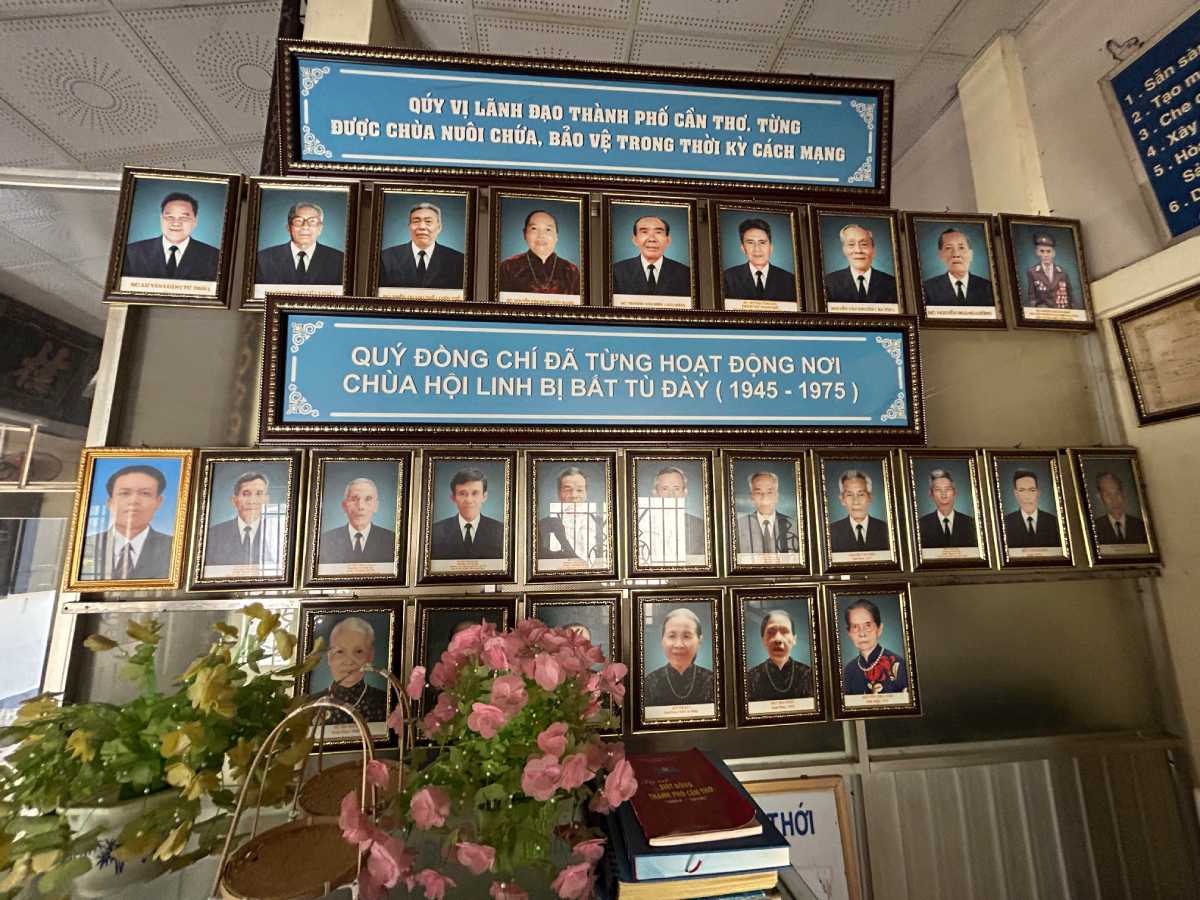
Not only is it a place for religious activities, Hoi Linh Pagoda is also a location associated with the revolutionary movement in Can Tho during the resistance wars. Many important meetings were held here, contributing to promoting revolutionary activities, towards the goal of liberating the South and unifying the country.
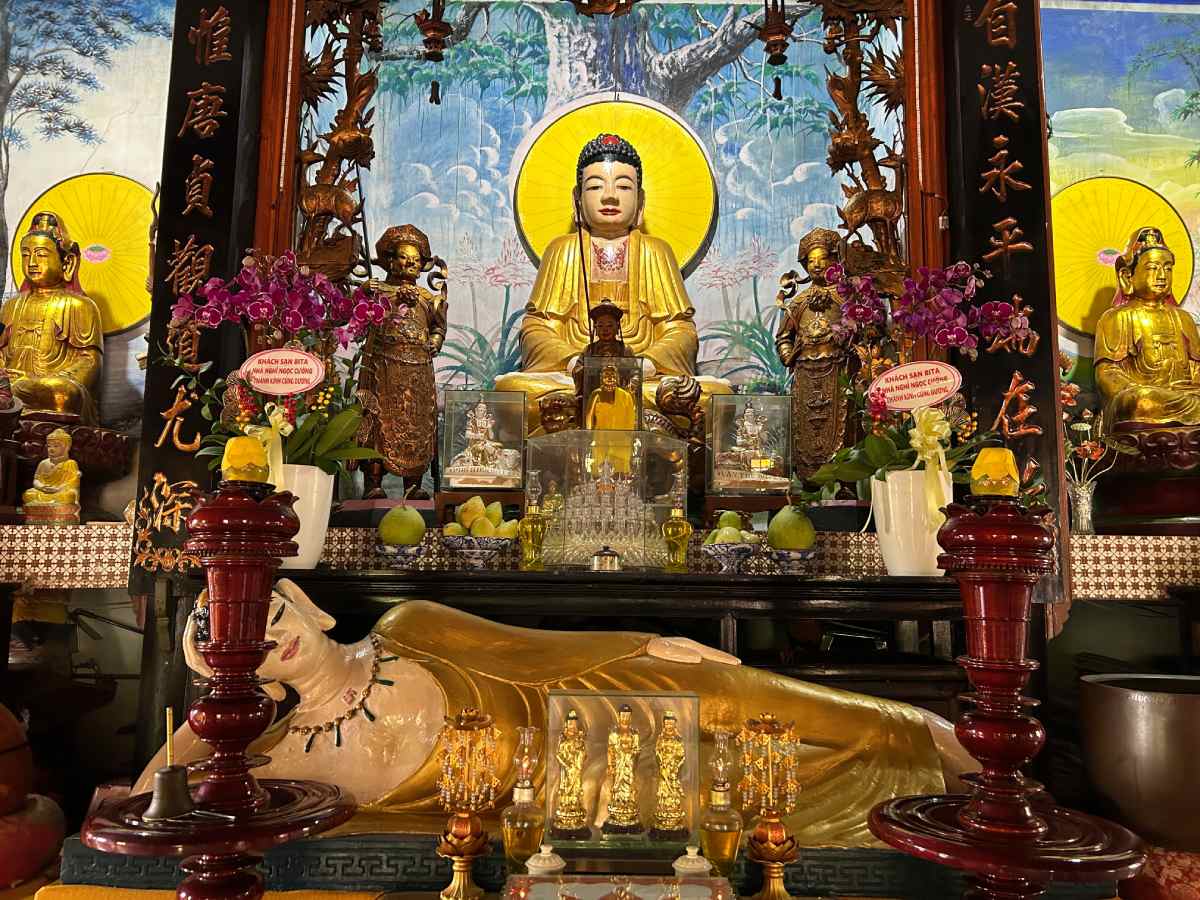
The main hall architecture is in an ancient style, highlighted by 3 compartments above placing statues of Avalokiteśvara Bodhisattva, Amitabha Buddha in the center and Mahāsthāmaprāpta Bodhisattva. The harmonious combination creates a sacred and solemn space.
According to Mr. Bui Huu Thuan ( Dharma name Phuoc Trung), a disciple of late Venerable Thich Chan Duc, during the war, the pagoda was once a place to shelter and hide revolutionary cadres. Despite being besieged and searched by enemy forces many times, they still could not find evidence.
In particular, Venerable Thich Phap Than (real name Duong Van De), abbot of the pagoda from 1944 to 1970, took drastic action by self-immolating part of the main hall to protect the Revolutionary base. After that, he and many monks, nuns, and Buddhists were imprisoned at Phu Loi prison for 3 years. Despite enduring many tortures, they remained steadfast and did not confess.
In 1993, Hoi Linh Pagoda was recognized as a National Historical and Cultural Relic. To this day, this place still attracts a large number of people and Buddhists to worship, especially during Tet holidays, becoming a space to preserve historical memories and spiritual values of the Southwest region.


